Category
page 1Motor neuron diseases

ALS
Amyotrophic lateral sclerosis (ALS), also known as motor neuron disease (MND) or '''Lou Gehrig's disease''', is a rare terminal neurodegenerative disease defined by the progressive loss of both upper and lower motor neurons that normally control voluntary muscle contraction. ALS is the most common of the motor neuron diseases. ALS often presents in its early stages with gradual muscle stiffness, twitches, weakness, and wasting. Motor neuron loss typically continues until the ability to eat, speak, move, and breathe without mechanical support is lost. It is estimated that at least 50% of people
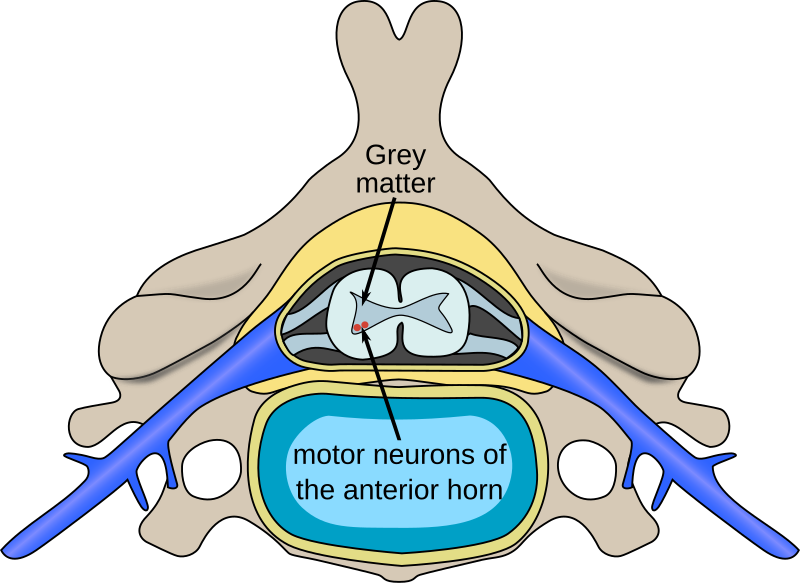
spinal muscular atrophy
rare congenital neuromuscular disorder
chronic traumatic encephalopathy
neurodegenerative disease caused by head injury
motor neuron disease
group of neurological disorders affecting motor neurons
post-polio syndrome
group of potentially disabling signs and symptoms that appear decades after the initial poliomyelitis illness
progressive muscular atrophy
rare, milder form of amyotrophic lateral sclerosis. It is characterized by a slowly progressive clinical course. Signs and symptoms include muscle weakness, atrophy, and fasciculation
Kennedy disease
Kennedy's disease, also known as bulbospinal muscular atrophy (BSMA), is a rare X-linked recessive motor neuron disease characterized by proximal and bulbar muscle wasting
lateral sclerosis
motor neuron disease characterized by painless but progressive weakness and stiffness of the muscles of the legs
pseudobulbar palsy
medical condition characterized by the inability to control facial movements (such as chewing and speaking) and caused by a variety of neurological disorders

progressive bulbar palsy
human disease
monomelic amyotrophy
disease of the lower motor neurons
spinal muscular atrophies
group of diseases