Category
page 1Musical subcultures

punk rock
genre of rock music

disco
Disco is a genre of dance music and a subculture that emerged in the late 1960s from the United States' urban nightlife scene, particularly in African-American, Italian-American, Latino and queer communities. Its sound is typified by four-on-the-floor beats, syncopated basslines, string sections, brass and horns, electric pianos, synthesizers, and electric rhythm guitars.

grunge
Grunge (originally known as the Seattle Sound) is an alternative rock genre and subculture that emerged during the in the U.S. state of Washington, particularly in Seattle and Olympia, and other nearby cities. Grunge fuses elements of punk rock and heavy metal, and features the distorted electric guitar sound used in both genres, as well as bass guitar, drums, and vocals. Grunge also incorporates influences from indie rock bands such as Sonic Youth, Pixies, and Dinosaur Jr. Lyrics are typically angst-filled and introspective, often addressing themes such as social alienation, self-doubt, abuse
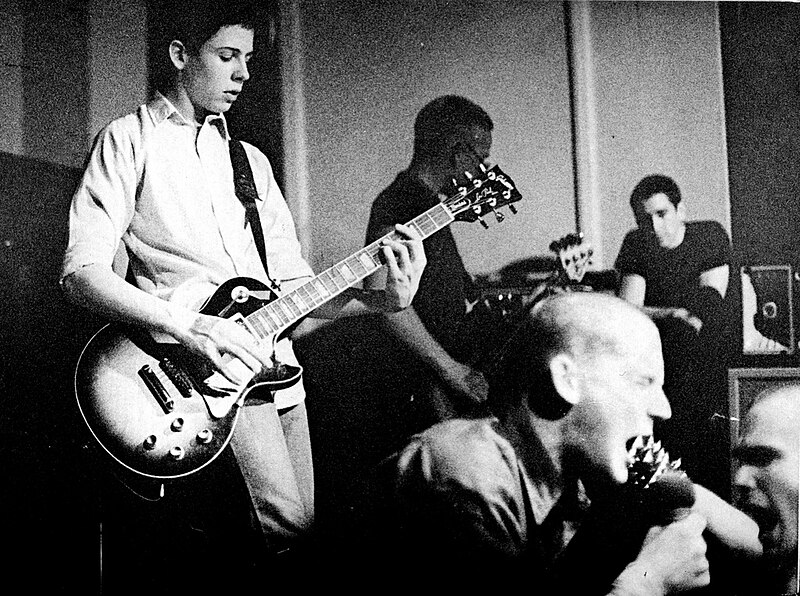
hardcore punk
aggressive and fast subgenre of punk rock

punk subculture
anti-establishment culture
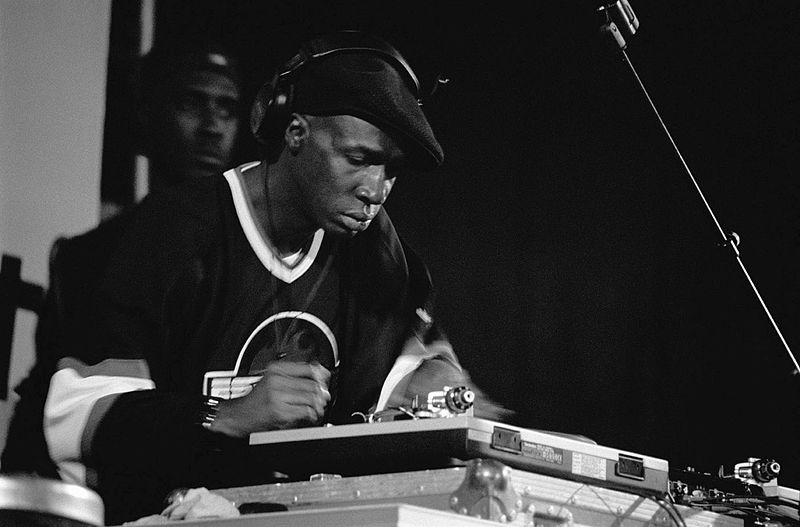
hip hop culture
culture including hip hop music, turntablism, breakdancing and graffiti

Goth
contemporary subculture

straight edge
punk subculture

rockabilly
Rockabilly is one of the earliest styles of rock and roll music. It dates back to the early 1950s in the United States, especially the South. As a genre, it blends the sound of Western musical styles such as country with that of rhythm and blues, leading to what is considered "classic" rock and roll. Some have also described it as a blend of bluegrass with rock and roll. The term "rockabilly" itself is a portmanteau of "rock" (from "rock 'n' roll") and "hillbilly", the latter a reference to the country music (often called "hillbilly music" in the 1940s and 1950s) that contributed strongly to t

indie pop
genre of pop music within independent music movement

rave
A rave (from the verb: to rave) is a dance party at a warehouse, club, or other public or private venue, typically featuring performances by DJs playing electronic dance music. The style is most associated with the early 1990s dance music scene when DJs played at illegal events in musical styles dominated by electronic dance music from a wide range of sub-genres, including drum and bass, dubstep, trap, break, happy hardcore, trance, techno, hardcore, house, and alternative dance. Occasionally live musicians have been known to perform at raves, in addition to other types of performance artists
new wave of British heavy metal
heavy metal movement of the late 1970s and early 1980s
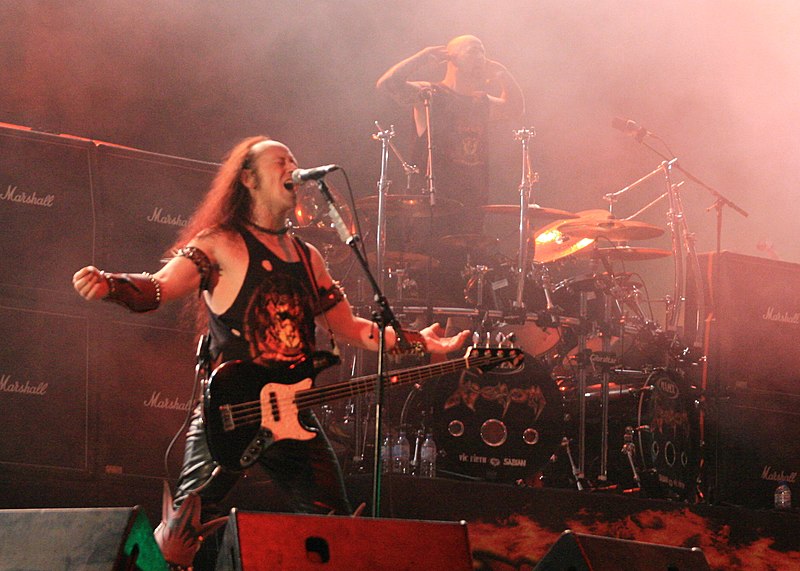
extreme metal
any of a number of related heavy metal music subgenres
riot grrrl
underground feminist punk rock movement; music genre
mod
subculture in England
New Romantic
1970s British pop culture movement
heavy metal subculture
culture of heavy metal fans
skate punk
subgenre of punk rock

psychobilly
Psychobilly (also known as punkabilly) is a rock music fusion genre that fuses elements of rockabilly and punk rock. It has been defined as "loud frantic rockabilly music", it has also been said that it "takes the traditional countrified rock style known as rockabilly, ramp[ing] up its speed to a sweaty pace, and combin[ing] it with punk rock and imagery lifted from horror films and late-night sci-fi schlock,... [creating a] gritty honky tonk punk rock."

breakcore
Breakcore is a style of electronic dance music that emerged from jungle, hardcore, and drum and bass in the mid-to-late 1990s. It is characterized by very complex and intricate breakbeats and a wide palette of sampling sources played at high tempos.

Beatnik
thumb|Beat, Beat, Beat (1959) by William F. Brown (writer)|William F. Brown
Teddy Boy
member of a British subculture
Emo subculture
youth subculture
Para Para
synchronized dance that originated in Japan
.jpg)
queercore
Queercore (or homocore) is a cultural/social movement that began in the mid-1980s as an offshoot of the punk subculture and a music genre that comes from punk rock. It is distinguished by its discontent with society in general, and specifically society's disapproval of the LGBTQ community. Queercore expresses itself in a DIY style through magazines, music, writing and film.
Northern soul
music and dance movement that emerged, initially in Northern England in the late 1960s
bardcore
Bardcore or tavernwave is a musical microgenre that became popular in 2020, consisting of medieval-inspired remakes of popular songs.
Universal Zulu Nation
international hip hop awareness group formed by Afrika Bambaataa
filk
folk music of science fiction fandom

poseur
thumb|Models (painting)|Models (Les Poseuses) by Georges Seurat
A poseur is someone who poses for effect, or behaves affectedly, who affects a particular attitude, character or manner to impress others, or who pretends to belong to a particular group. A poseur may be a person who pretends to be what they are not or an insincere person; they may have a flair for drama or behave as if they are onstage in daily life.
urban culture
culture of cities
wizard rock
music genre

Swing Kids
The Swing Youth () were a youth counterculture of jazz and swing lovers in Germany formed in Hamburg in 1939. Primarily active in Hamburg and Berlin, they were composed of 14- to 21-year-old Germans, mostly middle or upper-class students, but also including some in the working class. They admired the "American way of life", defining themselves in swing music and opposing Nazism, especially the Hitler Youth (). They loosely structured themselves into “clubs” with names such as the Harlem Club, the OK Gang, and the Hot Club. This underground subculture, distinctly nonconformist with a focus on A

nazi punk
music genre
progressive music
type of music that emphasizes form and stylistic variety
.jpg)
go-go
Go-go is a subgenre of funk music with an emphasis on specific rhythmic patterns, and live audience call and response.

Raggare
right|thumb|Two stereotypical raggare at the Power Big Meet 2005
thumb|A lot of raggare on the roof of a 1960s car during Power Big Meet in 2005
Stilyagi
Stilyagi (, , "stylish, style hunters") were members of a Soviet youth counterculture movement from the late 1940s until the early 1960s. A stilyaga () was primarily distinguished by snappy clothing—preferably foreign-label clothing acquired from fartsovshchiks (black market sellers)—that contrasted with the communist realities of the time, and a fascination with zagranitsa, modern Western music and fashions corresponding to those of the Beat Generation. English writings on Soviet culture variously translated the term as "dandies", "fashionistas", "beatniks", "hipsters", or "zoot suiters".
dark culture
subculture
youth crew
music subculture of hardcore punk
Palm Desert Scene
music culture in Southern California often described as "desert rock."
Teknival
Teknivals (a portmanteau of the words tekno and festival) are large free parties which take place for several days. They take place most often in Europe and are often illegal under various national or regional laws. They vary in size from dozens to thousands of people, depending on factors such as accessibility, reputation, weather, and law enforcement. The parties often take place in venues far away from residential areas such as squatted warehouses, empty military bases, beaches, forests or fields. The teknival phenomenon is a grassroots movement which has grown out of the rave, punk, reggae

free party
party "free" from the restrictions of the legal club scene
free tekno
subgenre of hardtechno
Club drug
recreational drug
Deadhead
thumb|upright=1.1|A Deadhead school bus conversion
A Deadhead or Dead head is a fan of the American rock band the Grateful Dead. The Deadhead subculture originated in the 1970s, when a number of fans began traveling to see the Grateful Dead in as many shows or festival venues as they could. As more people began attending live performances and festivals, a community developed. The Deadhead community has since gone on to create slang and idioms unique to them.
rivethead
A rivethead or rivet head is a person associated with the industrial dance music scene. In stark contrast to the original industrial culture, whose performers and heterogeneous audience were sometimes referred to as "industrialists", the rivethead scene is a coherent youth culture closely linked to a discernible fashion style. The scene emerged in the late 1980s on the basis of electro-industrial, EBM, and industrial rock music. The associated dress style draws on military fashion and punk aesthetics with hints of fetish wear, mainly inspired by the scene's musical protagonists.
hooping
Hooping (also called hula hooping or hoop dance) is the manipulation of and artistic movement or dancing with a hoop (or hoops). Hoops can be made of metal, wood, or plastic. Hooping combines technical moves and tricks with freestyle or technical dancing. Hooping can be practiced to or performed with music. In contrast to the classic toy hula hoop, modern hoopers use heavier and larger diameter hoops, and frequently rotate the hoop around parts of the body other than the waist, including the hips, chest, neck, shoulders, thighs, knees, arms, hands, thumbs, feet, and toes. The hoop can also be
Freetekno
thumb|Freetekno
freak scene
cultural scene and subculture that was part of the hippie movement in California
masonic music
Music used in connection with the ritual and social functions of freemasonry
Juggalo
thumb|A car painted with a reproduction of the Psychopathic Records logo and the word juggalo
pimba
thumb|right|250px|Marco Paulo (singer)|Marco Paulo, the forerunner of pimba music.
thumb|right|300px|Emanuel, an icon of the pimba music community|music scene.
Pimba is an umbrella term for Portuguese types or genres of music with an uptempo style and/or folk song features, and corny romantic or saucy and vulgar lyrics, which was often associated with poorly educated public from rural areas and suburban poor or working-class neighbourhoods, as well as with Portuguese economic migrants living abroad who spend their holidays in their ancestors' localities across the Portuguese countryside. The P