Category
page 1Mycenaean Greece
%20-%20Homer%20and%20his%20Guide%20(1874).jpg)
Homer
Homer (; , ; possibly born ) was an ancient Greek poet who is widely credited as the author of the Iliad and the Odyssey, two epic poems that are foundational works of ancient Greek literature. Although his life and authorship remain obscure, Homer was highly revered in ancient Greek society and is considered one of the most influential authors in history.

Mycenaean Greece
late Bronze Age Greek civilization
Ithaca
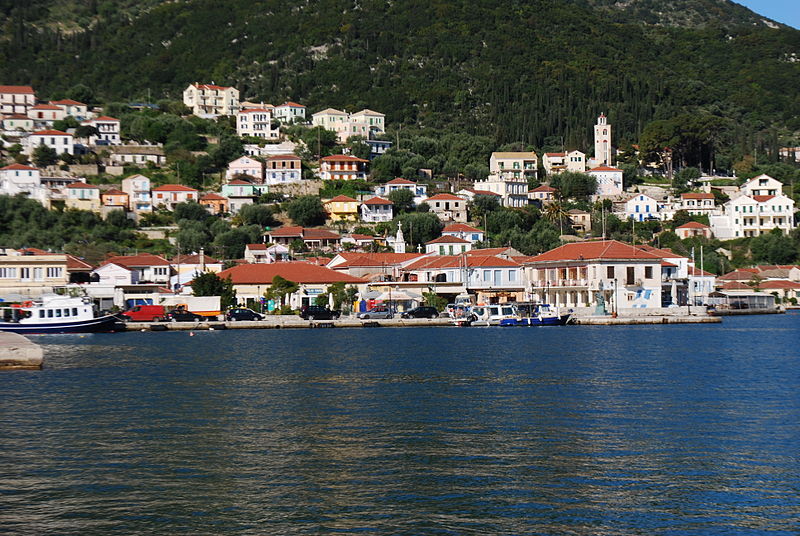
Greek island in the Ionian Sea

Dorians

Greek Dark Ages
period of time in ancient Greece
National Archaeological Museum of Athens
museum in Athens, Greece
Mycenaean Greek
most ancient attested form of the Greek language from the 16th to 12th centuries BC

Heracleidae
thumb|Heracles holding [[Hyllus with Deianira nearby, as the centaur Nessus pleads for his life (Pompeii fresco)]]
right|thumb|Heracles with his son Telephus, one of the Heracleidae

Kition
Kition (Ancient Greek: , ; Latin: ; Egyptian: ; Phoenician: , , or , ;) was an ancient Phoenician and Greek city-kingdom on the southern coast of Cyprus (in present-day Larnaca), one of the ten city-kingdoms of Cyprus.

pithos
Pithos (, , plural: '''''''' ) is the Greek name of a large storage container. The term in English is applied to such containers used among the civilizations that bordered the Mediterranean Sea in the Neolithic, the Bronze Age and the succeeding Iron Age. Pithoi were used for bulk storage, primarily for fluids and grains; they were comparable to the drums, barrels and casks of recent times.The name was different in other languages; for instance, the Hittites used harsi-''.
Polis
municipality of Paphos District, Republic of Cyprus
Dorian invasion
legendary ancient invasion of southern Greece
list of kings of Athens
Wikimedia list article

Sherden
thumb|300px|The Sherden in battle as depicted at Medinet Habu (temple)|Medinet Habu
The Sherden (Egyptian: šrdn, šꜣrdꜣnꜣ or šꜣrdynꜣ; Ugaritic: šrdnn(m) and trtn(m); possibly Akkadian: šêrtânnu; also glossed "Shardana" or "Sherdanu") are one of the several ethnic groups the Sea Peoples were said to be composed of, appearing in fragmentary historical and iconographic records (ancient Egyptian and Ugaritic) from the Eastern Mediterranean in the late 2nd millennium BC.

Wilusa
thumb|385x385px|Map of Bronze Age [[Near East depicting the location of Wilusa in Northwest Anatolia.]]
boar's tusk helmet
military item
protogeometric art
type or style of Ancient Greek ceramic
Achaeans
collective name of the Greeks in Homer's poems
Madduwatta
275px|thumb|Anatolia during the Late Bronze Age
Dendra panoply
full body armor from Greece
list of kings of Argos
Wikimedia list article

Military of Mycenaean Greece
warfare, armor, and weapons from Mycenae, Greece
Denyen
thumb|Denyen prisoners on a register from :File:Medinet Habu Ramses III. Tempel Erster Hof 01.jpg|a graphic wall relief on the Second Pylon at Medinet Habu, BC, during the reign of [[Ramesses III.]]
The Denyen (Egyptian: dꜣjnjnjw) is purported to be one of the groups constituting the Sea Peoples.
Walmu
Walmu was a king of Wiluša, likely modern Hisarlık, in the late 13th century BC.
Mycenaean religion
ancient Greek religion of the Mycenaean civilisation
Nestor's Cup
gold goblet discovered in 1876 by Heinrich Schliemann
Nichoria
Nichoria () is a site in Messenia, on a ridgetop near modern Rizomylos, at the northwestern corner of the Messenian Gulf. From the Middle to Late Bronze Age it cultivated olive and terebinth for export. During the Helladic period it was part of the Mycenaean civilisation.
Tomb of Aegisthus
Archaeological site in Mycenae, Greece