Category
page 1Mysticism

mysticism
thumb|upright=1.2|Liber Divinorum Operum, or the Universal Man of St. Hildegard of Bingen, 1185 (13th-century copy)
%20001.jpg)
dervish
thumb|200px|right|Dervish with a lion and a tiger, Mughal painting,
thumb|200px|right|Ottoman Turks|Ottoman Dervish portrayed by [[Amedeo Preziosi, , Muzeul Naţional de Artă al României]]

Neoplatonism
Neoplatonism, also called late platonism, is a version of Platonic philosophy that emerged in the 3rd century AD against the background of Hellenistic philosophy and religion. The term does not encapsulate a set of distinct ideas based on a form of Platonism as much as a series of Platonic thinkers coming primarily from a certain ancient historical period. Among the common ideas it maintains is monism, the doctrine that all of reality can be derived from a single principle, "the One".
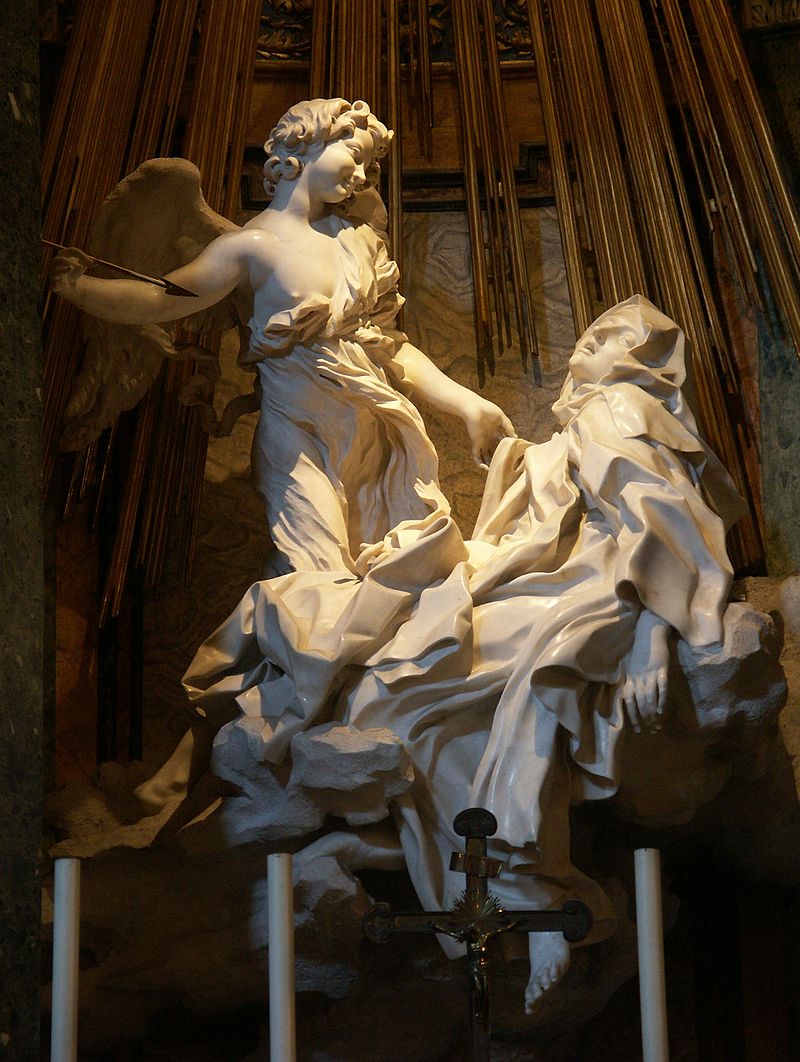
ecstasy
advanced emotion, subjective experience of total involvement of the subject, with an object of their awareness

Thelema
thumb|right|alt=Crowley wearing the ceremonial garb of the Hermetic Order of the Golden Dawn, 1910|Aleister Crowley in 1910

Yarsanism
Yarsanism (), Ahl-e Haqq (; ), or '''Kaka'i''', is an inherited, syncretic religion founded by Sultan Sahak in the late 14th century in western Iran. The total number of followers of Yarsanism is estimated to be over half a million to one million in Iran. However, according to one source, there are as many as 3 million followers in Iran. The numbers in Iraq are unknown. However, according to one source there are 120 to 150 thousand followers in Iraq. The adherents are mostly Kurds, as well as some Shabaks, Laks, and Lurs.

immanence
The doctrine or theory of immanence holds that the divine encompasses or is manifested in the material world. It is held by some philosophical and metaphysical theories of divine presence. Immanence is usually applied in monotheistic, pantheistic, pandeistic, or panentheistic faiths to suggest that the spiritual world permeates the mundane. It is often contrasted with theories of transcendence, in which the divine is seen to be outside the material world.
Quietism
17th-century ideas heretical to Catholics
nadi
subtle energy channels described in yoga and Tantra
altered state of consciousness
any condition which is significantly different from a normal waking state

yamabushi
are Japanese mountain ascetic hermits. They are generally part of the syncretic religion, which includes Tantric Buddhism and Shinto.
self-realization
Self-realization is a term used in Western philosophy, psychology, and spirituality; and in Indian religions. In the Western understanding, it is the "fulfillment by oneself of the possibilities of one's character or personality" (see also self-actualization). In Hinduism, self-realization is liberating knowledge of the true self, either as the permanent undying Purusha or witness-consciousness, which is atman (essence). In Buddhism, it is knowledge of the absence (sunyata) of such a permanent self.
quantum mysticism
set of metaphysical beliefs and associated practices
Omega Point
spiritual belief and a scientific speculation that everything in the universe is fated to spiral towards a final point of divine unification
love of God
concepts of worship and devotions towards God
Fana
annihilation of self
Sant Mat
Hindu spiritual movement in the Indian subcontinent in the 13th century.
transcendence
in religions, the wholly non-material aspect of a deity's nature & power
numinous
Numinous () means "arousing spiritual or religious emotion; mysterious or awe-inspiring"; also "supernatural" or "appealing to the aesthetic sensibility." The term was given its present sense by the German theologian and philosopher Rudolf Otto in his influential 1917 German book The Idea of the Holy. He also used the phrase mysterium tremendum as another description for the phenomenon. Otto's concept of the numinous influenced thinkers including Carl Jung, Mircea Eliade, and C. S. Lewis. It has been applied to theology, psychology, religious studies, literary analysis, and descriptions of psy
Henosis
Henosis () is the classical Greek word for mystical "oneness", "union" or "unity". In Neoplatonism, henosis refers to the unification with what is fundamental in reality: the One (Τὸ Ἕν), the Source, or Monad. The Neoplatonic concept has precedents in the Greek mystery religions as well as parallels in Eastern philosophy. It is further developed in the Corpus Hermeticum, in Christian theology, Islamic Mysticism, soteriology and mysticism. Henosis is also an important factor in the historical development of monotheism during Late Antiquity.

mystagogue
thumb|Artistic rendition of a classical "mystagogue"
A mystagogue or mystagog (from ) is a person who initiates others into mystic beliefs, and an educator or person who has knowledge of the sacred mysteries of a belief system. Another word for mystagogue is hierophant.
oneiric vision
literary genre/technique
ego death
complete loss of subjective self-identity
Henology
Henology () is the philosophical account or discourse on the One that appears most notably in the philosophy of Plotinus.
Jewish mysticism
different forms of mysticism in Jewish history
peak experience
altered state of consciousness characterized by euphoria
divine madness
unconventional, outrageous, unexpected, or unpredictable behavior linked to religious or spiritual pursuits
Mystical experience
experience interpreted within a religious framework