Category
page 1Nag Hammadi library

Gospel of Thomas
Coptic-language early Christian non-canonical gospel, part of the Nag Hammadi library
Nag Hammadi library
collection of early Christian and Gnostic texts discovered near the Upper Egyptian town of Nag Hammadi in 1945

Gospel of Philip
Third century gnostic text
Gospel of Truth
2nd century Valentinian homily
Apocryphon of John
second-century Sethian Gnostic text
Holy Book of the Great Invisible Spirit
literary work
Apocryphon of James
pseudonymous text amongst the New Testament apocrypha
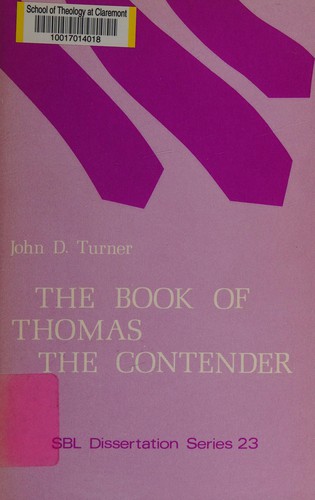
Book of Thomas the Contender
literary work
The Sophia of Jesus Christ
literary work
Dialogue of the Saviour
Christian Gnostic text
Gnostic Apocalypse of Peter
Gnostic Christian text (c. 200 AD)

Hermetica
The Hermetica are texts attributed to the legendary Hellenistic figure Hermes Trismegistus, a syncretic combination of the Greek god Hermes and the Egyptian god Thoth. These texts may vary widely in content and purpose, but by modern convention are usually subdivided into two main categories, the "technical" and "religio-philosophical" Hermetica.
Prayer of the Apostle Paul
New Testament apocryphal work
Hypostasis of the Archons
literary work
Letter of Peter to Philip
2nd or 3rd century Gnostic Christian epistle
Epistle of Eugnostos
literary work
The Thunder, Perfect Mind
literary work
Apocalypse of Adam
literary work
Second Treatise of the Great Seth
3rd-century Gnostic text
First Apocalypse of James
third century Christian Gnostic text
Acts of Peter and the Twelve
Christian Gnostic text
On the Origin of the World
gnostic work dealing with creation and the end time

Second Apocalypse of James
2nd century Christian Gnostic text
Tripartite Tractate
Valentinian treatise found on the Jung Codex surviving in Coptic
Trimorphic Protennoia
Sethian Gnostic text from the New Testament apocrypha
Exegesis on the Soul
literary work

Treatise on the Resurrection
Valentinian treatise
Zostrianos
Zostrianos is a Sethian Gnostic text. It is the first tractate of two in Codex VIII of the Nag Hammadi library. It takes up 132 of the 140 pages in the codex, making Zostrianos the longest tractate of the entire library. However the text is extensively damaged, especially in the center, making the document difficult to fully understand. The Coptic manuscript is a translation of a Greek original, likely written in Alexandria in c. 200 AD. In the text, Zostrianos goes on a heavenly journey and receives divine knowledge from the aeons.
Paraphrase of Shem
Gnostic text
Template:Nag Hammadi Codices
Wikimedia template
Sentences of Sextus
2nd-century collection of maxims

Allogenes
Allogenes is a series of Gnostic texts. The main character in these texts is Allogenes (Greek: ἀλλογενής), which translates as 'stranger,' 'foreigner,' or 'of another race.' The first text discovered was Allogenes as the third tractate in Codex XI of the Nag Hammadi library. The Coptic manuscript is a translation of a Greek original, likely written in Alexandria before 300 AD. In this text, containing Middle Platonic or Neoplatonic elements, Allogenes receives divine revelations.
Teachings of Silvanus
one of the books found in the Nag Hammadi library
Thought of Norea
Sethian Gnostic text
Marsanes
Marsanes is a Sethian Gnostic text from the New Testament apocrypha. The only surviving copy comes from the Nag Hammadi library, albeit with 14 pages completely missing and a large number of lines throughout the text damaged beyond recovery. Scholars speculate that the text was originally written by a Syrian in Greek during the third century. The content of the text focuses on the 13 seals, the Triple-Powered One, the shape and structure of the soul, acquiring power and knowledge, and an apocalyptic vision.
Testimony of Truth
Christian Gnostic text
Three Steles of Seth
Gnostic text
Concept of Our Great Power
Apocalyptic text from the Nag Hammadi library
The Eighth Reveals the Ninth
ancient Hermetic treatise
Hypsiphrone
Hypsiphrone is Codex XI, Tractate 4 of the Nag Hammadi writings, named from the translation of a Greek feminine name word 'Hypsiphrone' or 'Hupsiph[rone]' rendered as she of high mind. The text is highly fragmentary, and only parts of several paragraphs have survived.

Asclepius
text by Pseudo-Apuleius