Category
page 1Namul
.jpg)
Lagenaria siceraria
Calabash (; Lagenaria siceraria), also known as bottle gourd, white-flowered gourd, long melon, birdhouse gourd, New Guinea bean, New Guinea butter bean, Tasmania bean, zucca melon and opo squash, is a vine which is grown for its fruit. It belongs to the family Cucurbitaceae, is native to tropical Africa, and cultivated across the tropics. It can be either harvested young to be consumed as a vegetable, or harvested mature to be dried and used as a kitchen utensil (typically as a ladle or bowl), beverage container or a musical instrument. When it is fresh, the fruit has a light green smooth ski

Amaranthus tricolor
species of plant
mung bean sprout
sprout of the mung bean

Zanthoxylum piperitum
species of plant

Agastache rugosa
species of plant

namul
Namul () refers to either a variety of edible greens or leaves or seasoned herbal dishes made of them. Wild greens are called san-namul (), and spring vegetables are called bom-namul (). On the day of Daeboreum, the first full moon of the year, Koreans eat boreum-namul () with five-grain rice. It is believed that boreum namuls eaten in winter help one to withstand the heat of the summer to come.
== Preparation and serving ==

Allium ochotense
species of plant

Sedum sarmentosum
species of plant

Allium monanthum
species of plant

Peucedanum japonicum
species of plant
soybean sprout
culinary vegetable

Aster scaber
species of plant

Ligularia fischerii
species of plant
aehobak
Aehobak (), also called Korean zucchini or Korean courgette, is an edible, green to yellow-green summer squash. Although nearly all summer squashes are varieties of Cucurbita pepo, aehobak belongs to the species Cucurbita moschata. Commonly used in Korean cuisine, an has the shape of zucchini, but with thinner, smoother skin, and more delicate flesh. It is usually sold in shrink-wrapped plastic.
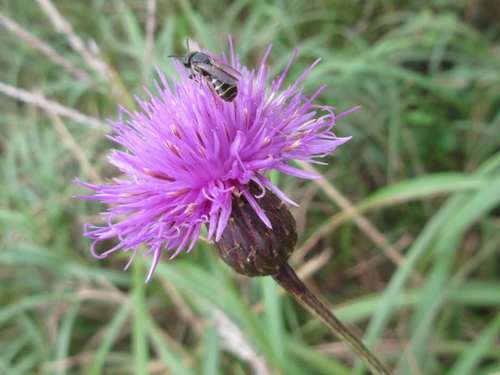
Cirsium setidens
taxon