Category
page 1Narrative techniques

fairy tale
fictional story typically featuring folkloric fantasy characters and magic

fable
thumb|200px|Anthropomorphism|Anthropomorphic cat guarding geese, Egypt,
Fable is a literary genre defined as a succinct fictional story, in prose or verse, that features animals, legendary creatures, plants, inanimate objects, or forces of nature that are anthropomorphised, and that illustrates or leads to a particular moral lesson, which may at the end be added explicitly as a concise maxim or saying.

allegory
thumb|Pearl, miniature from Pearl Manuscript|Cotton Nero A.x. The dreamer stands on the other side of the stream from the Pearl-maiden. Pearl is one of the greatest allegories from the [[High Middle Ages.]]
As a literary device or artistic form, an allegory is a narrative or visual representation in which a character, place, or event can be interpreted to represent a meaning with moral or political significance. Authors have used allegory throughout history in all forms of art to illustrate or convey complex ideas and concepts in ways that are comprehensible or striking to its viewers, readers

aphorism
An aphorism (from Greek ἀφορισμός: aphorismos, denoting 'delimitation', 'distinction', and 'definition') is a concise, terse, laconic, or memorable expression of a general truth or principle. Aphorisms are often handed down by tradition from generation to generation.

irony

metonymy
thumb|The Pentagon is the headquarters building of the [[United States Department of Defense and is a common metonym for the US military and its leadership]]
Metonymy () is a figure of speech in which a concept is referred to by the name of something associated with that thing or concept. For example, the word "suit" may refer to a person from groups commonly seen wearing business attire, such as business executives, bankers, or lawyers.

simile
thumb|The Madonna album Like a Virgin, in whose title track the narrative persona uses a simile, professing to be experiencing an erotic relationship "like a virgin".
A simile () is a type of figure of speech that directly compares two unrelated things, using wording to explicitly make the comparison (often, with a grammatical structure of the type "x is like y"). It is usually understood specifically to entail figurative comparison: thus "a wolf is like a dog" is merely a literal comparison, whereas the figurative "a man is like a wolf" is a simile. In the words of Michael Israel, Jennifer Ri
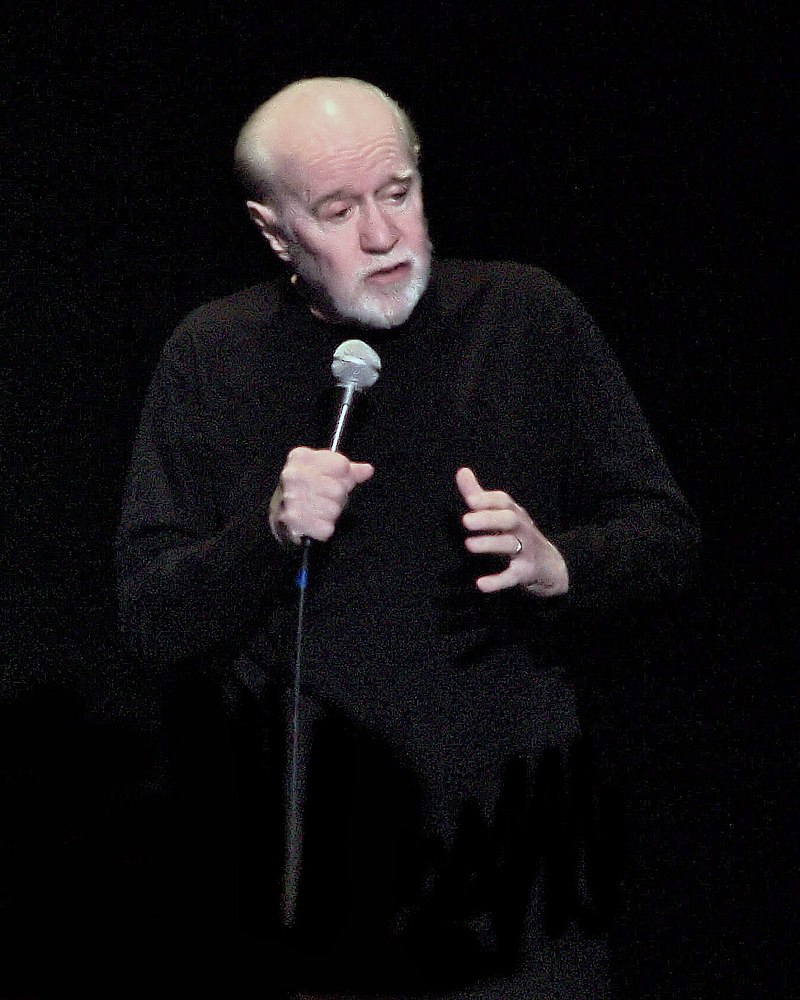
stand-up comedy
comedy style where the performer addresses the audience directly

parable
thumb|The Return of the Prodigal Son (Rembrandt)|The Return of the Prodigal Son, by [[Rembrandt, 1660s]]

plot
concept in narratology: presentation of a sequence of events in a narrative work

allusion
Allusion, or alluding, is a figure of speech that makes a reference to someone or something (a person, object, location, etc.) without mentioning it by name or without explaining how it relates to the given context, so that the audience must realize the connection in their own minds. When a connection is directly and explicitly explained (as opposed to indirectly implied), it is instead often simply termed a reference. In the arts, a literary allusion puts the alluded text in a new context under which it assumes new meanings and denotations. Literary allusion is closely related to parody and p

deus ex machina
plot device

homophone
thumb|400px|Venn diagram showing the relationships between homophones (blue circle) and related linguistic concepts
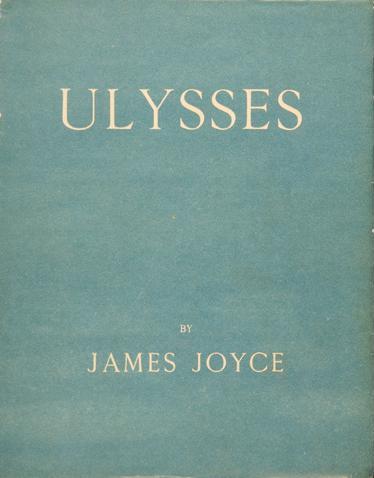
stream of consciousness
narrative device used in literature

flashback
interjected scene that takes a narrative back in time
red herring
false clue that misleads or distracts attention away from a relevant or important question

homunculus
A homunculus ( , , ; "little person", : homunculi , , ) is a small artificial human or human-like being. Popularized in 16th-century alchemy and 19th-century fiction, it has historically been referred to as the creation of a miniature, fully formed human or humanoid being. The concept has roots in preformationism as well as earlier folklore and alchemic traditions.
slice of life
depiction of everyday experience in art and entertainment
%20-%202.jpg)
suspense
thumb|A frame from the 1919 film Suspense
Suspense is a state of anxiety or excitement caused by mysteriousness, uncertainty, doubt, or undecidedness. In a narrative work, suspense is the audience's excited anticipation about the plot or conflict (which may be heightened by a violent moment, stressful scene, puzzle, mystery, etc.), particularly as it affects a character for whom the audience feels sympathy. However, suspense is not exclusive to narratives.
in medias res
narrative that opens mid-plot, or 'in the middle of things'
Chekhov's gun
dramatic principle that every element in a story must be necessary, and irrelevant elements should be removed
love triangle
romantic relationship involving three people

word play
thumb|Artist Tavar Zawacki painted a site-specific wordplay painting in Lima, Peru, commenting on the [[cocaine crisis and exportation.]]
pact with the devil
cultural motif
frame story
story in a nested narration that brackets one or more embedded stories

soliloquy
thumb|Juliet delivers a soliloquy on the balcony, unaware that [[Romeo is listening in act 2, scene 2 of Romeo and Juliet.|alt=painting of a girl in a long dress on a balcony, she is looking to the right]]
A soliloquy (, from Latin 'alone' and 'to speak', ) is a monologue in drama in which a character speaks their thoughts aloud, typically while alone on stage or onscreen. It is used to reveal the character's inner feelings, motivations, or plans directly to the audience, providing information that would not otherwise be accessible through dialogue with other characters. They are used as a nar
exposition
background information within a narrative; one of four rhetorical modes
found footage film
film genre

MacGuffin
In fiction, a MacGuffin (sometimes McGuffin) is an object, device, or event that is necessary to the plot and the motivation of the characters, but insignificant, unimportant, or irrelevant in itself. Thus, the use of a MacGuffin in a narrative is a plot device. The term was originated by Angus MacPhail for film, adopted by Alfred Hitchcock, and later extended to a similar device in other fiction.

Svayamvara
thumb|The Svayaṃvara ceremony of princess Damayantī, by [[Nandalal Bose]]
Svayaṃvara ( ) is a matrimonial tradition in ancient Indian society where a bride, usually from Kṣatriya (warrior) caste, selects her husband from a group of assembled suitors either by her own choice or a public contest between her suitors. This practice is mainly featured in the two major Sanskrit epics, the Mahābhārata and the Rāmāyaṇa, though its prevalence and portrayal vary significantly between them.
unreliable narrator
narrator whose credibility has been seriously compromised
digression
Digression ( [parékbasis] in Greek; , or in Latin) is a section of a composition or speech that marks a temporary shift of subject; the digression ends when the writer or speaker returns to the main topic. Digressions can be used intentionally as a stylistic or rhetorical device.
heteronym
imaginary character created by a writer to write in different styles
ab ovo
adverb meaning "from the beginning"
imagery
Imagery is the literary device of using vivid sensory language. Less commonly known as enargia, it is figurative language that evokes a mental image or other kinds of sense impressions in the reader or listener. Imagery in narrative literature can also be instrumental in conveying tone, mood, and other literary elements.
retroactive continuity
revision of existing facts in fiction by succeeding work
foreshadowing
Foreshadowing is a narrative device in which suggestions or
warnings about events to come are dropped or planted. Foreshadowing often appears at the beginning of a story, and it helps develop or subvert the audience's expectations about upcoming events.
analog horror
subgenre of horror fiction
flashforward
A flashforward (also spelled flash-forward, and more formally known as prolepsis) is a scene that temporarily takes the narrative forward in time from the current point of the story in literature, film, television and other media. Flashforwards are often used to represent events expected, projected, or imagined to occur in the future. They may also reveal significant parts of the story that have not yet occurred, but soon will in greater detail. It is similar to foreshadowing, in which future events are not shown but rather implicitly hinted at. It is also similar to an ellipsis, which takes t
E-Prime
E-Prime (short for English-Prime or English Prime, sometimes É or E′) denotes a restricted form of English in which authors avoid all forms of the verb to be.
%20Starbase%2011%20Star%20System%20in%20the%20American%20TV%20series%20Star%20Trek%20-%20The%20Old%20Series.png)
worldbuilding
Worldbuilding is the process of constructing an imaginary world or setting, sometimes associated with a fictional universe. Developing the world with coherent qualities such as a history, geography, culture and ecology is a key task for many science fiction or fantasy writers. Worldbuilding often involves the creation of geography, a backstory, flora, fauna, inhabitants, technology, and often if writing speculative fiction, different peoples. This may include social customs as well as invented languages (often called conlangs) for the world.
ab initio
Latin term meaning "from the beginning"
apologue
An apologue or apolog (from the Greek ἀπόλογος, a "statement" or "account") is a brief fable or allegorical story with pointed or exaggerated details, meant to serve as a pleasant vehicle for a moral doctrine or to convey a useful lesson without stating it explicitly. Unlike a fable, the moral is more important than the narrative details. As with the parable, the apologue is a tool of rhetorical argument used to convince or persuade.
backstory
In a narrative, a backstory or the background (information) is a set of events that establishes a character's past or that precedes and leads up to the main plot. In acting, it is the fictional history of a character before the main plot events that a performer creates during their preparation for the role.

quest
A quest is a journey toward a specific mission or a goal. It serves as a plot device in mythology and fiction: a difficult journey towards a goal, often symbolic or allegorical. Tales of quests figure prominently in the folklore of every nation and ethnic culture.
aside
An aside is a dramatic device in which a character speaks to the audience. By convention, the audience is to realize that the character's speech is unheard by the other characters on stage. It may be addressed to the audience expressly (in character or out) or represent an unspoken thought. An aside is usually a brief comment rather than a speech, such as a monologue or soliloquy.
free indirect speech
style of third-person narration which uses some of the characteristics of third-person along with the essence of first-person direct speech
redshirt
stock character; an expendable character who dies soon after being introduced
illeism
Illeism (; from Latin : "he; that man") is the act of referring to oneself in the third person instead of first person. It is sometimes used in literature as a stylistic device. In real-life usage, illeism can reflect a number of different stylistic intentions or involuntary circumstances.
cacography
Cacography is bad spelling or bad handwriting. The term in the sense of "poor spelling, accentuation, and punctuation" is a semantic antonym to orthography, and in the sense of "poor handwriting" it is an etymological antonym to the word calligraphy: cacography is from Greek κακός (kakos "bad") and γραφή (graphe "writing").
show, don't tell
narrative technique
historical present
linguistic device
narrative technique
method used to convey a fictional narrative
teaser
scene of a television episode or film that precedes the title sequence
running gag
literary device that takes the form of an amusing joke or a comical reference and appears repeatedly throughout a work of literature or other form of storytelling
plot device
anything which moves the plot forward or maintains it
imitation
doctrine of artistic creativity according to which the creative process should be based on the close imitation of the masterpieces of the preceding authors

euphuism
Euphuism is an elegant literary style that was briefly in fashion during the Elizabethan era. The euphuism style employed the frequent use of alliteration, antithesis, balance, and simile, with references to nature and mythological tales. Euphuism was fashionable in the 1580s, especially in the Elizabethan court. Its origins can be traced back to Spanish writer Antonio de Guevara, whose ornate, manierist courtesan prose became very popular throughout Europe, and whose work The Clock of the Princes, translated into English in 1557 by Thomas North, reached its peak in popularity during Elizabeth
chreia
The chreia or chria () was, in antiquity and the Byzantine Empire, both a genre of literature and one of the progymnasmata.
metalepsis
Metalepsis (from , ) is a figure of speech in which a word or a phrase from figurative speech is used in a new context. Ancient Roman academic Quintilian described metalepsis as an "intermediate step" to the original phrase, and its meaning depends upon its connection to the idiom from which it derives. Harold Bloom called metalepsis a "metonymy of a metonymy" because it uses part of an established trope to refer to the whole.