Category
page 1Narratology

legend
thumb|In this Lady Godiva (painting)|1897 painting of [[Lady Godiva by John Collier, the authentic historical person is fully submerged in the legend, presented in an anachronistic high medieval setting.]]
.jpg)
rhetoric
thumb|right|upright=1.25|Painting depicting a lecture in a knight academy, painted by [[Pieter Isaacsz or Reinhold Timm for Rosenborg Castle as part of a series of seven paintings depicting the seven independent arts. This painting illustrates rhetoric.]]
thumb|upright|Jesus was a preacher in 1st-century Judea.

narrative
thumb|Books about narrative on a library shelf

genre
Genre ( ; ) is any style or form of communication in any mode (written, spoken, digital, artistic, etc.) with socially agreed-upon conventions developed over time. In popular usage, it normally describes a category of literature, music, or other forms of art or entertainment, based on some set of stylistic or thematic criteria, as in literary genres, film genres, music genres, comics genres, etc. Often, works fit into multiple genres by way of borrowing and recombining these conventions. Stand-alone texts, works, or pieces of communication may have individual styles, but genres are amalgams of

monologue
thumb|Actor Christopher Walken performing a monologue in the 1984 stage play [[Hurlyburly]]
In theatre, a monologue (also spelled monolog in American English) (in , from μόνος mónos, "alone, solitary" and λόγος lógos, "speech") is a speech presented by a single character, most often to express their thoughts aloud, though sometimes also to directly address another character or the audience. Monologues are common across the range of dramatic media (plays, films, etc.), as well as in non-dramatic media such as poetry, and stand-up comedy. Monologues share much in common with several other litera
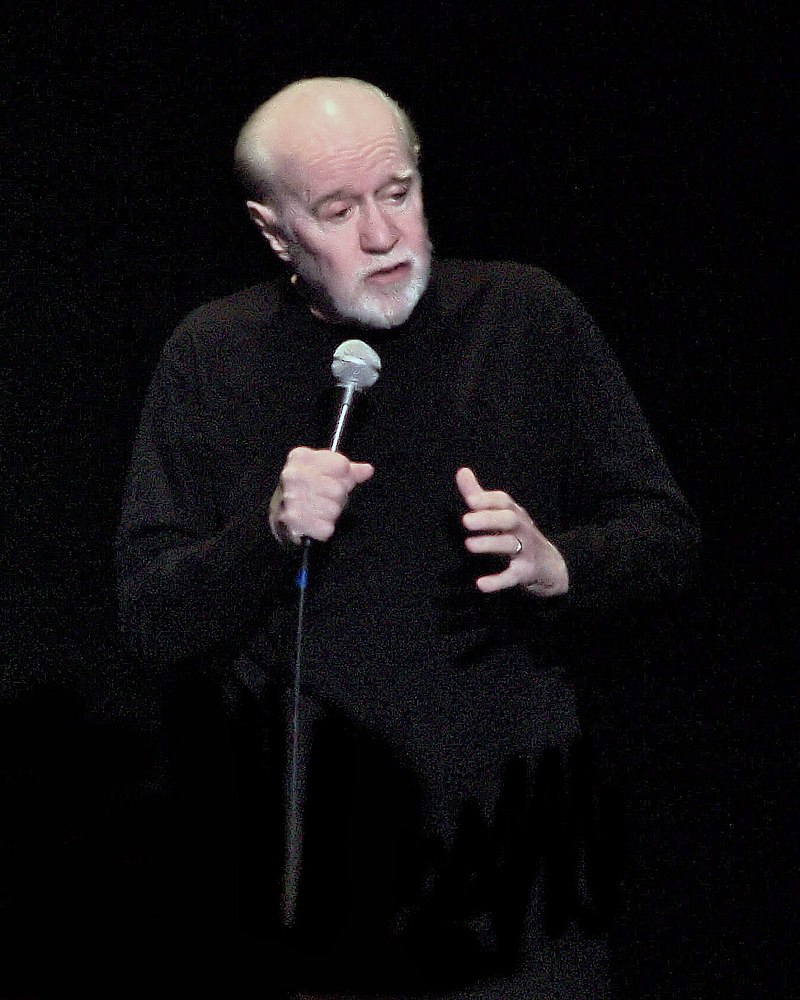
stand-up comedy
comedy style where the performer addresses the audience directly

article
text that forms an independent part of a publication
catharsis
Catharsis or katharsis is from the Ancient Greek word , , meaning 'purification' or 'cleansing', commonly used to refer to the purification and purgation of thoughts and emotions by way of expressing them. The desired result is an emotional state of renewal and restoration.

Poetics
book by Aristotle

spin-off
narrative work derived from existing works

epistolary novel
novel written as a series of letters

deus ex machina
plot device
.jpg)
narratology
thumb|Vladimir Propp in 1928. Literary historian, university professor, linguist, writer, and Soviet philologist. Precursor of narratology.|249x249px
Narratology is the study of narrative and narrative structure and the ways that these affect human perception. The term is an anglicisation of French narratologie, coined by Tzvetan Todorov (Grammaire du Décaméron, 1969). Its theoretical lineage is traceable to Aristotle (Poetics) but modern narratology is agreed to have begun with the Russian formalists, particularly Vladimir Propp (Morphology of the Folktale, 1928), and Mikhail Bakhtin's theori

mimesis
Mimesis (; , mīmēsis) is a term used in literary criticism and philosophy that carries a wide range of meanings, including imitatio, imitation, similarity, receptivity, representation, mimicry, the act of expression, the act of resembling, and the presentation of the self.
archetype
The concept of an archetype ( ) appears in areas relating to behavior, historical psychology, philosophy and literary analysis.
metafiction
Metafiction is a form of fiction that emphasizes its own narrative structure in a way that inherently reminds the audience that they are reading or viewing a fictional work. Metafiction is self-conscious about language, literary form, and storytelling, and works of metafiction directly or indirectly draw attention to their status as artifacts. Metafiction is frequently used as a form of parody or a tool to undermine literary conventions and explore the relationship between literature and reality, life and art.

deixis
In linguistics, deixis () is the use of words or phrases to refer to a particular time (e.g. then), place (e.g. here), or person (e.g. you) relative to the context of the utterance. Deixis exists in all known natural languages and is closely related to anaphora, with a sometimes unclear distinction between the two. In linguistic anthropology, deixis is seen as the same as, or a subclass of, indexicality.
in medias res
narrative that opens mid-plot, or 'in the middle of things'
syntagma
elementary constituent segment within a text
narration
Narration is the use of a written or spoken commentary to convey a story to an audience. Narration is conveyed by a narrator: a specific person, or unspecified literary voice, developed by the creator of the story to deliver information to the audience, particularly about the plot: the series of events. Narration is a required element of all written stories (novels, short stories, poems, memoirs, etc.), presenting the story in its entirety. It is optional in most other storytelling formats, such as films, plays, television shows and video games, in which the story can be conveyed through other
psychological thriller
specific sub-genre of the broad-ranged thriller

Gérard Genette
French literary theorist (1930–2018)

ethos
thumb|A sculpture representing Ethos outside the Australian Capital Territory Legislative Assembly in Canberra, Australia
Ethos is a Greek word meaning "character" that is used to describe the guiding beliefs or ideals that characterize a community, nation, or ideology; and the balance between caution and passion. The Greeks also used this word to refer to the power of music to influence emotions, behaviors, and even morals. Early Greek stories of Orpheus exhibit this idea in a compelling way. The word's use in rhetoric is closely based on the Greek terminology used by Aristotle in his concept
fiction literature
literature which is derived at least partly from imagination and not presented as a factual account
setting
time and place within a narrative, whether fiction or non-fiction
narrative poetry
type of poetry which tells a story
first-person narrative
mode where a story is narrated by one character at a time, speaking for and about themselves
stock character
literary or social stereotype used to create characters or determine their role in a story
characterization
Characterization or characterisation is the representation of characters (persons, creatures, or other beings) in narrative and dramatic works. The term character development is sometimes used as a synonym. This representation may include direct methods like the attribution of qualities in description or commentary, and indirect (or "dramatic") methods inviting readers to infer qualities from characters' actions, dialogue, or appearance. Such a personage is called a character. Character is a literary element.
action fiction
genre of fiction
TV Tropes
online wiki listing and analyzing conventions (tropes) found in fictional works

diegesis
Diegesis (; , ) is a style of fiction storytelling in which a participating narrator offers an on-site, often interior, view of the scene to the reader, viewer, or listener by subjectively describing the actions and, in some cases, thoughts, of one or more characters. Diegetic events are those experienced by both the characters within a piece and the audience, while non-diegetic elements of a story make up the "fourth wall" separating the characters from the audience. Diegesis in music describes a character's ability to hear the music presented for the audience, in the context of musical theat

anagnorisis
Anagnorisis (; ) is a moment in a play or other work when a character makes a critical discovery. Anagnorisis originally meant recognition in its Greek context, not only of a person but also of what that person stood for. Anagnorisis was the hero's sudden awareness of a real situation, the realization of things as they stood, and finally, the hero's insight into a relationship with an often antagonistic character in Aristotelian tragedy.
peripeteia
Peripeteia (, peripety, alternative Latin form: Peripetīa, ultimately from ) is a reversal of circumstances, or turning point, within a work of literature.
paratext
In literary interpretation, paratext is material that surrounds a published main text (e.g., the story, non-fiction description, poems, etc.) supplied by the authors, editors, printers, and publishers. These added elements form a frame for the main text, and can change the reception of a text or its interpretation by the public. In Gérard Genette's terminology, paratext is a subtype of transtextuality (See the overview on the French Wikipedia page paratexte).
moral
A moral (from Latin morālis) is a message that is conveyed or a lesson to be learned from a story or event. The moral may be left to the hearer, reader, or viewer to determine for themselves, or may be explicitly encapsulated in a maxim. A moral is a lesson in a story or real life.
artistic license
deliberate distortion of rules or convention for aesthetic reasons
Mary Sue
stock character; youthful but one-dimensional character with overly idealized and hackneyed mannerisms, often considered a stand-in for the author

hamartia
thumb|The title page of Poetics (Aristotle)|Aristotle's Poetics
Iceberg Theory
writing style of American writer Ernest Hemingway
continuity
in a narrative, the consistency of characteristics of people, plot, objects, and places seen by the reader or viewer over time
shared universe
fictional universe in which works written by one or multiple writers are set
pitch
brief presentation of an idea for film or television series
nonlinear narrative
narrative technique
Exercises in Style
1947 novel by Raymond Queneau
show, don't tell
narrative technique
representation
art technique of the use of signs that stand in for and take the place of something else
conflict
literary element; challenge that the main characters must face to achieve their goals
literary forgery
literary work which is either deliberately misattributed to a historical or invented author
three-act structure
dramatic structure
poetic justice
narrative technique
title character
character who is named or referred to in the title, performance part that gives the title to the piece
motive
reason for performing a criminal act
description
Description is any type of communication that aims to make vivid a place, object, person, group, or other physical entity. It is one of four rhetorical modes (also known as modes of discourse), along with exposition, argumentation, and narration.
polyphony
simultaneity of points of view and voices within a particular narrative plane
scene
division of a film

The Thirty-Six Dramatic Situations
essay by Georges Polti
narrative technique
method used to convey a fictional narrative
shooting script
version of a screenplay used during the production of a motion picture
hysteron proteron
figure of speech reversing a natural or rational order