Category
page 1National revivals
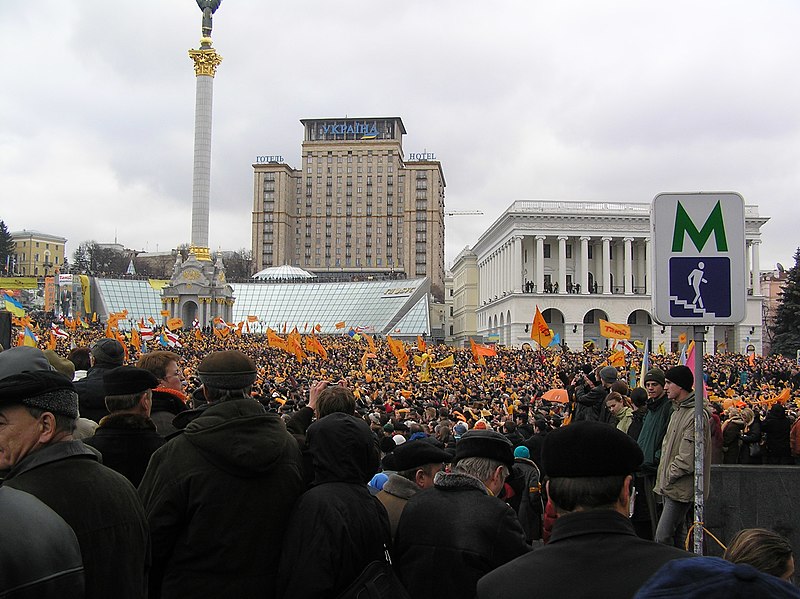
Orange Revolution
series of protests and political events that took place in Ukraine from late November 2004 to January 2005
Khmelnytsky Uprising
Cossack rebellion within the Polish-Lithuanian Commonwealth in 1648–1657
Ukrainian War of Independence
eastern European military conflict (1917–1921)
Estonian national awakening
overview of Estonian national awakening in 19th century
.jpg)
Sarmatism
thumb|right|200px|Stanisław Antoni Szczuka in Sarmatian attire, wearing a [[kontusz]]
thumb|"Treatise about two [[Sarmatia Asian and European and about their composition" by Maciej Miechowita (1517)]]
thumb|200px|Sarmatian-style Karacena armor
Sarmatism (or Sarmatianism; ; ) was an ethno-cultural identity within the Polish–Lithuanian Commonwealth. It was the dominant Baroque culture and ideology of the nobility () that existed in the time from the Renaissance to the early 18th century. Together with the concept of "Golden Liberty", it formed a central aspect of the Commonwealth social elites’
Unification Act
1919 agreement of the two Ukrainian People's Republics
Bengali Renaissance
socio-cultural and religious reform movement in Bengal, in the 19th and early 20th centuries
Czech National Revival
Czech cultural movement during 18th and 19th centuries aiming to revive the Czech language, culture and national identity
national revival
period of ethnic awakening in history of various nations
The First Latvian National Awakening
cultural and national revival movement between 1850 and 1880
Indonesian National Awakening
historical nationalist movement and time period

Rexurdimento
The '''''' (Galician for 'resurgence') was a period in the History of Galicia during the 19th century. Its central feature was the revitalization of the Galician language as a vehicle of social and cultural expression after the so-called séculos escuros ("dark centuries") in which the dominance of Castilian Spanish was nearly complete. The Galician Rexurdimento coincides with the Catalan Renaixença.

Ukrainophilia
thumbnail|The flag of Ukraine, which has appeared in variations of this modern design since the 19th century.

Bulgarism
thumb|right|200px|A 2007 monument to emir Ibrahim ibn Muhammad, a ruler of [[Volga Bulgaria, founder of Elabuga]]
Bulgarism is an ideology aimed at the "revival of Bulgars' national identity" and Volga Bulgaria statehood. It originated in the second half of 19th century within the Wäisi movement and the Society for the study of the native land (Chuvashia). It was revived at the end of the 20th century as "neobulgarism" in Tatarstan, Bashkortoston and Chuvashia.
Circassian nationalism

Rise of nationalism under the Ottoman Empire
overview of the rise of nationalism in the Ottoman Empire
unification of the Georgian realm
creation of the politically and administratively integrated Kingdom of Georgia
Serbian Revival