Category
page 1Naturalism (philosophy)

Epicureanism
thumb|Roman Epicurus bust
Epicureanism, less commonly Epicurism, is a school of philosophy founded in 307 BCE and based upon the teachings of Epicurus, an ancient Greek philosopher. Epicurus was an atomist and materialist, following in the steps of Democritus. His materialism led him to religious scepticism and a general attack on superstition and divine intervention. Epicureanism was originally a challenge to Platonism, and its main opponent later became Stoicism. It is a form of hedonism insofar as it declares pleasure to be its sole intrinsic goal. However, the concept that the absence of p

naturalism
belief that only natural laws, entities and forces operate in the universe
scientism
Scientism is the belief that science and the scientific method are the best or only way to render truth about the world and reality.
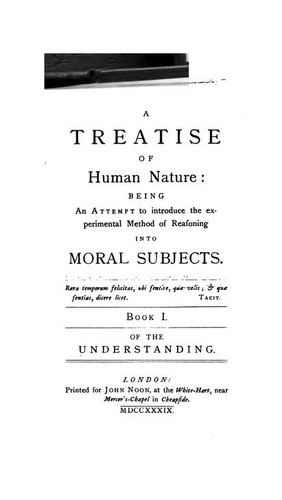
A Treatise of Human Nature
work by David Hume
metaphysical naturalism
philosophical worldview rejecting 'supernatural or supernaturalism' and holds that there is nothing but natural elements, principles, and relations of the kind studied by the natural sciences
ethical naturalism
metaethical position
eternal oblivion
consciousness permanently ceases upon death
naturalistic observation
observation of a subject in its natural habitat without any manipulation by the observer

Newtonianism
thumb|Title page of Isaac Newton's Opticks
mechanism
belief that natural wholes are composed of parts lacking any intrinsic relationship to each other
Naturalistic pantheism
attempt at seeing pantheism with science
cognitive closure
the proposition that human minds are constitutionally incapable of solving certain perennial philosophical problems
evolutionary argument against naturalism
philosophical argument asserting a problem with believing both evolution and philosophical naturalism simultaneously
biological naturalism
an approach to the mind–body problem proposed by John Searle, that mental phenomena are higher-level features of the brain caused by neurobiological processes
naturalized epistemology
collection of philosophic views concerned with the theory of knowledge that emphasize the role of natural scientific methods
sociological naturalism
theory in sociology
philosophical theism
belief that a deity exists (or must exist) independent of the teaching or revelation of any particular religion
ethical non-naturalism
meta-ethical view