Category
page 1Navigation

geographic coordinate system
system to specify locations on Earth

North Pole
The North Pole, also known as the Geographic North Pole or Terrestrial North Pole, is the point in the Northern Hemisphere where the Earth's axis of rotation meets its surface. It is called the True North Pole to distinguish from the Magnetic North Pole.

latitude
thumb|Earth model with circles of latitude in black and indications of the North Pole, [[Equator, and the northern and southern hemispheres.]]
thumb|upright=0.9|right|Earth's Graticule (cartography)|graticule. The vertical lines from pole to pole are lines of constant [[longitude, or meridians. The circles parallel to the equator are lines of constant latitude, or parallels. The graticule shows the latitude and longitude of points on the surface. In this example meridians are spaced at 6° intervals and parallels at 4° intervals.]]

longitude
thumb|Earth with blue longitude lines and corresponding degrees.
thumb|upright=0.9|A Geographic coordinate system|graticule on the [[Earth as a sphere or an ellipsoid. The lines from pole to pole are lines of constant longitude, or meridians. The circles parallel to the Equator are circles of constant latitude, or parallels. The graticule shows the latitude and longitude of points on the surface. In this example, meridians are spaced at 6° intervals and parallels at 4° intervals.]]

tide
300px|thumb|upright=1|Simplified schematic of only the lunar portion of Earth's tides, showing (exaggerated) high tides at the sublunar point and its antipodal point|antipode for the hypothetical case of an ocean of constant depth without land, and on the assumption that Earth is not rotating; otherwise there is a lag angle. Solar tides not shown.|alt=
right|thumb|Earth's rotation drags the position of the tidal bulge ahead of the position directly under the Moon showing the lag angle.
thumb|In Maine (U.S.), low tide occurs roughly at moonrise and high tide with a high Moon, corresponding to t

geodesy
thumb|upright=1.05|A modern instrument for geodetic measurements using satellites

navigation
thumb|A navigation system on an oil tanker
Navigation is a field of study that focuses on the process of monitoring and controlling the movement of a craft or vehicle from one place to another. The field of navigation includes four general categories: land navigation, marine navigation, aeronautic navigation, and space navigation. It is also the term of art used for the specialized knowledge used by navigators to perform navigation tasks. All navigational techniques involve locating the navigator's position compared to known locations or patterns. Navigation, in a broader sense, can refer to a

azimuth
right|thumb|The azimuth is the angle formed between a reference direction (in this example north) and a sightline|line from the observer to a point of interest projected on the same plane as the reference direction orthogonal to the [[zenith.]]
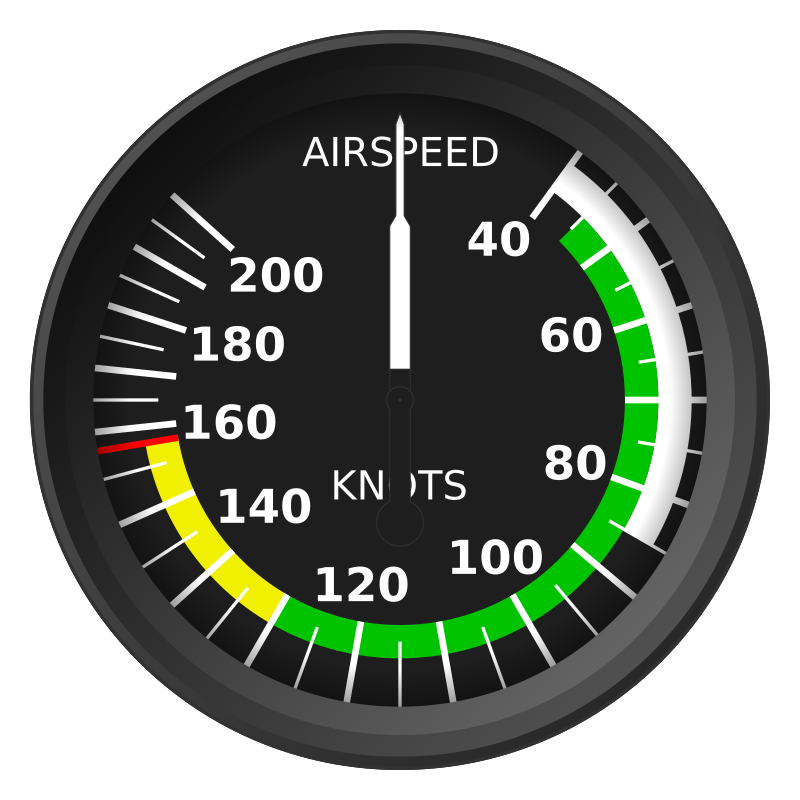
knot
unit of speed

astronomical coordinate system
spherical coordinate system

orienteering
thumb|Official IOF orienteering pictogram
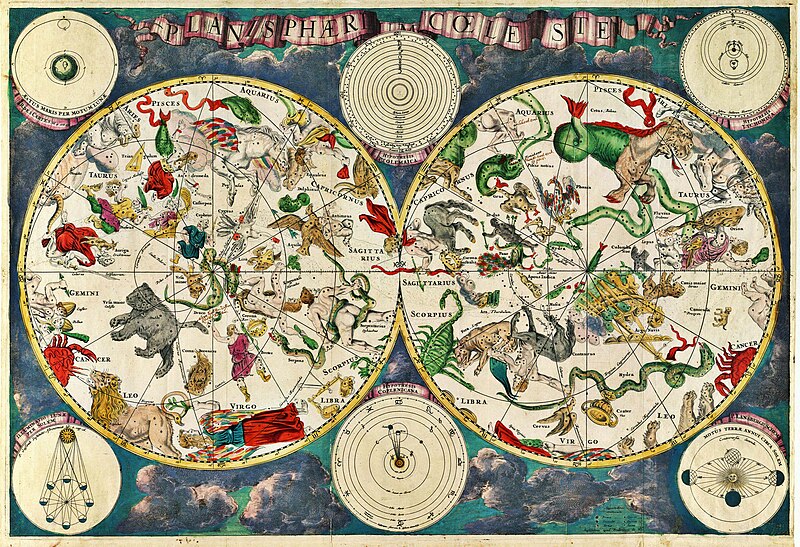
star chart
map of the night sky

maritime pilot
mariner who manoeuvres ships through dangerous or congested waters

pole star
visible star that is approximately aligned with the Earth's axis of rotation

Northeast Passage
shipping lane from the Kara Sea to the Pacific Ocean

compass rose
figure on a compass, map, nautical chart, or monument used to display the orientation of the cardinal directions

draft
vertical distance between the waterline and the bottom of the hull (keel)
rhumb line
arc crossing all meridians of longitude at the same angle

circumnavigation
400px|thumb|The Magellan-Elcano expedition was the first circumnavigation of the Earth.
Circumnavigation is the complete navigation around an entire island, continent, or astronomical body (e.g. a planet or moon). This article focuses on the circumnavigation of Earth.
bearing
in navigation, horizontal angle between the direction of an object and another object
radio beacon
radio transmitter to identify a location for navigation aid
logbook
blankbook in which the daily activities of an expedition, voyage, mission, or other undertaking are noted chronologically as a matter of record
dead reckoning
means of calculating position
radio navigation
navigation using radio signals
wind rose
graphic tool used by meteorologists to give a succinct view of how wind speed and direction are typically distributed at a particular location
Age of Sail
era dominated by sailing vessels out at sea

seamanship
thumb|right|An example of a seamanship training establishment at the Glasgow College of Nautical Studies in the United Kingdom
True north
direction on Earth's surface
magnetic deviation
error of a magnetic compass caused by local magnetic fields
radar altimeter
device which measures altitude above the terrain presently beneath an aircraft or spacecraft
point of interest
specific location that someone may find useful or interesting
World Geodetic System
geodetic reference system

rogaining
thumb|right|150px|The standard international orienteering symbol is used to designate a checkpoint on rogaining courses.

capsizing
thumb|upright=1.3|RMS Queen Elizabeth|Seawise University capsized after being gutted by fire in 1972
marine navigation
monitoring and directing the movement of watercraft
45×90 points
four points on Earth which are halfway between the geographical poles, the equator, the Prime Meridian, and the 180th meridian
sea lane
route through a large body of water
gnomonic projection
map projection
light characteristic
description of navigational light
animal navigation
ability of many animals to find their way accurately without maps or instruments
Northern Sea Route
shipping route running along the Russian Arctic coast

waypoint
thumb|A walking route with a number of waypoints marked
A waypoint is a point or place on a route or line of travel, a stopping point, an intermediate point, or point at which course is changed, the first use of the term tracing to 1880. In modern terms, it most often refers to coordinates which specify one's position on the globe at the end of each "leg" (stage) of a journey.
fairway
area of sea where ships can navigate safely
International Ice Patrol
Organization monitoring icebergs in the Atlantic and Arctic

OpenSeaMap
OpenSeaMap is a software project collecting freely usable nautical information and geospatial data to create a worldwide nautical chart. This chart is available on the OpenSeaMap website, and can also be downloaded for use as an electronic chart for offline applications.
SOFAR channel
horizontal layer of water in the ocean at which depth the speed of sound is at its minimum
apparent wind
wind experienced by a moving object
RINEX
In the field of geodesy, Receiver Independent Exchange Format (RINEX) is a data interchange format for raw satellite navigation system data. This allows the user to post-process the received data to produce a more accurate result — usually with other data unknown to the original receiver, such as better models of the atmospheric conditions at time of measurement.
Songline
A songline, also called dreaming track, is one of the paths across the land (or sometimes the sky) within the animist belief systems of the Aboriginal cultures of Australia which mark the route followed by localised "creator-beings" in the Dreaming. The paths of the songlines are recorded in traditional song cycles, stories, dance, and art, and are often the basis of ceremonies.
notice to mariners
periodical literature for seamen
depth sounding
method of measuring the depth of a body of water

Munzee
Munzee is a freemium scavenger hunt game where QR codes have to be found at different places in the real world. The game is similar to geocaching but uses QR code technology, in addition to device GPS location, to prove the find instead of a logbook. Launched in McKinney, Texas in 2011, the game caught on first in Germany, along with California and Michigan. It is now played in more than 188 countries around the world, and there is at least one physical Munzee deployed on every continent, including Antarctica.

maritime pilotage
Piloting or pilotage is the process of navigating on water or in the air using fixed points of reference on the sea or on land, usually with reference to a nautical chart or aeronautical chart to obtain a fix of the position of the vessel or aircraft with respect to a desired course or location. Horizontal fixes of position from known reference points may be obtained by sight or by radar. Vertical position may be obtained by depth sounder to determine depth of the water body below a vessel or by altimeter to determine an aircraft's altitude, from which its distance above the ground can be dedu
as the crow flies
idiom meaning the shortest distance between two points
Chief Directorate of the Northern Sea Route
Soviet government organization

Clipper route
sailing route around the world
projected coordinate system
locations on maps using Cartesian coordinates
Tango
mobile computer vision platform for Android developed by Google
traffic separation scheme
maritime traffic-management route-system
GPS signals
GPS