Category
page 1Near-Earth-sized exoplanets
Gliese 581 e
extrasolar planet

TRAPPIST-1e
TRAPPIST-1e is a rocky, close-to-Earth-sized exoplanet orbiting within the habitable zone around the ultracool dwarf star TRAPPIST-1, located away from Earth in the constellation of Aquarius. Astronomers used the transit method to find the exoplanet, a method that measures the dimming of a star when a planet crosses in front of it.
%20(weic2309a).jpg)
TRAPPIST-1 b
TRAPPIST-1b is a terrestrial, Earth-sized exoplanet orbiting around the ultra-cool dwarf star TRAPPIST-1, located away from Earth in the constellation of Aquarius. The planet was detected using the transit method, where a planet dims the host star's light as it passes in front of it. It was first announced on May 2, 2016, and later studies were able to refine its physical parameters.
Ross 128 b
exoplanet

TRAPPIST-1 f
TRAPPIST-1f is an exoplanet, likely rocky, orbiting within the habitable zone around the ultracool dwarf star TRAPPIST-1, located away from Earth in the constellation of Aquarius. The exoplanet was found by using the transit method, in which the dimming effect that a planet causes as it crosses in front of its star is measured.
HD 85512 b
extrasolar planet

TRAPPIST-1 g
TRAPPIST-1g is an exoplanet orbiting around the ultra-cool dwarf star TRAPPIST-1, located away from Earth in the constellation Aquarius. It was one of four new exoplanets to be discovered orbiting the star in 2017 using observations from the Spitzer Space Telescope. The exoplanet is within the optimistic habitable zone of its host star. It was found by using the transit method, in which the dimming effect that a planet causes as it crosses in front of its star is measured.

TRAPPIST-1 c
TRAPPIST-1c is a mainly rocky exoplanet orbiting around the ultracool dwarf star TRAPPIST-1, located away from Earth in the constellation Aquarius. It is the third most massive and third largest planet of the system, with about 131% the mass and 110% the radius of Earth. Its density indicates a primarily rocky composition, and observations by the James Webb Space Telescope announced in 2023 suggests against a thick CO2 atmosphere, however this does not exclude a thick abiotic oxygen-dominated atmosphere as is hypothesized to be common around red dwarf stars.
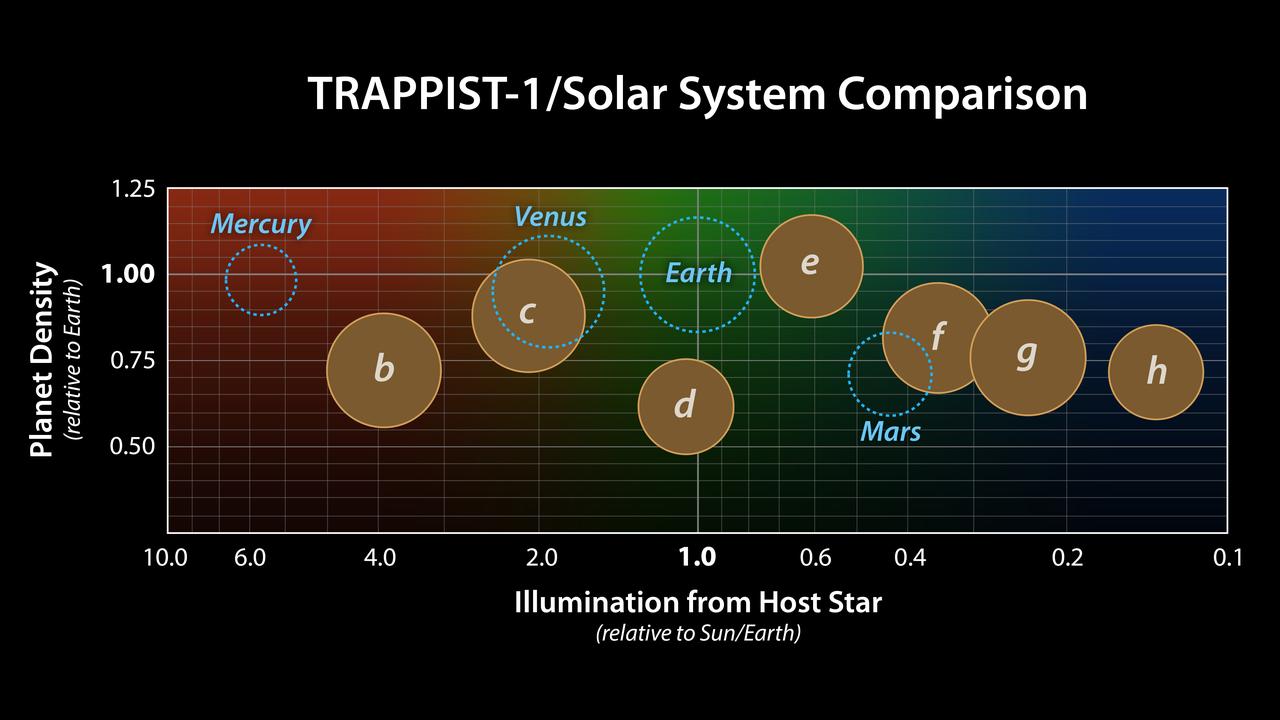
TRAPPIST-1 h
TRAPPIST-1h is an exoplanet orbiting around the ultra-cool dwarf star TRAPPIST-1, located away from Earth in the constellation Aquarius. It was one of four new exoplanets to be discovered orbiting the star in 2017 using observations from the Spitzer Space Telescope. In the following years, more studies were able to refine its physical parameters.

Kepler-78 b
Kepler-78b (formerly known as KIC 8435766 b) is an exoplanet orbiting around the star Kepler-78. At the time of its discovery, it was the exoplanet most similar to Earth in terms of mass, radius, and mean density.
HD 219134 b
extrasolar planet
LHS 475 b
Extrasolar planet
Wolf 1061b
exoplanet