Category
page 1Neo-Sovietism
Transnistria
Transnistria, officially known as the Pridnestrovian Moldavian Republic (PMR) and locally as Pridnestrovie, is a landlocked breakaway state internationally recognised as part of Moldova. It controls most of the narrow strip of land between the Dniester river and the Moldova–Ukraine border, as well as some land on the other side of the river's bank. Its capital and largest city is Tiraspol. Transnistria is officially designated by the Republic of Moldova as the Administrative-Territorial Units of the Left Bank of the Dniester () or as ("Left (Bank) of the Dniester").

Alexander Dugin
Russian political activist and philosopher (born 1962)

Communist Party of the Russian Federation
Marxist–Leninist political party in Russia
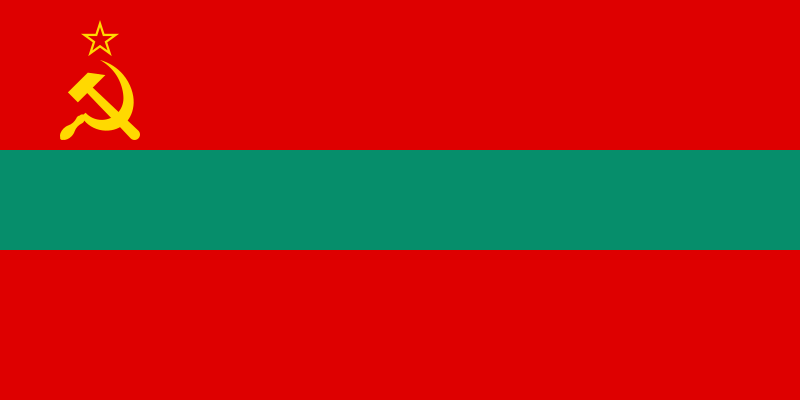
flag of Transnistria
National Flag

Brezhnev Doctrine
Soviet foreign policy

Eurasianism
Eurasianism ( ) is a socio-political movement in Russia that emerged in the early 20th century under the Russian Empire, which states that Russia does not belong in the "European" or "Asian" categories but instead to the geopolitical concept of Eurasia and the "Russian world", forming an ostensibly standalone Russian civilization. The ideology is geopolitical, similar to Atlanticism and Gulfism.
coat of arms of Transnistria
national coat of arms of Transnistria
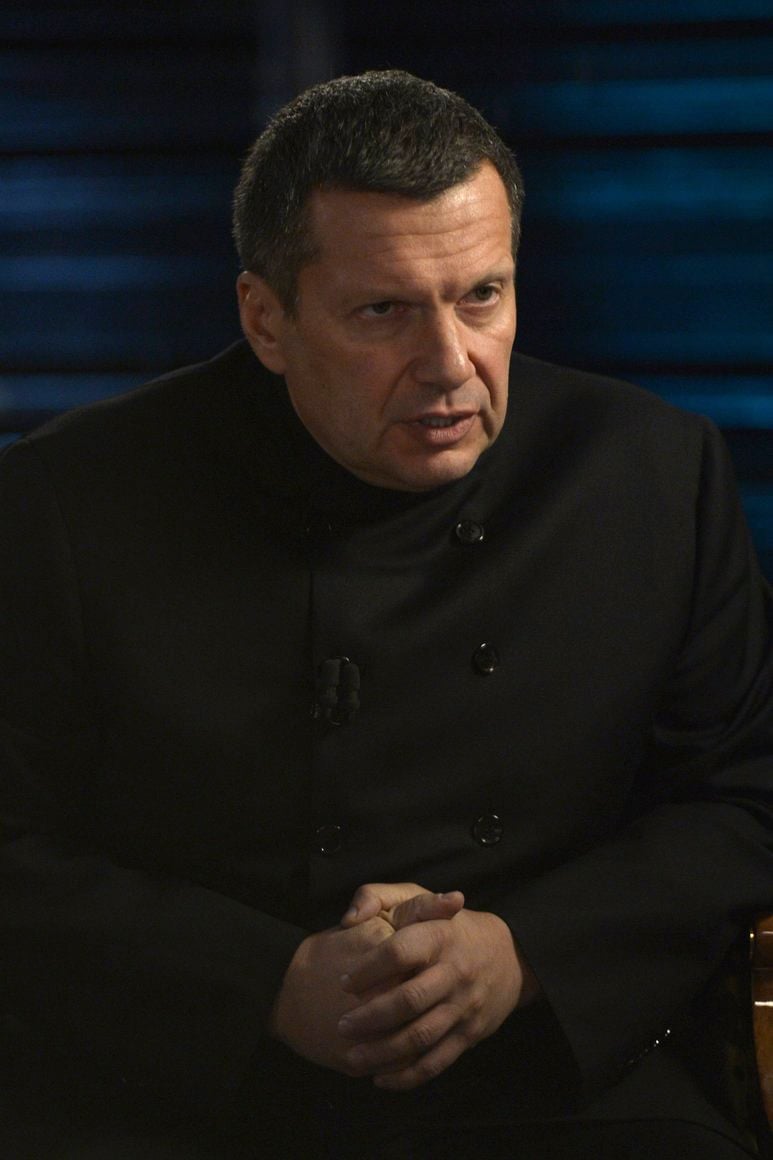
Vladimir Solovyov
Russian television presenter
National Bolshevik Party
political party in Russia
Soviet empire
informal political term used to describe the actions and power of the Soviet Union before 1991
Dmitry Kiselyov
Russian television presenter

Sovietization
thumb|300px|Latvian National Theatre decorated with Soviet symbols ([[hammer and sickle, red star, red flags and a double portrait of Vladimir Lenin and Joseph Stalin) after the Soviet occupation in 1940. The text on top reads "Long live the USSR!"]]
Sovietization ( ) is the adoption of a political system based on the model of soviets (workers' councils) or the adoption of a way of life, mentality, and culture modeled after the Soviet Union.
nostalgia for the Soviet Union
retrospective fondness for USSR
1995 Belarusian referendum
referendum in Belarus
Russian-occupied territories
territories occupied by Russia

Sergey Kurginyan
Russian scientist
2022 Moscow rally
political rally
2023 Moscow Victory Day Parade
military parade
2025 Moscow Victory Day Parade
military parade in Moscow, Russia
2024 Moscow Victory Day Parade
military parade in Moscow, Russia

Neo-Sovietism
thumb|Belarusian Honor Guard carrying the national flags of Belarus and the Soviet Union, as well as the Soviet victory banner, in Minsk, 2019.
National Salvation Front
Defunct political coalition in Russia
Communist Party of the Soviet Union
Political party founded in 2001
2022 Moscow Victory Day Parade
victory parade
Soviet imagery during the Russo-Ukrainian War
Essence of Time
Russian left patriotic movement
Vladimir Putin presidential campaign, 2000
2000 Russia presidential campaign of Vladimir Putin
pobedobesie
thumb|right|300px|2021 Moscow Victory Day Parade. [[Military parades and Soviet military symbolism play an important role in the Victory Day celebrations across Russia.]]
Pobedobesie () is a pejorative term used to describe the perceivably jingoistic celebrations of Victory Day in Russia. This has been also dubbed the Victory Cult.
International Movement of Donbass
political movement in the Soviet Union and Ukraine