Category
page 1Neocolonialism
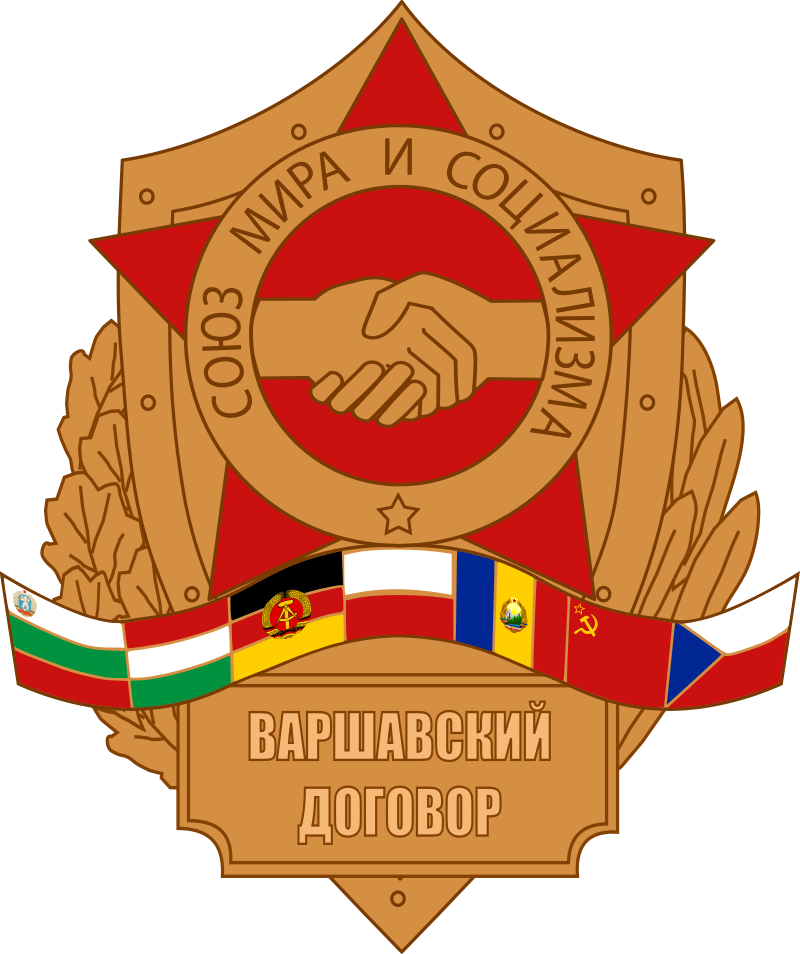
Warsaw Pact
European Eastern Military Alliance (1954 – 1991)

banana republic
political science term for a politically unstable country

neocolonialism
Neocolonialism is the control by a state (usually, a former colonial power) over another nominally independent state (usually, a former colony) through indirect means. The term neocolonialism was first used after World War II to refer to the continuing dependence of former colonies on foreign countries, but its meaning soon broadened to apply, more generally, to places where the power of developed countries was used to produce a colonial-like control. Some scholars have argued that neocolonialism operates through global economic governance, including international financial institutions and tr
satellite state

postcolonialism
Postcolonialism is the academic study of the cultural, political and economic consequences of colonialism and imperialism, focusing on the impact of human control and exploitation of colonized people and their lands. The field started to emerge in the 1960s, as scholars from previously colonized countries began publishing on the lingering effects of colonialism, developing an analysis of the history, culture, literature, and discourse of imperial power. It is part of the critical theory framework in broader sense, and more narrowly, critical race theory.
Washington Consensus
broad set of economic policies commonly prescribed by institutions based in Washington D.C. such as the International Monetary Fund (IMF) and World Bank
Soviet empire
informal political term used to describe the actions and power of the Soviet Union before 1991
nine-dash line
map delineating Chinese territorial claims to South China Sea waters

Françafrique
thumb|right|400px|Map showing French colonies, protectorates and mandates (in blue) in Africa in 1945; namely French Equatorial Africa, [[French North Africa, French Somaliland and French West Africa. Along with former Belgian colonies (shown in light blue), these areas today make up the bulk of francophone Africa.
]]
Russian imperialism
imperialism
Subaltern
colonial populations who are socially, politically, and geographically excluded from the hierarchy of power of an imperial colony and from the metropolitan homeland of an empire
land grabbing
large-scale acquisition of farmland (over 1,000 ha) whether by purchase, leases or other means.

cocacolonization
thumb|Coca-Cola advertising in the High Atlas mountains of Morocco
Chinese imperialism
expansion of China's political, economic, military, and cultural influence
Russian involvement in regime change
list of regime changes orchestrated by Russia
Anglo-Persian Agreement
1919 agreement between the United Kingdom and Persia
Tjalie Robinson
Dutch writer (1911–1974)
Lumpenbourgeoisie
Lumpenbourgeoisie is a term used in colonial sociology to describe members of the middle class and upper class (merchants, lawyers, industrialists, etc.) who have little collective self-awareness or economic base and who support the colonial masters. It is often attributed to Andre Gunder Frank in 1972, although the term is already present in several texts by Lukács (1943), Koestler (1945), C. Wright Mills (1951) and also in Paul Baran's The Political Economy of Growth (1957). Nonetheless, the term was popularized by Frank's book Lumpenbourgeoisie and Lumpendevelopment: Dependency, Class and P
New Right in South Korea
Political party in South Korea

semi-colony
In Marxist theory, a semi-colony is a country which is officially recognized as a politically independent state and as a sovereign nation, but which is in reality dependent on and/or dominated by another (imperialist) country (or, in some cases, several imperialist countries or corporations). A country could have been independent before it became a semi-colony, and it could have gained full independence after it had been a semi-colony.
==Forms of dependence and domination==
The dependence or domination of a semi-colony could take different forms:
economic - foreign control over the supply of
refeudalization
In political theory, refeudalization is the process of recovering the political mechanisms and relationships that used to define feudalism. Because the term "feudalism" is slightly ambiguous, "refeudalization" is ambiguous, too.
Bonn Powers
political powers in Bosnia and Herzegovina
Chinese expansionism
territorial expansion which took place during multiple periods of Chinese history, especially under the dynasties of Han, Tang, Yuan, Qing & PRC