Category
page 1Neoliberalism

Augusto Pinochet
dictator of Chile from 1973 to 1990
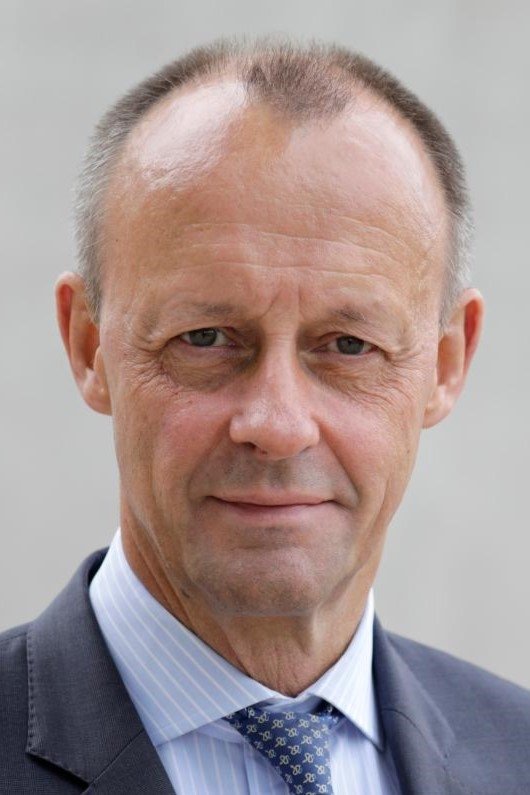
Friedrich Merz
German politician, Chancellor of the Federal Republic of Germany

Kim Dae-jung
8th President of the Republic of Korea (1924–2009)

Turgut Özal
8th President of the Republic of Turkey (1927–1993)

neoliberalism

The Economist
British weekly news and international affairs publication (founded 1843)

Financial Times
London-based daily newspaper

laissez faire
Laissez-faire ( , from , ) implies that nothing restricts what happens, irrespective of the potential consequences.

free trade
policy in which countries' governments do not restrict imports from, or exports to, other countries

Fernando Collor de Mello
President of Brazil from 1990 to 1992

Walter Lippmann
American journalist and political commentator (1889–1974)

anarcho-capitalism
thumb|alt=A two-colored flag, split diagonally, with yellow at the top and black at the bottom|The black and gold flag, a symbol of anarchism (black) and capitalism (gold) which, according to Murray Rothbard, was first flown in 1963 in [[Colorado and is also used by the Swedish Anarkokapitalistisk Front.|261x261px]]

economic liberalism
political and economic ideology

Miguel de la Madrid
59th President of Mexico

Operation Condor
series of anti-communist, anti-dissent campaigns in South America

Third Way
political position akin to centrism
Chicago school of economics
neoclassical school of economic thought associated with the work of the faculty at the University of Chicago, some of whom have constructed and popularized its principles
Reaganomics
thumb|thumbtime=16:09|Reagan gives a televised address from the Oval Office, outlining his plan for tax reductions in July 1981.
Reaganomics (; a portmanteau of Reagan and economics attributed to Paul Harvey), or Reaganism, were the neoliberal
economic policies promoted by Ronald Reagan, president of the United States from 1981 to 1989. These policies focused mainly on supply-side economics. Opponents (including some Republicans) characterized them as "trickle-down economics" or Voodoo Economics, while Reagan and his advocates preferred to call it free-market economics.

Thatcherism
Thatcherism is a form of British conservative ideology named after Conservative Party leader Margaret Thatcher that relates to not just her political platform and particular policies, but also her personal character and style of management while in office. Proponents of Thatcherism are referred to as Thatcherites. The term has been used to describe the principles of the British government under Thatcher from the 1979 general election to her resignation in 1990. In international terms, Thatcherites have been described as a part of the general socio-economic movement known as neoliberalism, with

cultural imperialism
cultural dominance in imperialism

austerity
In economic policy, austerity is a set of political-economic policies that aim to reduce government budget deficits through spending cuts, tax increases, or a combination of both. There are three primary types of austerity measures: higher taxes to fund spending, raising taxes while cutting spending, and lower taxes and lower government spending. Austerity measures are often used by governments that find it difficult to borrow or meet their existing obligations to pay back loans. The measures are meant to reduce the budget deficit by bringing government revenues closer to expenditures. Propone
Washington Consensus
broad set of economic policies commonly prescribed by institutions based in Washington D.C. such as the International Monetary Fund (IMF) and World Bank
economic globalization
increasing economic interdependence of national economies across the world
Mont Pelerin Society
international neoliberal organization
trickle-down economics
economic theory
shock therapy
sudden release of price and currency controls
Chicago Boys
Chilean economists and political advisors
structural adjustment
provision of loans by the International Monetary Fund and World Bank to countries that experienced economic crises
New Labour
Historical rebranding of the British Labour Party
The Californian Ideology
1995 essay on media theory and Silicon Valley politics
market fundamentalism
strong belief in the ability of unregulated laissez-faire or free market policies to solve most economic and social problems
.jpg)
ultraconservatism
Ultraconservatism refers to extreme conservative views in politics or religious practice. In modern politics, ultraconservative usually refers to conservatives of the far-right on the political spectrum, comprising groups or individuals who are located to the right of those who hold mainstream conservative views, and continuing further right to include fringe parties.
New Democrats
ideological faction within the Democratic Party

Cyber-utopianism
Cyber-utopianism, web-utopianism, digital utopianism, or utopian internet is a subcategory of technological utopianism and the belief that online communication helps bring about a more decentralized, democratic, and libertarian society. The desired values may also be privacy and anonymity, freedom of expression, access to culture and information or also socialist ideals leading to digital socialism.
==Origins==
The Californian Ideology is a set of beliefs combining bohemian and anti-authoritarian attitudes from the counterculture of the 1960s with techno-utopianism and support for neoliberal e

Pinochetism
Pinochetism () is an authoritarian political ideology rooted in the 17-year military dictatorship of Augusto Pinochet. Characterized by its staunch anti-communism, conservatism, militarism, and nationalism, Pinochetism represents a distinct strand of right-wing politics in Chile that combines authoritarian rule with free-market economics. The ideology's economic dimension was shaped by the Chicago Boys, Chilean economists who implemented neoliberal reforms that dramatically restructured Chile's economy.
Sadegh Zibakalam
Iranian academician
liberal elite
political epithet for those holding or promoting Left Liberal views
Profit motive
Motivation for businesses to maximize profits
Colloque Walter Lippmann
one-time conference of intellectuals
Louis Rougier
French philosopher (1889-1982)
Roger Douglas
New Zealand politician
accumulation by dispossession
social and economic class mobility
Matthew Yglesias
American blogger and journalist
Rogernomics
thumb|Roger Douglas in 1996
Fujimorism
Fujimorism (, , Hepburn: ) is the policies and the political ideology of former President of Peru Alberto Fujimori as well as the personality cult built around him, his policies and his family, especially Keiko Fujimori. The ideology is defined by authoritarianism, its support for neoliberal economics, opposition to communism, and socially and culturally conservative stances such as opposition to LGBT rights and school curriculums including gender equality or sex education. Opponents of Fujimorism are known as anti-Fujimorists.
post-industrial economy
type of economy
New Right in South Korea
Political party in South Korea
Clintonism
Clintonism refers to the political and economic policies of Bill and Hillary Clinton, as well as the era of his presidency in the United States. Members of the Democratic Party who are aligned with these political policies and practices are called Clinton Democrats.
Political economy of communication
branch in Communication studies or media studies
gremialismo
Gremialismo, or guildism, is a right-wing to far-right social, political, and economic ideology, inspired by Catholic social teachings that claims that every correct social order should base itself in intermediary societies between persons and the state, which are created and managed in freedom, and that the order should serve only the purposes for which they were created.