Category
page 1Neurology

neurology
Neurology (from , "string, nerve" and the suffix -logia, "study of") is the branch of medicine dealing with the diagnosis and treatment of all categories of conditions and disease involving the nervous system, which comprises the brain, the spinal cord and the peripheral nerves. Neurological practice relies heavily on the field of neuroscience, the scientific study of the nervous system, using various techniques of neurotherapy.

neuroscience
right|thumb|260px|Drawing by Santiago Ramón y Cajal (1899) of [[neurons in the pigeon cerebellum]]

paralysis
Paralysis (: paralyses; also known as plegia) is a loss of motor function in one or more muscles. Paralysis can also be accompanied by a loss of feeling (sensory loss) in the affected area if there is sensory damage. In the United States, roughly 1 in 50 people have been diagnosed with some form of permanent or transient paralysis. The word "paralysis" derives from the Greek παράλυσις, meaning "disabling of the nerves" from παρά (para) meaning "beside, by" and λύσις (lysis) meaning "making loose". A paralysis accompanied by involuntary tremors is usually called "palsy".
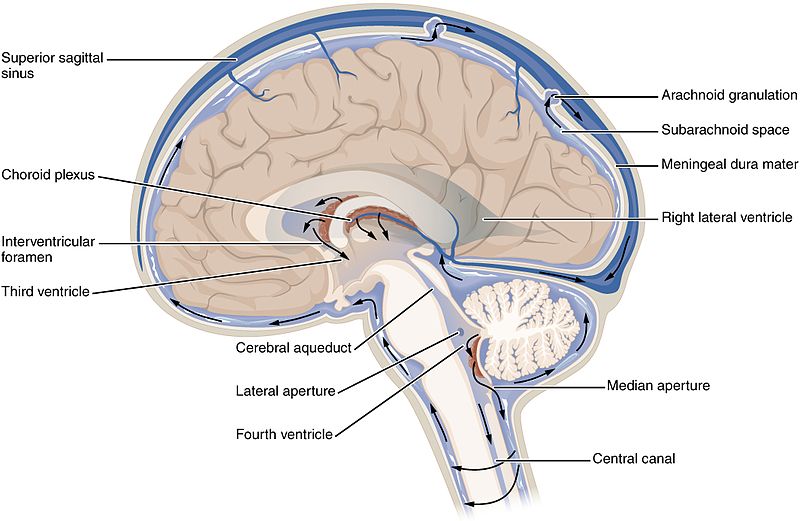
cerebrospinal fluid
clear colorless bodily fluid found in the brain and spine

optic nerve
second cranial nerve, which connects the eyes to the brain

trigeminal nerve
nerve in human face

blood–brain barrier
semipermable membrane that separates blood and the brain

pons
The pons (from Latin ) is the part of the brainstem that, in humans and other mammals, lies inferior to the midbrain, superior to the medulla oblongata, and anterior to the cerebellum.

olfactory nerve
second pair of cranial nerves that transmit sense of smell from olfactory epithelium to the brain
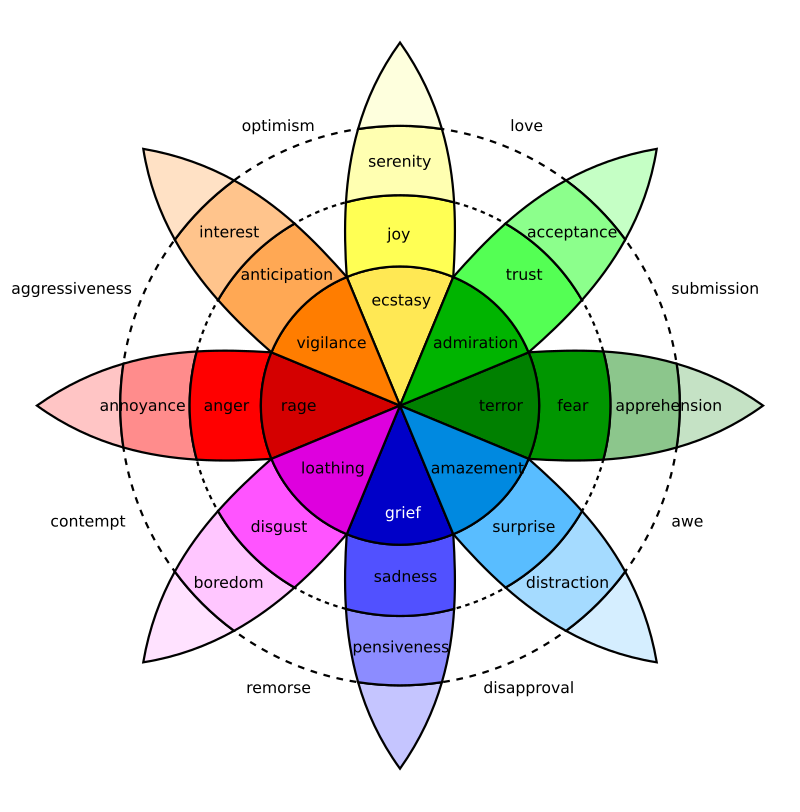
mental confusion
In psychology, confusion is the quality or emotional state of being bewildered or unclear. The term acute mental confusion is often used interchangeably with delirium in the International Statistical Classification of Diseases and Related Health Problems and the Medical Subject Headings publications to describe the pathology. These refer to the loss of orientation, or the ability to place oneself correctly in the world by time, location and personal identity. Mental confusion is sometimes accompanied by disordered consciousness (the loss of linear thinking) and memory loss (the inability to co
facial nerve
seventh cranial nerve
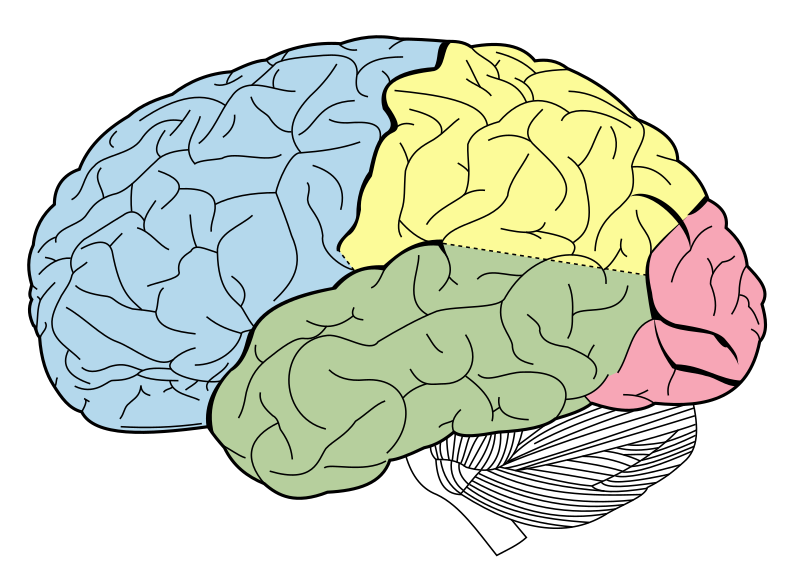
frontal lobe
part of the brain that, because of how large it is, it's responsible for many functions, such as motor control, executive functions, language production, emotional regulation, working memory, and personality

trochlear nerve
4th cranial nerve

abducens nerve
cranial nerve controlling the movement of the lateral rectus muscle
accessory nerve
11th cranial nerve
hypoglossal nerve
12th cranial nerve
temporal lobe
part of the brain responsible for processing auditory information and encoding of memory. The temporal lobe also plays a role in processing affect/emotions, language, and certain aspects of visual perception.
auditory system
sensory system used for hearing
vestibulocochlear nerve
eighth cranial nerve
glossopharyngeal nerve
9th cranial nerve, mixed nerve that carries afferent sensory and efferent motor information
muscle contraction
process in which force is generated within muscle tissue, resulting in a change in muscle geometry. Force generation involves a chemo-mechanical energy conversion step that is carried out by the actin/myosin complex activity

neurooncology
Neuro-oncology is the study of brain and spinal cord neoplasms, many of which are (at least eventually) very dangerous and life-threatening (astrocytoma, glioma, glioblastoma multiforme, ependymoma, pontine glioma, and brain stem tumors are among the many examples of these). Among the malignant brain cancers, gliomas of the brainstem and pons, glioblastoma multiforme, and high-grade (highly anaplastic) astrocytoma/oligodendroglioma are among the worst. In these cases, untreated survival usually amounts to only a few months, and survival with current radiation and chemotherapy treatments may ex
anaplastic oligodendroglioma
human disease

neuropsychiatry
thumb|X-ray image of deep brain stimulation, an experimental procedure used to treat disorders such as OCD and depression.
Neuropsychiatry is a branch of medicine that deals with psychiatry as it relates to neurology, in an effort to understand and attribute behavior to the interaction of neurobiology and social psychological factors. Within neuropsychiatry, the mind is considered "as an emergent property of the brain", whereas other behavioral and neurological specialties might consider the two as separate entities. Those disciplines are typically practiced separately.
derealization
Derealization is an alteration in the perception of the external world, causing those with the condition to perceive it as unreal, distant, distorted, or in other ways falsified. Other symptoms include feeling as if one's environment lacks spontaneity, emotional coloring, and depth. Described as "Experiences of unreality or detachment with respect to surroundings (e.g., individuals or objects are experienced as unreal, dreamlike, foggy, lifeless or visually distorted)" in the DSM-5, it is a dissociative symptom that may appear in moments of severe stress.
dermatome
area of the skin which is supplied by a spinal nerve
psychoneuroimmunology
Psychoneuroimmunology (PNI), also referred to as psychoendoneuroimmunology (PENI) or psychoneuroendocrinoimmunology (PNEI), is the study of the interaction between psychological processes and the nervous and immune systems of the human body. It is a subfield of psychosomatic medicine. PNI takes an interdisciplinary approach, incorporating psychology, neuroscience, immunology, physiology, genetics, pharmacology, molecular biology, psychiatry, behavioral medicine, infectious diseases, endocrinology, and rheumatology.
field of view
extent of the observable world seen at any given moment

neuropathology
thumb|Micrograph of a [[vasculitic neuropathy. Plastic embedded. Toluidine blue stain.]]
Neuropathology is the study of disease of nervous system tissue, usually in the form of either small surgical biopsies or whole-body autopsies. Neuropathologists usually work in a department of anatomic pathology, but work closely with the clinical disciplines of neurology, and neurosurgery, which often depend on neuropathology for a diagnosis. Neuropathology also relates to forensic pathology because brain disease or brain injury can be related to cause of death. Neuropathology should not be confused with
blindsight
Blindsight is the ability of people who are cortically blind to respond to visual stimuli that they do not consciously see due to lesions in the primary visual cortex, also known as the striate cortex or Brodmann Area 17. The term was coined by Lawrence Weiskrantz and his colleagues in a paper published in a 1974 issue of Brain. A previous paper studying the discriminatory capacity of a cortically blind patient was published in Nature in 1973.
synaptic plasticity
the ability of synapses to strengthen or weaken over time, in response to increases or decreases in their activity

myotome
thumb|right
A myotome is the group of muscles that a single spinal nerve innervates. Similarly a dermatome is an area of skin that a single nerve innervates with sensory fibers. Myotomes are separated by myosepta (singular: myoseptum). In vertebrate embryonic development, a myotome is the part of a somite that develops into muscle.
grid neuron
type of neuron
mandibular nerve
largest of the three branches of the trigeminal nerve
autoscopy
Autoscopy is the experience in which one perceives one’s surrounding environment from a different perspective, from a position outside of one’s own body. Autoscopy comes from the ancient Greek (, "self") and (, "watcher").
sensory processing
organization of sensory information from a person's body and the external world
cerebral circulation
brain blood flow
Wartenberg wheel
medical device
neuroimmunology
Neuroimmunology is a field combining neuroscience, the study of the nervous system, and immunology, the study of the immune system. Neuroimmunologists seek to better understand the interactions of these two complex systems during development, homeostasis, and response to injuries. A long-term goal of this rapidly developing research area is to further develop our understanding of the pathology of certain neurological diseases, some of which have no clear etiology. In doing so, neuroimmunology contributes to development of new pharmacological treatments for several neurological conditions. Many

neuro-ophthalmology
Neuro-ophthalmology is an academically-oriented subspecialty that merges the fields of neurology and ophthalmology, often dealing with complex systemic diseases that have manifestations in the visual system. Neuro-ophthalmologists initially complete a residency in either neurology or ophthalmology, then do a fellowship in the complementary field. Since diagnostic studies can be normal in patients with significant neuro-ophthalmic disease, a detailed medical history and physical exam is essential, and neuro-ophthalmologists often spend a significant amount of time with their patients.
eye–hand coordination
coordinated control of eye movement with hand movement and processing of visual input to guide reaching and grasping along with the use of proprioception of the hands to guide the eyes
Neurotmesis
Neurotmesis (in Greek tmesis signifies "to cut") is a complete transection of a peripheral nerve, and is part of Seddon's classification scheme used to classify nerve damage. It is the most serious nerve injury in the scheme. In this type of injury, both the nerve and the nerve sheath are disrupted. While partial recovery may occur, complete recovery is impossible.
neuroanthropology
Neuroanthropology is the study of the relationship between culture and the brain.
This field of study emerged from a 2008 conference of the American Anthropological Association. It is based on the premise that lived experience leaves identifiable patterns in brain structure, which then feed back into cultural expression. The exact mechanisms are so far ill defined and remain speculative.
cognitive reserve
the mind's resistance to damage of the brain
McDonald criteria
criteria for multiple sclerosis
neuropediatrics
medical specialty dealing with disorders of the nervous system in children
lesser petrosal nerve
general visceral efferent component of the glossopharyngeal nerve
Silver Spring Monkeys
17 macaques kept (1981–1991) in the Institute for Behavioral Research, Silver Spring, Md., US, whose afferent ganglia were cut and whose arms were restrained to study neuroplasticity; caused a criminal prosecution for animal cruelty with a $3000 fine
Behavioral neurology
Branch of medicine
otic ganglion
parasympathetic ganglion of head and neck
neuronitis
Neuroinflammation is inflammation of the nervous tissue. It may be initiated in response to a variety of cues, including infection, traumatic brain injury, toxic metabolites, or autoimmunity. In the central nervous system (CNS), including the brain and spinal cord, microglia are the resident innate immune cells that are activated in response to these cues. The CNS is typically an immunologically privileged site because peripheral immune cells are generally blocked by the blood–brain barrier (BBB), a specialized structure composed of astrocytes and endothelial cells. However, circulating periph
neural Darwinism
Darwinian approach to understanding global brain function
infected aneurysm
medical condition
electrodiagnosis
method of diagnosis
neuroprotection
thumb|right|A neuron observed under an optical microscope
body image
in medicine, a patient's cognitive perception of their own body
nervous system disease
human disease
cortical spreading depression
type of evoked potential
prepulse inhibition
The process in which a startle magnitude is reduced when the startling stimulus is preceded by a low-intensity prepulse.
adipsia
Adipsia, also known as hypodipsia, is a symptom of inappropriately decreased or absent feelings of thirst. It involves an increased osmolality or concentration of solute in the urine, which stimulates secretion of antidiuretic hormone (ADH) from the hypothalamus to the kidneys. This causes the person to retain water and ultimately become unable to feel thirst. Due to its rarity, the disorder has not been the subject of many research studies.