Category
page 1Newar

Newar
Sino-Tibetan language of central-eastern Nepal
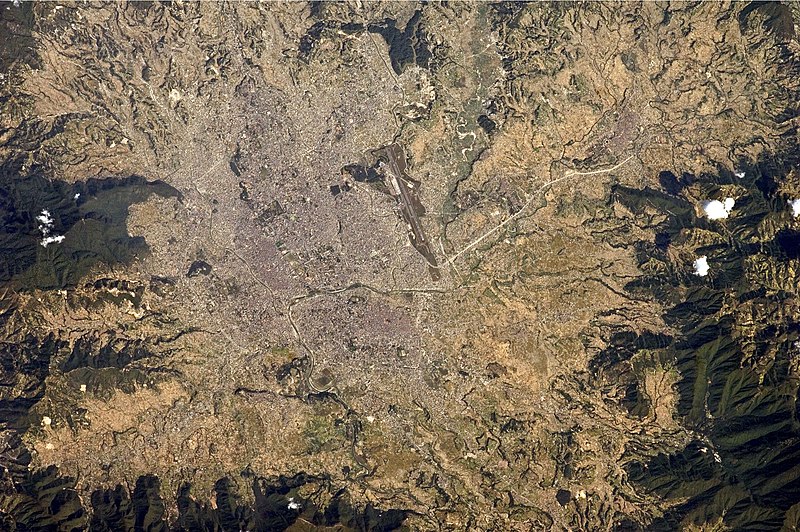
Kathmandu Valley
valley in Bagmati Province, Nepal

Lalitpur
city in Kathmandu Valley, Nepal

Bhaktapur

Bagmati River
river in Nepal and India
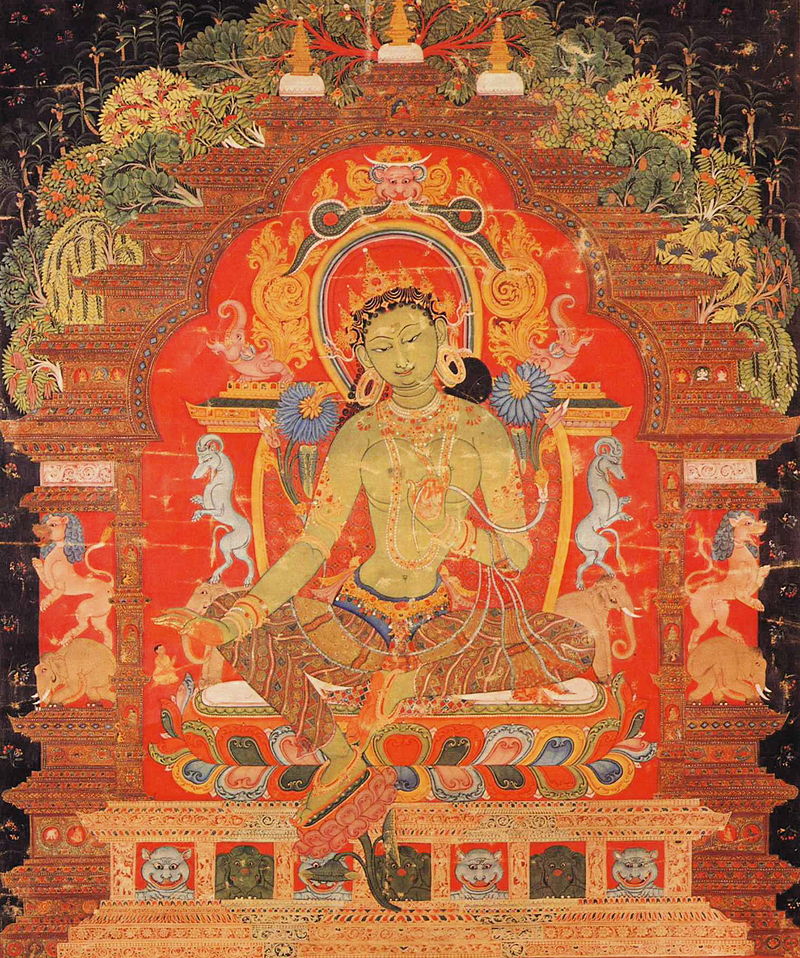
Tārā
female Bodhisattva

Bhairava
thumb|right|Muthappan, Kaalabhairavan worshipped in ancestral form through [[Theyyam form, in the northern region of Kerala, South India. ]]
Bhairava (, ), or Kāla Bhairava, is a Shaivite and Vajrayāna deity worshipped by Hindus and Buddhists. In Shaivism, he is a powerful manifestation, or avatar, of Shiva. In the tradition of Kashmir Shaivism, Bhairava represents the Supreme Reality, synonymous to Para Brahman. Generally in Hinduism, Bhairava is also called Daṇḍapāni ("[he who holds the] danda in [his] hand"), as he holds a rod or danda to punish sinners, and Śvāśva, meaning, "he whose vehic
Bagmati Zone
former administrative zone of Nepal
Kumari
manifestations of the divine female energy or devi in Hindu religious traditions
Newar people
Indigenous native ethnic group of Nepal
Lalitpur District
district of Nepal

Swayambhunath
thumb|274x274px|Seated The Buddha|Buddha statues in Swayambhunath
thumb|273x273px|Main stupa of Swayambhu
thumb|273x273px|Swayambhunath in 1877
%20Flanked%20by%20Shiva%20(left)%20and%20Ganesha%20(right).jpg)
Matrikas
thumb|9th-century sculpture depicting the Seven Mother Goddesses (Matrikas) flanked by Shiva (left) and Ganesha (right)

Araniko
Aniko, Anige or Araniko (, ; 1245–1306) was one of the key figures in the arts of Nepal and the Yuan dynasty of China, and the artistic exchanges in these areas. He was born in Kathmandu Valley during the reign of Abhaya Malla. He is known for building the White Stupa at the Miaoying Temple in Beijing. During the reign of Jayabhimadeva, he was sent on a project to build a golden stupa in Tibet, where he also initiated into monkhood. From Tibet, he was sent further to northern China to work in the court of the emperor Kublai Khan, the founder of the Yuan dynasty, where he brought the trans-Hima

Kirtipur
Kirtipur (; Nepal Bhasa: किपू Kipoo) is a Municipality and an ancient city of Nepal. The Newars are the natives of Kipoo (Kirtipur). It is located in the Kathmandu Valley 5 km south-west of the city of Kathmandu. It is one of the five dense municipalities in the valley, the others being Kathmandu, Lalitpur, Bhaktapur and Madhyapur Thimi. It is one of the most famous and religious places to visit. Many people visit this place not only for its natural environment but also to visit temples. The city was listed as a UNESCO tentative site in 2008.
thumb|The 18th-century former palace building
Ranjana
language script that uses Abugida writing system

Banepa
Banepa () is a municipality and historical town in a valley situated at about above sea level in central Nepal which is at about east from Kathmandu. At the time of the 2021 Nepal census, it has a population of 67,690. The main attraction of Banepa is the temple of
Chandeshwori, located approximately northeast of the town along the Rudramati River. The Dhaneshwor Temple is 1 kilometre south of the town. Banepa is also known for its eight different temples of Ganesh, Narayanthan (the temple of Narayan), Bhimshenthan (the temple of Bhimshen), and eight different ponds.
Malla
Ruling dynasty of the Kathmandu Valley from 1201 to 1779
Marich Man Singh Shrestha
Nepalese politician (1942-2013)
Nepal Sambat
Nepalese Traditional Calendar
Nepalese script
writing system of Nepal
Bhujimol
language script that uses Abugida writing system
Sā Pāru
Hindu festival in Nepal
Asan
square in Kathmandu, Nepal
Indra Jatra
holiday

Newar Buddhism
the form of Vajrayana Buddhism practiced by the Newar people of the Kathmandu Valley, Nepal

Sankhu
thumb|Sankhu an ancient town near Kathmandu, Nepal
Sankhu (Nepal Bhasa: साँखु, alternative name: Sakwa (Nepal Bhasa: /सक्व)) is the ancient Newari town located in the north-eastern corner of Kathmandu Valley, about 17 km from the city center of Kathmandu. Mani-Yogini, one of the four Vajra Yoginis of Kathmandu Valley, resides here, and it is located along the historic trade route between Kathmandu and Lhasa. It is believed that the name Sakwa has two parts - Samdesh (Meaning Tibet) and Kvay (Meaning Below), together meaning a town below Tibet.
Prachalit Nepal
script
Nepal Mandala
cultural region in central Nepal
list of bodhisattvas
Wikimedia list article
Chitlang
Chitlang (Nepali: चित्लाङ, Nepal Bhasa: चिलं/चिलिम]) is a village located in Thaha Municipality of Makwanpur District, Bagmati Province, Nepal.
Swanti
five-day festival of Nepal
Madan Krishna Shrestha
Nepalese actor
Lakhey
Lākhey (Nepal Bhasa: लाखे or , lā-khé) (alternative spellings Lākhe, Lākhay, ) is a demon in Nepalese folklore. He is depicted with a ferocious face, protruding fangs and a mane of red, white or black hair. The dance of a demon in the carnival of God. Lakhes figure prominently in the traditional Newar culture of Nepal Mandala. The Lakhe tradition is found in the Kathmandu Valley and other Newar settlements throughout Nepal.
dhimay
Dhimay, Dhimaya () or Dhime is a traditional Nepalese drum of the Newar people. According to the Hornbostel–Sachs classification, it belongs to the category of double-headed cylindrical membranophone.
Battle of Kathmandu
1768 siege in the Gorkhali conquest of Nepal
Classical Newari
Sino-tibetan dead language
Yomari punhi
public holiday in Nepal
Bhairab Naach
type of dance

Battle of Kirtipur
1767 battle in Nepal
Gurumapa
thumb|200px|Plaque at Itum Bahal, Kathmandu. The caption reads "Gurumapa eating rice".
thumb|200px|Kesh Chandra and sister from an old painting.
thumb|200px|Tinkhya (Tundikhel) open field in Kathmandu, ca 1939.
Gurumāpā (Nepal Bhasa: ; Devanagari: गुरुमापा) is a mythical creature in the folklore of Nepal Mandala. According to legend, he is said to take away disobedient children, and so was banished to a field in Kathmandu.
Vajracharya
thumb|300px|Padmasambhāva|Padmasambhava, the archetypal vajra master in [[Tibetan Buddhism, holding a vajra and a skullcup, both important tantric ritual implements.]]
Paubha
thumb|200px|Paubha painting showing Vishnu Mandala (15th century).
thumb|200px|Waumha Tara (Green Tara)
A paubhā (Devanagari: पौभा) is a traditional religious painting made by the Newar people of Nepal. Paubhās depict deities, mandalas or monuments, and are used to help the practitioners in meditation. The Tibetan equivalent is known as thangka. The main difference between thangka and paubha is that thangka is a Buddhist art, while paubha is used for both Hindu and Buddhist art by the Newar community.
Kantipur
kingdom in Medieval Nepal
Sankhadhar Sakhwa
Nepalese philanthropist
Gunla Bajan
music genre
Battle of Bhaktapur
1769 battle
Mha Puja
Memorial day and annual ritual of the Newar living in Nepal
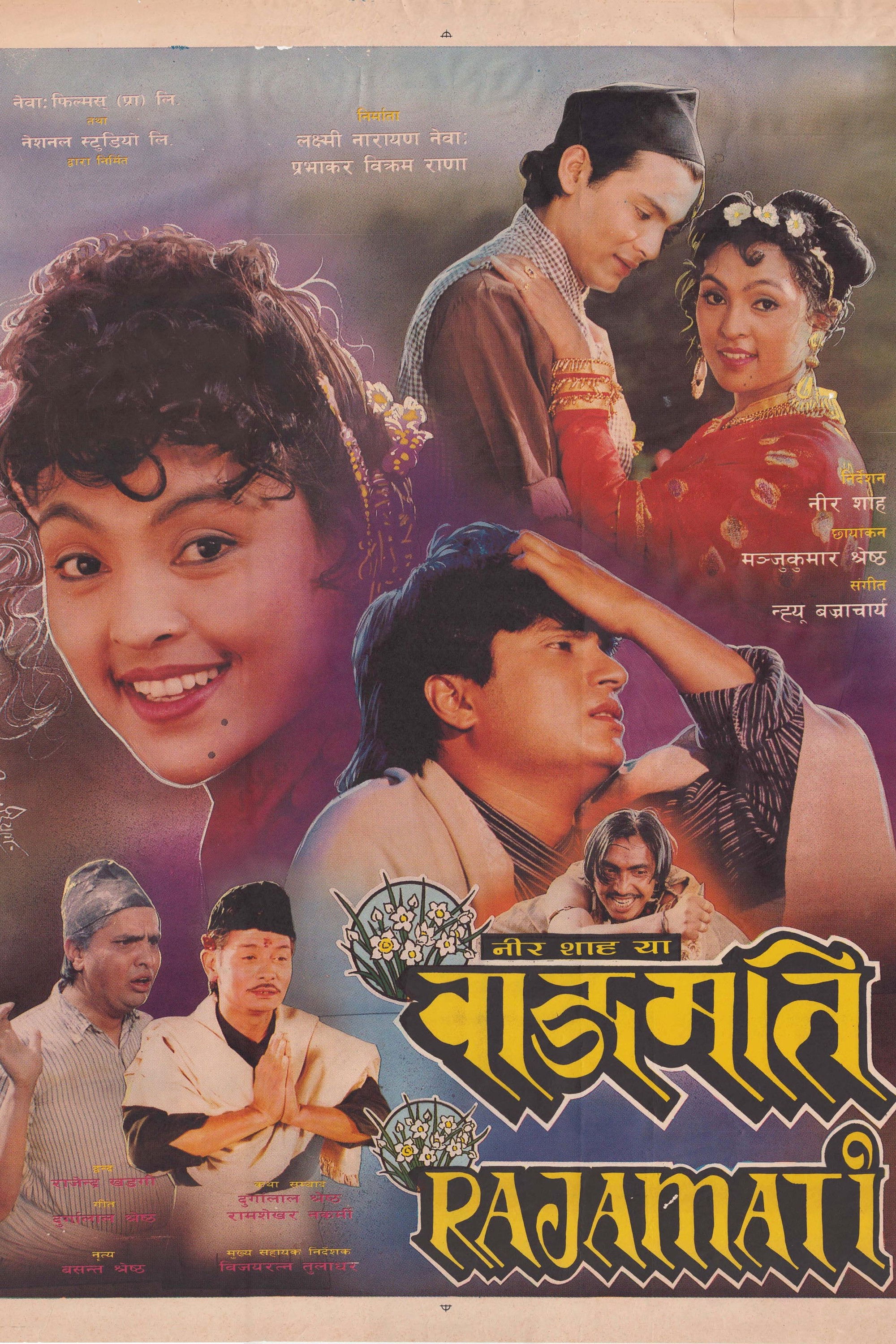
Rajamati
Rājamati () is a 1995 Nepali film made in Nepal Bhasa. The first Nepal Bhasa movie is Silu, released in 1987.
Shiva Shankar
Nepalese musician (1932-2004)
Pahan Charhe
Hindu festival in Nepal
Lhasa Newar
Nepalese businessman
Shrestha
Śrēṣṭha is a Nepalese surname meaning "noble” or "great" in Sanskrit or "warrior" in Nepal Bhasa. Shrestha is one of the eponym surnames used by those belonging to the caste of Shresthas who prior to the unification of modern Nepal formed the ruling and administrative Kshatriya castes in the court of the Malla kings of Nepal. They also counted among them the trading and business Vaishya castes, and were the pre-eminent traders in between Nepal and Tibet. After the unification of Nepal, many Shresthas took up business and trading since their former positions as administrators and courtiers of t