Category
page 1Nile

Nile
The Nile is a major north-flowing river in northeast Africa which empties into the Mediterranean Sea. At long, it is the longest river in the world, although the volume of water it carries is much smaller than other major rivers such as the Amazon or the Congo. The Nile has played a central role in the environmental, economic, and cultural history of Africa for millennia.
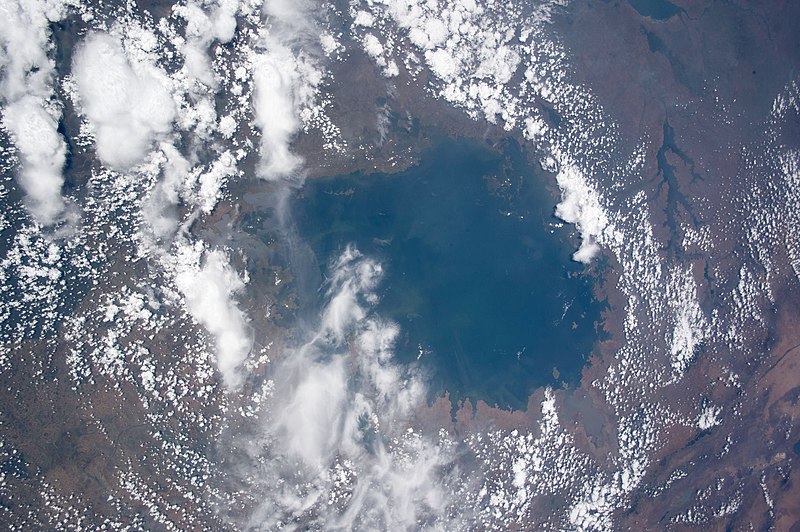
Lake Victoria
lake in east-central Africa

Lake Albert
lake in Uganda and the Democratic Republic of the Congo

White Nile
river in Africa and tributary of the Nile River

Nile crocodile
species of reptile
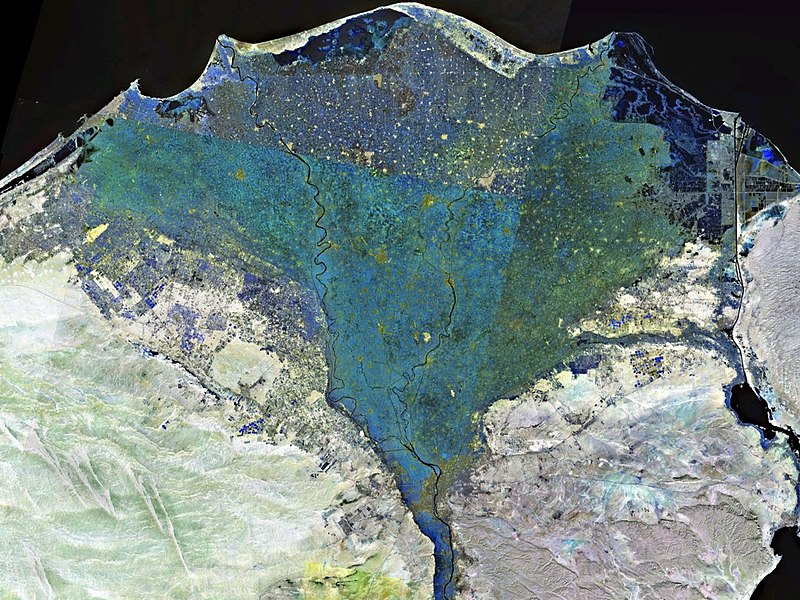
Nile Delta
delta formed in Northern Egypt where the Nile River drains into the Mediterranean Sea

Khnum
Khnum, also romanised Khnemu (; , ), was one of the earliest-known Egyptian deities in Upper Egypt, originally associated with the Nile cataract. He held the responsibility of regulating the annual inundation of the river, emanating from the caverns of Hapi, the deity embodying the flood. Since the annual flooding of the Nile brought with it silt and clay, and its water brought life to its surroundings, he eventually became known as the creator of human bodies and the life force kꜣ ("ka"). Using a potter's wheel and clay, he fashioned these entities and placed them within their mothers' wombs.
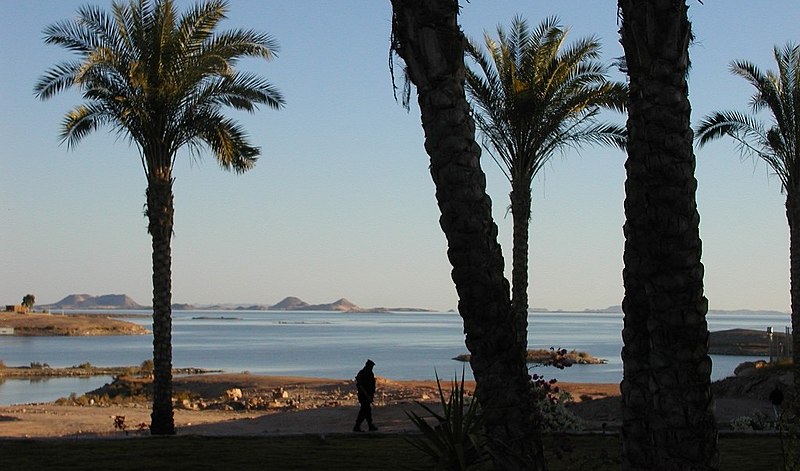
Lake Nasser
reservoir in Southern Egypt

Lates niloticus
species of fish

Oreochromis niloticus
species of fish

Sudd
thumb|300px|right|Satellite image of the swamp around the time of the wet season
Cataracts of the Nile
series of six whitewater rapids
Murchison Falls
waterfall on the Nile in Uganda

Hyphaene thebaica
species of plant
Nilus
god of the Nile river in Greek mythology, son of Oceanus and Tethys
Lake Mariout
brackish lake in northern Egypt

nilometer
thumb|Measuring shaft of the nilometer on Roda Island, Cairo built in 861 AD on the orders of the Abbasid Caliph [[al-Mutawakkil]]
A nilometer is a structure for measuring the Nile River's clarity and water level during the annual flood season in Egypt. There were three main types of nilometers, calibrated in Egyptian cubits: (1) a vertical column, (2) a corridor stairway of steps leading down to the Nile, and (3) a deep well with a culvert. If the water level was low, the fertility of the floodplain would suffer. If it was too high, the flooding would be destructive. There was a specific mark

Gihon
Gihon is the name of the second river mentioned in the second chapter of the biblical Book of Genesis. The Gihon is mentioned as one of four rivers (along with the Tigris, Euphrates, and Pishon) issuing out of Eden, branching from a single river that split after watering the Garden of Eden (Genesis 2:10–14).

Pishon
The Pishon ( Pīšōn; Koine Greek: Φισών Phisṓn) is one of four rivers (along with Hiddekel (Tigris), Perath (Euphrates) and Gihon) mentioned in the Biblical Book of Genesis. In that passage, a source river flows out of Eden to water the Garden of Eden and from there divides into the four named rivers. The Pishon is described as encircling "the entire land of Havilah where is gold; bdellium and onyx stone."
Lake No
lake in South Sudan
Ruvyironza River
river in Burundi
flooding of the Nile
Famous natural phenomenon
Wadi Howar
valley between Sudan and Chad
Mountains of the Moon
legendary mountain range in east Africa at the source of the Nile River
Wadi Halfa Salient
geographical object
Lower Nubia
northernmost part of Nubia
Nile basin
drainage basin of the river Nile
SS Sudan
nile cruise ship
Upper Nubia
southernmost part of Nubia

Al Jabalayn
human settlement in Sudan
Dar al-Manasir
geographic region