Category
page 1Nimrod

Babylon
Babylon ( ) was an ancient city located on the lower Euphrates river in southern Mesopotamia, within modern-day Hillah, Iraq, about south of modern-day Baghdad. Babylon functioned as the main cultural and political centre of the Akkadian-speaking region of Babylonia. Its rulers established two important empires in antiquity, the 19th–16th century BC Old Babylonian Empire, and the 7th–6th century BC Neo-Babylonian Empire. Babylon was also used as a regional capital of other empires, such as the Achaemenid Empire. Babylon was one of the most important urban centres of the ancient Near East, unti
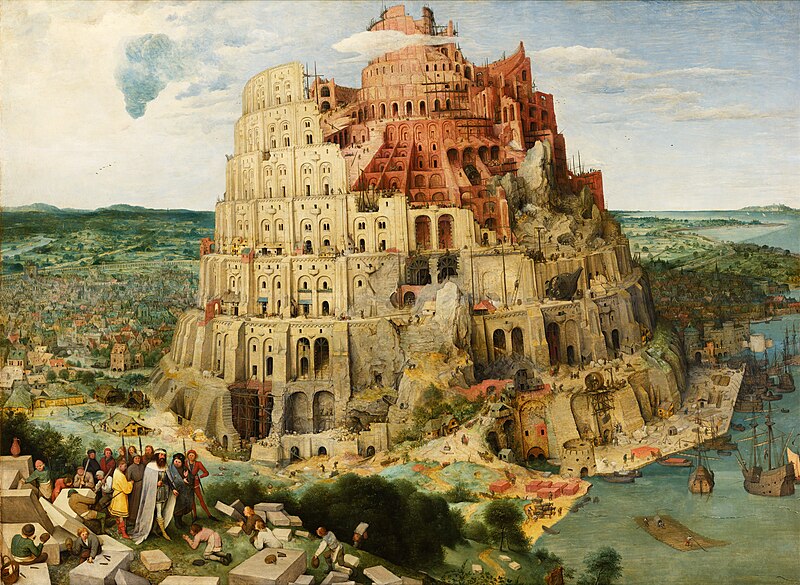
Tower of Babel
biblical pericope about hubris and the origin of languages

Gilgamesh
Gilgamesh (, ; ; originally ) was a hero in ancient Mesopotamian mythology and the protagonist of the Epic of Gilgamesh, an epic poem written in Akkadian during the late 2nd millennium BC. He was possibly a historical king of the Sumerian city-state of Uruk, who was posthumously deified. His rule probably would have taken place sometime in the beginning of the Early Dynastic Period, 2900–2350 BC, though he became a major figure in Sumerian legend during the Third Dynasty of Ur ().

Akkadian Empire
ancient empire in the Mesopotamia (2334–2154 BC)

Nineveh
Nineveh was an ancient Near Eastern city of Upper Mesopotamia, located in the modern-day city of Mosul in northern Iraq. It is located on the eastern bank of the Tigris River and was the capital and largest city of the Neo-Assyrian Empire, and potentially the wealthiest city in the ancient world. Today, it is a common name for the half of Mosul that lies on the eastern bank of the Tigris, and the country's Nineveh Governorate takes its name from it.

Sargon of Akkad
founder of Akkadian Empire
Uruk
Uruk, the archeological site known today as Warka, was an ancient city in the Near East or West Asia, located east of the current bed of the Euphrates River, on an ancient, now-dried channel of the river in Muthanna Governorate, Iraq. The site lies 93 kilometers (58 miles) northwest of ancient Ur, 108 kilometers (67 miles) southeast of ancient Nippur, and 24 kilometers (15 miles) northwest of ancient Larsa.

Semiramis
thumb|Semiramis, a legendary figure based on the life of Shammuramat, depicted as an armed Amazons|Amazon in an eighteenth-century Italian illustration
Semiramis (; Šammīrām, Šamiram, , Samīrāmīs) was the legendary Lydian-Babylonian wife of Onnes and of Ninus, who succeeded the latter on the throne of Assyria, according to Movses Khorenatsi. Legends narrated by Diodorus Siculus, who drew primarily from the works of Ctesias of Cnidus, describe her and her relationships to Onnes and King Ninus.
Akkad
ancient Mesopotamian city
.jpg)
Nimrod
thumb|267px|Nimrod by David Scott (painter)|David Scott, 1832
Nimrod is a biblical figure mentioned in the Book of Genesis and the Books of Chronicles. The son of Cush and thus the great-grandson of Noah, Nimrod was described as a king in the land of Shinar (Lower Mesopotamia). The Bible states that he was "a mighty hunter before the Lᴏʀᴅ [and] ... began to be mighty in the earth". Nimrod became a symbol of defiance against God.

Esau

Mount Nemrut
mountain and UNESCO World Heritage Site in Turkey

Nimrud
Nimrud (; ) is an ancient Assyrian city (original Assyrian name Kalḫu, biblical name Calah) located in Iraq, south of the city of Mosul, and south of the village of Selamiyah (), in the Nineveh Plains in Upper Mesopotamia. It was a major Assyrian city between approximately 1350 BC and 610 BC. The city is located in a strategic position north of where the river Tigris meets its tributary the Great Zab. The city covered an area of . The ruins of the city were found within of the modern-day Assyrian village of Noomanea in Nineveh Governorate, Iraq.

Hayk
Hayk (, ), also known as Hayk Nahapet (, , ), is the legendary patriarch and founder of the Armenian nation. He is a central figure in Armenian mythology and national identity, and is traditionally regarded as the eponymous ancestor from whom the Armenian people, the "Hay", derive their name. His tale is recounted in the History of Armenia attributed to the 5th-century historian Movses Khorenatsi, as well as in the Primary History attributed to Sebeos. Additional fragments of his legend survive in other medieval sources and continue to be echoed in Armenian oral tradition and epic poetry.

Enmerkar
Enmerkar () was an ancient Sumerian ruler to whom the construction of the city of Uruk and a 420-year reign was attributed. According to literary sources, he led various campaigns against the land of Aratta.

Ninurta
Ninurta (: , possible meaning "Lord [of] Barley"), also known as Ninĝirsu (: , meaning "Lord [of] Girsu"), is an ancient Mesopotamian god associated with farming, healing, hunting, law, scribes, and war who was first worshipped in early Sumer. In the earliest records, he is a god of agriculture and healing, who cures humans of sicknesses and releases them from the power of demons. In later times, as Mesopotamia grew more militarized, he became a warrior deity, though he retained many of his earlier agricultural attributes. He was regarded as the son of the chief god Enlil and his main cult cen
The Tower of Babel
three paintings by Pieter Bruegel the Elder
Cush
male human biblical figure in Genesis 10 and 1 Chronicles 1, son of Ham, father of Nomrod &c
Nemrut
mountain in Bitlis Province, Turkey

Shinar
thumb|Cities of Mesopotamia in the 2nd millennium BC
Shin‘ar is the name for the southern region of Mesopotamia used by the Hebrew Bible.

Ninus
thumb|Portrait from Promptuarium Iconum Insigniorum (1553) by [[Guillaume Rouillé]]
Ninus (), according to Greek historians writing in the Hellenistic period and later, was the founder of Nineveh (also called Νίνου πόλις "city of Ninus" in Greek), ancient capital of Assyria. What figure or figures he may have been based on is uncertain; an identification with Shamshi-Adad I, Shamshi-Adad V, and/or a conflation of the two has been suggested.
The Bible: In the Beginning...
1966 film by John Huston
Generations of Noah
genealogy of the sons of Noah and their dispersion into many lands after the Flood found in Genesis
Hunor and Magor
mythical ancestors of the Huns and the Magyars

Amraphel
thumb|Illustration from the Jewish Encyclopedia showing Ḫammurabi on one of his steles as Amraphel
In the Hebrew Bible, Amraphel (; ; ) was a king of Shinar (Hebrew for Sumer) who, in chapter 14 of the Book of Genesis, invaded Canaan, along with two other kings under the leadership of Chedorlaomer, king of Elam. Chedorlaomer's coalition defeated Sodom and the other cities in the Battle of the Vale of Siddim.

Eliezer
Eliezer () was the name of at least three different individuals in the Hebrew Bible.
Pirke De-Rabbi Eliezer
literary work

The Two Babylons
book by Alexander Hislop
Balıklıgöl
thumb|Balıklıgöl in Turkey
Calneh
Calneh () was a city founded by Nimrod, mentioned three times in the Hebrew Bible (, , and ).
The verse in Genesis reads:
"And the beginning of his kingdom was Babel, and Erech, and Accad, and Calneh, in the land of Shinar" (KJV)
Nyyrikki
Nyyrikki (), Nyypetti, Vilpus or Pinneys is the Finnish god of the hunt and cattle, and son of Tapio and Mielikki. He has been tenuously associated with Nimrod.
New Chronology
alternative chronology of the ancient Near East developed by David Rohl
Kuando el Rey Nimrod
song

La Fin de Satan
poem written by Victor Hugo