Category
page 1Noach (parashah)

Noah
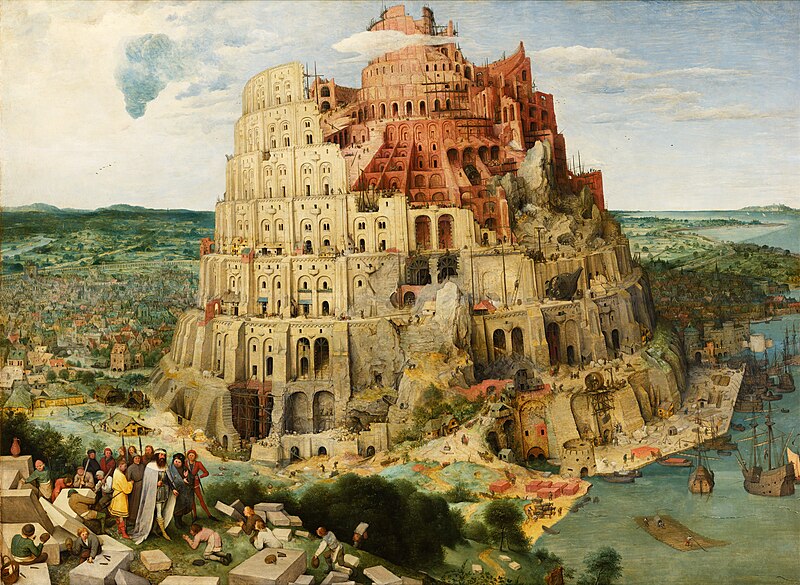
Tower of Babel
biblical pericope about hubris and the origin of languages

Noah's Ark
vessel in the Genesis flood narrative

Japheth
Japheth ( Yép̄eṯ, in pausa Yā́p̄eṯ; '; ; ') was one of the three sons of Noah in the Book of Genesis. In the biblical narrative he plays a role in the story of Noah's drunkenness and the curse of Ham, and subsequently in the Table of Nations, he is named as the ancestor of the peoples of the Aegean Sea, Anatolia, Caucasus, Greece, and elsewhere in Eurasia.

Shem
thumb|Shem, Ham (son of Noah)|Ham and [[Japheth by James Tissot 1900. Shem is on the left with a similar skin color to other Biblical figures painted by Tissot.]]

Ham
biblical figure, son of Noah
.jpg)
Nimrod
thumb|267px|Nimrod by David Scott (painter)|David Scott, 1832
Nimrod is a biblical figure mentioned in the Book of Genesis and the Books of Chronicles. The son of Cush and thus the great-grandson of Noah, Nimrod was described as a king in the land of Shinar (Lower Mesopotamia). The Bible states that he was "a mighty hunter before the Lᴏʀᴅ [and] ... began to be mighty in the earth". Nimrod became a symbol of defiance against God.

Terah
Terah, also spelled Terach (), was a biblical figure in the Book of Genesis. He is listed as the son of Nahor and father of the patriarch Abraham. As such, he is a descendant of Shem's son Arpachshad. Terah is mentioned in Genesis 11:24–32, Joshua 24:2, and 1 Chronicles 1:17–27 in the Hebrew Bible, and in Luke 3:34 in the New Testament.
Arpachshad
Arpachshad ( – ʾArpaḵšaḏ, in pausa – ʾArpaḵšāḏ; – Arphaxád), alternatively spelled Arphaxad or Arphacsad, was one of the five sons of Shem, the son of Noah (Genesis 10:22, 24; 11:10-13; 1 Chron. 1:17-18). His brothers were Elam, Asshur, Lud and Aram; he is an ancestor of Abraham. He is said by Gen. 11:10 to have been born two years after the Flood, when Shem was 100.
Seven Laws of Noah
universal moral laws incumbent upon humanity in the Jewish tradition
Salah
ancestor of Abraham according to Genesis in Hebrew Bible, son of Arpachshad or Cainan
Cush
male human biblical figure in Genesis 10 and 1 Chronicles 1, son of Ham, father of Nomrod &c
Canaan
son of Ham and grandson of Noah in the Hebrew Bible (Genesis 10)
Aram
biblical figure (Genesis 10)
Haran
Haran ( Hārān) is a man in the Book of Genesis in the Hebrew Bible. He was a son of Terah, brother of Abraham, and father of son Lot and daughters Milcah and Iscah. He died in Ur of the Chaldees. Through Lot, Haran was the ancestor of the Moabites and Ammonites.
Genesis flood narrative
biblical flood myth

Shinar
thumb|Cities of Mesopotamia in the 2nd millennium BC
Shin‘ar is the name for the southern region of Mesopotamia used by the Hebrew Bible.
Gomer
Gomer ( Gōmer; ) was the eldest son of Japheth (and of the Japhetic line), and father of Ashkenaz, Riphath, and Togarmah, according to the "Table of Nations" in the Hebrew Bible (Genesis 10).

Tarshish
Tarshish (; ; ) occurs in the Hebrew Bible with several uncertain meanings, most frequently as a place (probably a large city or region) far across the sea from Phoenicia and the Land of Israel. Tarshish was said to have exported vast quantities of important metals to Phoenicia and Israel. The same place name occurs in the Akkadian inscriptions of the Neo-Assyrian emperor Esarhaddon (died 669 BC) and also on the Phoenician inscription of the Nora Stone (around 800 BCE) in Sardinia; its precise location was never commonly known, and was eventually lost in antiquity. Legends grew up around

Javan
thumb|The world as known to the Hebrews

Meshech
thumb|The World as known to the Hebrews. This 1854 map locates Meshech together with Gog and Magog, roughly in the southern Caucasus.
Ashur
son of Shem, the second son of Shem, son of Noah, ancestor of the Assyrians in Iraq and Syria
Generations of Noah
genealogy of the sons of Noah and their dispersion into many lands after the Flood found in Genesis
Togarmah
thumb|340px|Red: Son of Japhet, Yellow: Son of Ham. Blue: Son of Shem
Madai
thumb
Madai (, ; , ) is a son of Japheth and one of the 16 grandsons of Noah in the Book of Genesis of the Hebrew Bible.
Tubal
Tubal (, Tuḇāl), in Genesis 10 (the "Table of Nations"), was the name of a son of Japheth, son of Noah. Modern scholarship has identified him with Tabal. Traditionally, he is considered to be the father of the Caucasian Iberians (ancestors of the Georgians) according to primary sources. Later, Saint Jerome refashioned the Caucasian Iberia (Georgia) into the Iberian Peninsula (Western Europe) and Isidore of Seville consolidated this idea.
Phut
Put the son of Ham, one of the three sons of Noah
Magog
Son of Japheth in Genesis 10, and people descended from him
Ashkenaz
thumb|260px|Ashkenaz is shown in Phrygia in this 1854 map of "The World as known to the Hebrews" ([[Lyman Coleman, Historical Textbook and Atlas of Biblical Geography)]]
Ashkenaz ( ʾAškənāz) in the Hebrew Bible is one of the descendants of Noah.
Ashkenaz is the first son of Gomer, and a Japhetic patriarch in the Table of Nations. In rabbinic literature, the descendants of Ashkenaz were first associated with the Scythian cultures, then later with the Slavic territories, and, from the 11th century onwards, with Germany and northern Europe, or the Indo-European people, in a manner similar to Tzar
Tiras
Tiras ( Ṯīrās) is, according to the Book of Genesis () and 1 Chronicles, the seventh and youngest son of Japheth in the Hebrew Bible. A brother of biblical Javan (associated with the Greek people), its geographical locale is sometimes associated by scholars with the Teresh or Tursha, one of the groups which made up the Sea Peoples, a naval confederacy which terrorized Egypt and other Mediterranean nations around 1200 BCE. These Sea People are referred to as "Tursha" in an inscription of Ramesses III, and as "Teresh of the Sea" on the Merneptah Stele.
Elam
Biblical character, son of Shem
Nahor
biblical character, son of Terah
Kittim
thumb|300px|right|The world as known to the Hebrews (1854 construction)
Kittim was a settlement in present-day Larnaca on the east coast of Cyprus, known in ancient times as Kition. On this basis, the whole island became known as "Kittim" in Hebrew, including the Hebrew Bible. However the name seems to have been employed with some flexibility in Hebrew literature. It was often applied to the Aegean Islands and even to "the W[est] in general, but esp[ecially] the seafaring W[est]". Flavius Josephus () records in his Antiquities of the Jews that
Lud
biblical character
Riphath
Riphath (Hebrew: ריפת) was great-grandson of Noah, grandson of Japheth, son of Gomer (Japheth's eldest), younger brother of Ashkenaz, and older brother of Togarmah according to the Table of Nations in the Hebrew Bible (, ). The name appears in some copies of 1 Chronicles as "Diphath", due to the similarities of the characters resh and dalet in the Hebrew and Aramaic alphabets.
Hivite
The Hivites () were one group of descendants of Canaan, son of Ham, according to the Generations of Noah in the Book of Genesis 10:17. A variety of proposals have been made, but beyond the references in the Hebrew Bible to Hivites in Canaan, no consensus has been reached about their precise historical identity.
Curse of Canaan
curse upon Canaan that was imposed by the biblical patriarch Noah
Caphtor
thumb|300px|right|One reconstruction of the Generations of Noah, placing the "Caphthorim" on [[Ancient Crete]]
Caphtor ( ) is a locality mentioned in the Bible, in which its people are called Caphtorites or Caphtorim and are named as a division of the ancient Egyptians. Caphtor is also mentioned in ancient inscriptions from Egypt, Mari, and Ugarit.

Noach
thumb|''Noah's Ark'' (1846 painting by Edward Hicks)
Dodanim
Dodanim ( Dōḏānīm) or Rodanim, ( Rōḏānīm, , Ródioi) was, in the Book of Genesis, a son of Javan (thus, a great-grandson of Noah). Dodanim's brothers, according to Genesis 10:4, were Elishah, Tarshish and Chittim. He is usually associated with the people of the island of Rhodes as their progenitor. "-im" is a plural suffix in Hebrew, and the name may refer to the inhabitants of Rhodes. Traditional Hebrew manuscripts are split between the spellings Dodanim and Rodanim — one of which is probably a copyist's error, as the Hebrew letters for R and D ( and respectively) are quite similar graph

Japhetic people
thumb|230px|right|This T and O map, from the first printed version of Isidore's [[Etymologiae (Augsburg 1472), identifies the three known continents (Asia, Europe, and Africa) as respectively populated by descendants of Sem (Shem), Iafeth (Japheth), and Cham (Ham).]]
Elishah
thumb|100px|right|The Table of Nations according to the Bible
Elishah ( ’Ĕlîšāh) was the son of Javan according to the Book of Genesis (10:4) in the Masoretic Text. The Greek Septuagint of Genesis 10 lists Elisa not only as the son of Javan, but also a grandson of Japheth. His name is spelled differently in Hebrew to the prophet Elisha, ending in a hei () instead of an ayin ().
Iscah
Iscah ( Yīskā; ) is the daughter of Haran and the niece of Abraham in the Book of Genesis. The passage in which Iscah is mentioned is extremely brief. As a result rabbinical scholars have developed theories to explain it, typically adopting the claim that Iscah was an alternate name for Sarah (Sarai), the wife of Abraham, particularly that it denoted her role as a prophetess.

Ur Kaśdim
city in southern Iraq mentioned as the birthplace of Abraham in the Hebrew Bible
Casluhim
thumb|right|250px|One reconstruction of the Generations of Noah, placing the "Casluhim" in the western [[Nile Delta.]]
The Casluhim or Casluhites () were an ancient Egyptian people mentioned in the Bible and related literature.
Gether
According to the Table of Nations in the Book of Genesis in the Hebrew Bible, Gether ( Geṯer) was the third son of Aram, son of Shem. He appears only twice in the Hebrew Bible, and both times is only mentioned in passing in genealogical lists. In the Table of Nations (Genesis 10:23), he is identified as a son of Aram, while in 1 Chronicles 1:17, he is listed among the sons of Shem.
Ludim
Ludim () is the Hebrew term for a people mentioned in Jeremiah and Ezekiel. In the Biblical Table of Nations Genesis 10:13 they were descended from Mizraim. The biblical scholar Victor P. Hamilton believes that the available evidence "suggests" that the Ludim are the Lydians.
Uz
minor Biblical figure and ascribed ancestor to various communities (Genesis 10)
Wives aboard Noah's Ark
part of the family that survived the Deluge in the biblical Genesis flood narrative
Anamim
__NOTOC__
Anamim (, ‘Ănāmīm) is, according to the Bible, either a son of Ham's son Mizraim or the name of a people descending from him. Biblical scholar Donald E. Gowan describes their identity as "completely unknown."
Pathrusim
thumb|300px|right|A map of the Generations of Noah, placing the "Pathrusim" in [[Upper Egypt.]]
Hul
In the Book of Genesis, Hul ( Ḥūl) is the son of Aram, son of Shem, who is mentioned twice in the Tanakh, both times in genealogical tables. According to the 1st century Jewish historian Flavius Josephus, he founded Armenia. Because his father is Aram, the eponymous ancestor of the Arameans (sometimes also called Syrians), the Holman Bible Dictionary infers that he must have been included in the Table of Nations as "the original ancestor of an Aramean or Syrian tribe."