Category
page 1Non-standard positional numeral systems
binary-coded decimal
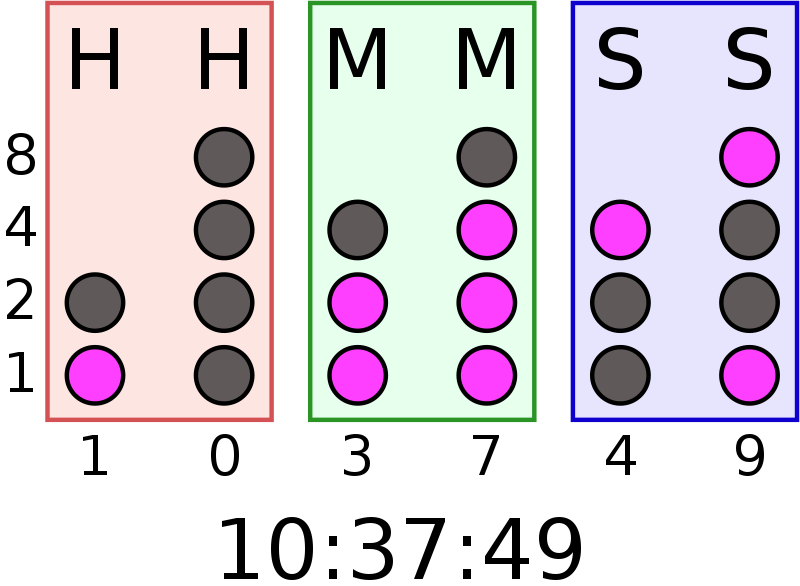
class of binary encodings of decimal numbers where each decimal digit is represented by a fixed number of bits, usually four or eight. Special bit patterns are sometimes used for a sign or for other indications
Gray code
ordering of binary strings such that subsequent strings differ only in one bit
Babylonian numerals
numeral system used in ancient Babylonia
balanced ternary
numeral system that uses the digits −1, 0, and 1
negative base
non-standard positional numeral system

factorial number system
mixed radix numeral system adapted to numbering permutations; represents a number as a×0! + b×1! + c×2! + ⋯
Fibonacci coding
universal code
Aiken code
complementary binary-coded decimal which assigns a group of 4 bits to each decimal digit: 0→0000, 1→0001, 2→0010, 3→0011, 4→0100, 5→1011, 6→1100, 7→1101, 8→1110, 9→1111
golden ratio base
positional numeral system
Asymmetric Numeral Systems
Enthropy coding methods
quater-imaginary base
non-standard numeral system
signed-digit representation
positional numeral system with signed digits; the representation may not be unique
mixed radix numerical system
positional numeral system in which positions have different numerical bases
non-standard positional numeral system
any positional numeral system that uses a base or digit set differently from standard positional systems