Category
page 1Observances on non-Gregorian calendars

Nowruz
Nowruz (, , ) is New Year's Day on the Iranian calendars, including the currently used Solar Hijri calendar. Historically, it has been observed by Iranian peoples, but is now celebrated by many Persianate cultures worldwide. It is a festival based on the Northern Hemisphere spring equinox, and thus usually coincides with a date between 19 March and 22 March on the Gregorian calendar.

Vesak
Vesak (; Sanskrit: '), also known as Buddha Jayanti, Buddha Purnima, Visak Bochea and Buddha Day''', is a holiday traditionally observed by Buddhists in South Asia and Southeast Asia, as well as in Tibet and Mongolia. It is among the most important Buddhist festivals. The festival commemorates the birth, enlightenment (Pali: Nibbāna, Sanskrit: Nirvāṇa), and death (Parinirvāna) of Gautama Buddha in Theravada, Tibetan Buddhism, and Navayana.
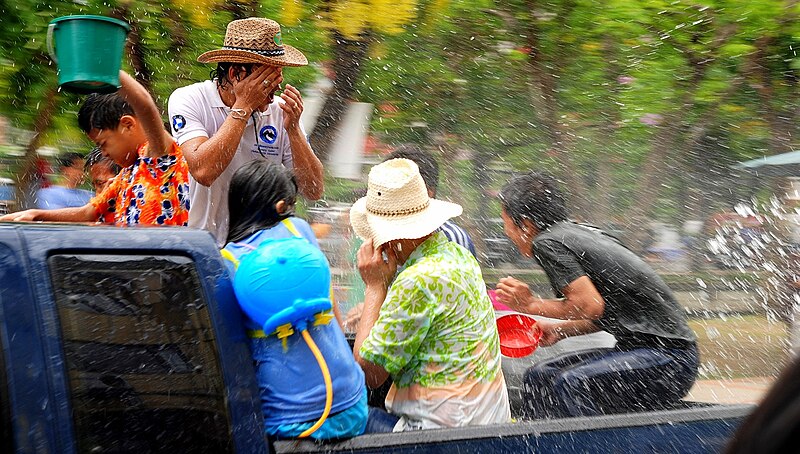
Songkran
traditional Thai New Year's holiday based on the sidereal year
Buddha's birthday
birthday of the Prince Siddhartha Gautama

Vaisakhi
Vaisakhi (), also known as Baisakhi () or Mesadi or Basoa (), marks the first day of the month of Vaisakh and is traditionally celebrated annually on 13 April or sometimes 14 April.
It is seen as a spring harvest celebration primarily in Punjab and Northern India.
Whilst it is culturally significant in many parts of India as a festival of harvest, Vaisakhi is also the date for the Indian Solar New Year. However, Sikhs celebrate the new year on the first the month Chet, according to the Nanakshahi calendar.
Tsagaan Sar
first day of the year according to the Mongolian lunar calendar

Matariki
In Māori culture, Matariki is the Pleiades star cluster and a celebration of its first rising in late June or early July. The rising marks the beginning of the new year in the Māori lunar calendar.

Kathina
Kathina is a Buddhist festival which comes at the end of Vassa, the three-month rainy season retreat for Theravada Buddhists in Bangladesh (known as Kaṭhina Cībar Dān), Cambodia, Myanmar, Thailand, India, Sri Lanka, Vietnam, Laos, Malaysia, and Singapore. The season during which a monastery may hold Kathina is one month long, beginning after the full moon of the eleventh month in the Lunar calendar (usually October).

Yhyakh
Yhyаkh (, ) is the festival that celebrates the rebirth of nature after a hard winter, the triumph of life, the beginning of a new year in the Sakha Republic. Historic celebration is observed on the 21st June, the day of the summer solstice.
Chunfen
The traditional Chinese calendar divides a year into 24 solar terms. Chūnfēn, Shunbun, Chunbun, or Xuân phân is the 4th solar term. It begins when the Sun reaches the celestial longitude of 0° and ends when it reaches the longitude of 15°. In the Gregorian calendar, it usually begins around 20 March and ends around 4 April (5 April East Asia time). It more often refers in particular to the day when the Sun is exactly at the celestial longitude of 0°.
Water Festival
New Year celebration in Southeast Asia
Lao New Year
Holiday celebrated in mid-April
Cambodian New Year
new year celebration in Cambodia

Bon Om Touk
Cambodian Water Festival
Hyacinthia
The death of Hyacinthus was celebrated at Amyclae by the second most important of Spartan festivals, the Hyacinthia (Ancient Greek / Hyakínthia)
in the Spartan month Hyacinthius in early summer.
Pchum Ben
public holiday in Cambodia celebrated on the 15th day of the 10th month in the Khmer calendar commemorating deceased relatives
Pravāraṇā
thumb|Buddhists fly lanterns during the Pavāraṇā ceremony in Bandarban, Bangladesh

Sinhalese New Year
Sri Lankan new year holiday
Þorrablót
Þorrablót (; transliterated as thorrablot) is an Icelandic midwinter festival, named for the month of Þorri of the historical Icelandic calendar (corresponding to mid January to mid February), and blót, literally meaning sacrifice.
Sajibu Nongma Panba
Manipuri new year festival