Category
page 1Obsolete arthropod taxa

Maxillopoda
REDIRECT Crustacean#Classification and phylogeny
.jpg)
Thysanura
Thysanura is the now deprecated name of what was, for over a century, recognised as an order in the class Insecta. The two constituent groups within the former order, the Archaeognatha (jumping bristletails) and the Zygentoma (silverfish and firebrats), share several characteristics, such as of having three long caudal filaments, the lateral ones being the cerci, while the one between (telson) is a medial cerciform appendage, specifically an epiproct. They are also both wingless, and have bodies covered with fine scales, rather like the scales of the practically unrelated Lepidoptera. In the l
Hadeninae
Hadeninae was formerly a subfamily of the moth family Noctuidae, but was merged into the subfamily Noctuinae. The tribes Apameini, Caradrinini, Elaphriini, Episemini, Eriopygini, Hadenini, Leucaniini, Orthosiini, and Xylenini were moved from Hadeninae to Noctuinae.
Monotrysia
The Monotrysia are a group of moths in the lepidopteran order, not currently considered to be a natural group or clade. The group is so named because the female has a single genital opening for mating and laying eggs, in contrast to the rest of the Lepidoptera (Ditrysia), which have two female reproductive openings. Later classifications used Monotrysia in a narrower sense for the nonditrysian Heteroneura, but this group was also found to be paraphyletic with respect to Ditrysia. Apart from the recently discovered family Andesianidae, most of the group consists of small, relatively understudie

Pseudostigmatidae
The Pseudostigmatinae are a subfamily of tropical damselflies belonging to the family Coenagrionidae, known as helicopter damselflies, giant damselflies, or forest giants. The subfamily includes the largest of all damselfly species. They specialize in preying on web-building spiders, and breed in phytotelmata, the small bodies of water held by plants such as bromeliads.

Tarachodidae
Tarachodidae is a now obsolete family in the order Mantodea, of genera found in Africa and Asia.

Agonoxenidae
REDIRECT Agonoxeninae

Mysidacea
The Mysidacea is a group of shrimp-like crustaceans in the superorder Peracarida, comprising the two extant orders Mysida and Lophogastrida and the prehistoric Pygocephalomorpha. Current data indicate that despite their external similarities, the three orders are not closely related, and the taxon Mysidacea is not used in modern taxonomy.
Iridopterygidae
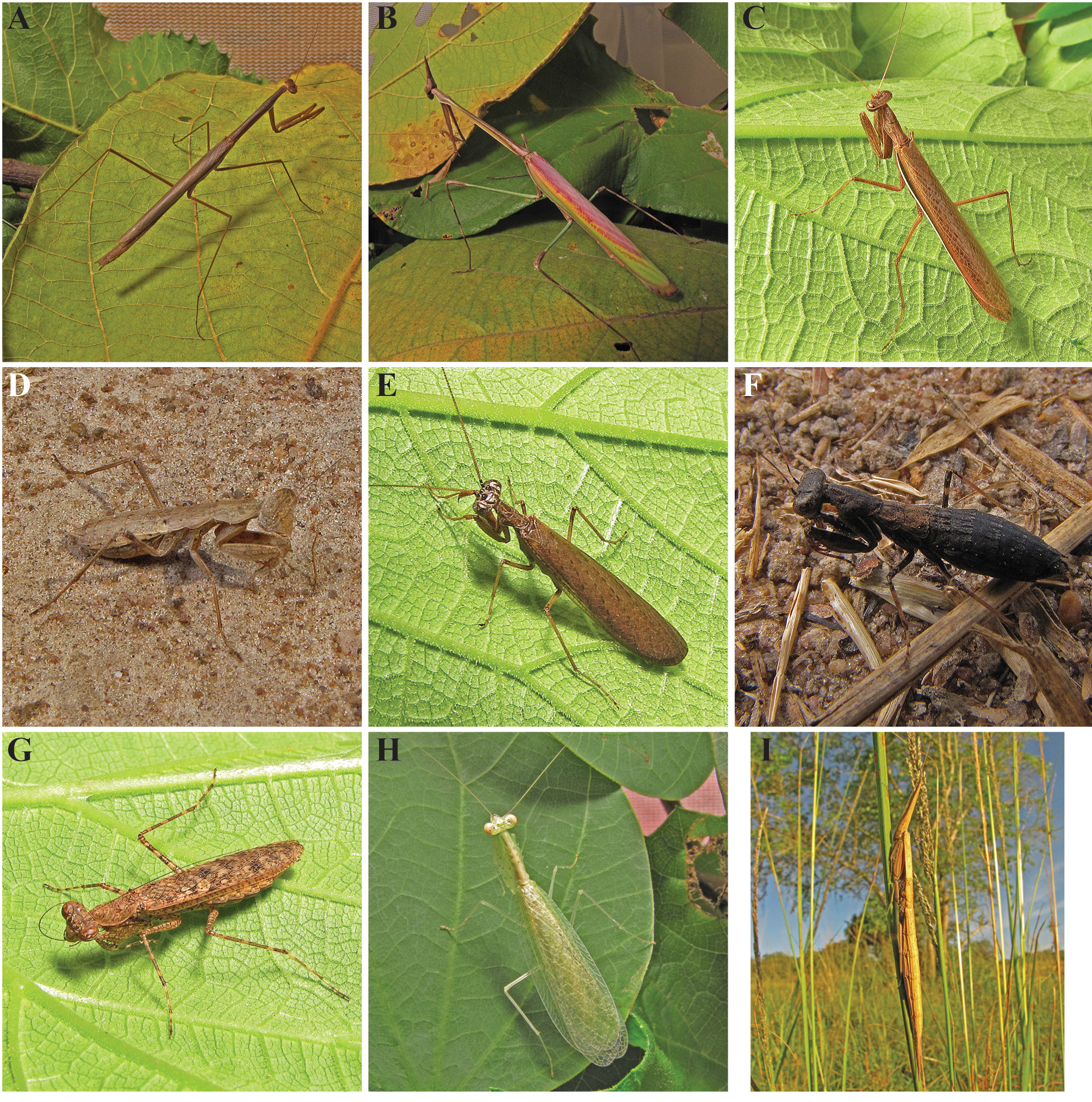
Iridopterygidae was a family of praying mantids the members in order Mantodea whose members, having formerly been moved here as a subfamily within Mantidae, have now been transferred elsewhere as part of the recent (2019) major revision of mantid taxonomy.
Thalassinidea
Thalassinidea is the former infraorder classification of decapod crustaceans that live in burrows in muddy bottoms of the world's oceans. In Australian English, the littoral thalassinidean Trypaea australiensis is referred to as the yabby (a term which also refers to freshwater crayfish of the genus Cherax), frequently used as bait for estuarine fishing; elsewhere, however, they are poorly known, and as such have few vernacular names, "mud lobster" and "ghost shrimp" counting among them. The burrows made by thalassinideans are frequently preserved, and the fossil record of thalassinideans reac
Hexanauplia
The Hexanauplia is a clade proposed by Oakley et al. (2013) that constitutes a class of crustaceans, comprising the Copepoda and Thecostraca. A number of recent phylogenomic studies have not found support for this clade, with some supporting the alternative clade of Communostraca comprising Thecostraca and Malacostraca.

Poecilostomatoida
Poecilostomatoida is a suborder of copepods. Although it was previously considered a separate order.
Polystoechotidae
REDIRECT Ithonidae
Kentrogonida
Kentrogonida was formerly a suborder of barnacles belonging to the group Rhizocephala, now an infraclass. In research published by Chan et al. in 2021, the suborders Kentrogonida and Akentrogonida were removed from the infraclass Rhizocephala, leaving 13 families as children of Rhizocephala without intermediate orders or suborders.
Orthorrhapha
Orthorrhapha is a circumscriptional name which historically was used in entomology for an infraorder of Brachycera, one of the two suborders into which the order Diptera, the flies, are divided. As the group was paraphyletic, it has not been used in classifications in the last decade, and is effectively obsolete. However, many catalogs, checklists, and older works still contain the name. The taxa that used to be in the Orthorrhapha now comprise all of the infraorders in Brachycera excluding the Muscomorpha (= "Cyclorrhapha").
Agathemerodea
REDIRECT Agathemera
Nanophyidae
REDIRECT Nanophyinae
Pygophora
order of crustaceans
Diphlebiidae
Diphlebiidae is no longer recognised as a biological family.
It was the name given to a small family of damselflies, the azure damselflies, with species in two genera: Diphlebia and Philoganga. Diphlebia is found in Australia and Philoganga is found in Southeast Asia. They are large and thick-bodied damselflies. They rest with their wings spread out. The Diphlebiidae were also known as Philogangidae.
Akentrogonida
Akentrogonida was formerly a suborder of barnacles belonging to the group Rhizocephala, now an infraclass. In research published by Chan et al. in 2021, the suborders Akentrogonida and Kentrogonida were removed from the infraclass Rhizocephala, leaving 13 families as children of Rhizocephala without intermediate orders or suborders.
Pemphigidae
REDIRECT Eriosomatinae
Fruva
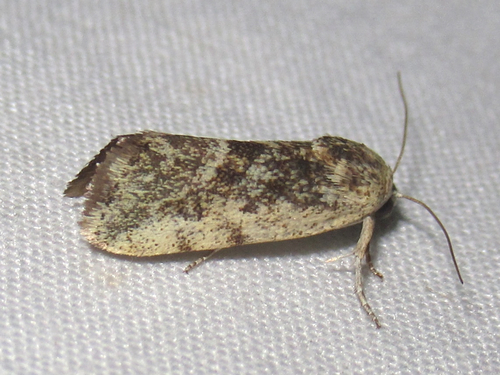
REDIRECT Ponometia#Formerly_Fruva
Tarachidia
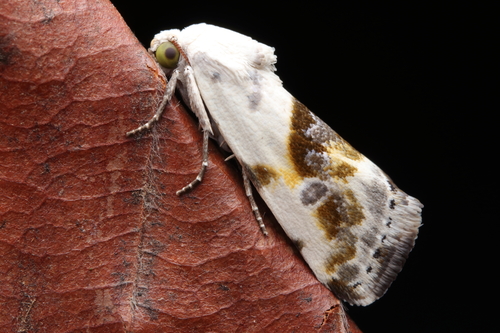
Tarachidia was a genus of moths of the family Noctuidae, it is now considered a synonym of Ponometia.

Conochares
Conochares was a genus of moths of the family Noctuidae, it is now considered a synonym of Ponometia.
Platylepadidae
thumb|Platylepas hexastylos
In the past, Platylepadidae has been considered a family of barnacles of the order Sessilia. Research published in 2021 by Chan et al. resulted in the genera of Platylepadidae being merged with that of Balanidae, except Stephanolepas which was moved to Chelonibiidae. In the same work, Sessilia was not retained as an order of barnacles.
Apygophora
In the past, Apygophora has been considered an order of barnacles. Research published in 2021 by Chan et al. resulted in the orders Apygophora and Pygophora being classified as families under the order Lithoglyptida.
Flabellifera
Flabellifera is a former suborder of isopod crustaceans. It is a polyphyletic or paraphyletic group, and contained over 3000 species. Its members are now placed in the Sphaeromatidea and Cymothoida.
Lernaeodiscidae
In the past, Lernaeodiscidae has been considered a family of barnacles. Research published in 2021 by Chan et al. resulted in the genera of Lernaeodiscidae being merged with that of Peltogastridae, which now contains the members of both families. As an exception, the species Triangulus galatheae was moved to the genus Paratriangulus in the family Triangulidae.
Catagramma
"Catagramma" is a genus of Neotropical butterflies; the name has a problematic history of differing usage, which especially continues to be used in a broader sense than any modern technical definitions e.g. among butterfly collectors as a form taxon. In that latter broad sense, the various "Catagramma" are popularly known as 88s in reference to patterning on the hindwing undersides which can resemble the number 88. They are medium-sized (around 5 cm (2 in) wingspan) forest dwellers.
Koleolepadidae
In the past, Koleolepadidae was considered a family of barnacles with a single genus, Koleolepas. Research published in 2021 by Chan et al. resulted in Koleolepas being moved to the family Heteralepadidae. The family Koleolepadidae is no longer active.
Cynthia
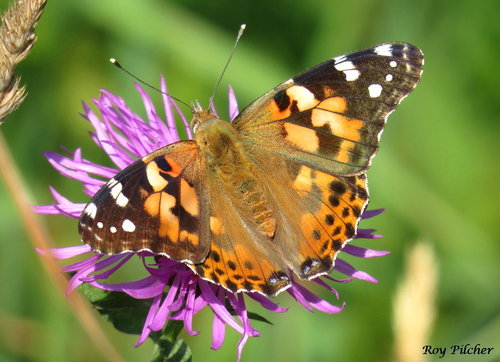
subgenus of insects
Tethinidae
REDIRECT Tethininae
Tibicen
thumb|Latreille, 1825, front page
Tibicen is a former genus name in the insect family Cicadidae (order Hemiptera) that was originally published by P. A. Latreille in 1825 and formally made available in a translation by A. A. Berthold in 1827. The name was placed on the Official Index of Rejected and Invalid Generic Names in Zoology by the International Commission on Zoological Nomenclature in 2021. Cicada species (all from Europe) that were included by some authors in this genus at the time of its suppression are now listed under genus Lyristes Horváth, 1926. Other formerly-Tibicen species are

Clavicornia
Clavicornia were a former order of beetles. The genera in it have been reassigned to the following families:
Amitermitinae
Amitermitinae is a diverse subfamily of termites in the family Termitidae. The subfamily was revived as a valid taxon by Hellemans et al., 2024, and is represented by 14 genera and 194 species. http://164.41.140.9/catal/statistics.php?filtro=extant
Natantia
Natantia (Boas, 1880) is an obsolete taxon of decapod crustaceans, comprising those families that move predominantly by swimming – the shrimp (comprising Caridea and Procarididea), prawns (Dendrobranchiata) and boxer shrimp. The remaining Decapoda were placed in the Reptantia, and consisted of crabs, lobsters and other large animals that move chiefly by walking along the bottom. The division between Natantia and Reptantia was replaced in 1963, when Martin Burkenroad erected the suborder Pleocyemata for those animals that brood their eggs on the pleopods, leaving Dendrobranchiata for the prawns
Cillenus
thumb|Cillenus
Cillenus was formerly a genus of beetles in the family Carabidae, but has been transferred to the genus Bembidion as a subgenus. Its species are now members of that genus.
Anelasmatidae
In the past, Anelasmatidae has been considered a family of barnacles of the order Lepadiformes. Research published in 2021 by Chan et al. resulted in the sole genus of this family, Anelasma, being moved to the family Pollicipedidae, and this family is no longer used.
Pseudoseptis
Pseudoseptis was a genus of moths that belongs to the family Noctuidae, it is now considered a synonym of Dichagyris.
Podotremata
Podotremata is a traditionally used section of crabs (Brachyura), now considered to be invalid. It was the smaller grouping of crabs, separate from the larger Eubrachyura section. Morphological and molecular analyses do not reveal a monophyletic Podotremata, but rather that it is paraphyletic, and so the most recent classifications divide "Podotremata" into three sections: Dromiacea, Cyclodorippoidea and Raninoida.