Category
page 1Obsolete bird taxa
Corvida
The "Corvida" were one of two "parvorders" contained within the suborder Passeri, as proposed in the Sibley-Ahlquist taxonomy, the other being Passerida. Standard taxonomic practice would place them at the rank of infraorder.
Harpyhaliaetus
REDIRECT Buteogallus#Taxonomy
Macrodipteryx
Macrodipteryx is a genus of African nightjars consisting of two species: the pennant-winged nightjar and the standard-winged nightjar. They inhabit subtropical woodlands, and the males of both species acquire strikingly elongated primaries in the breeding season. However, the former genus is now considered to be a synonym of Caprimulgus Linnaeus, 1758.
Psittiparus
redirect Paradoxornis
Hylocryptus
REDIRECT Clibanornis#Taxonomy
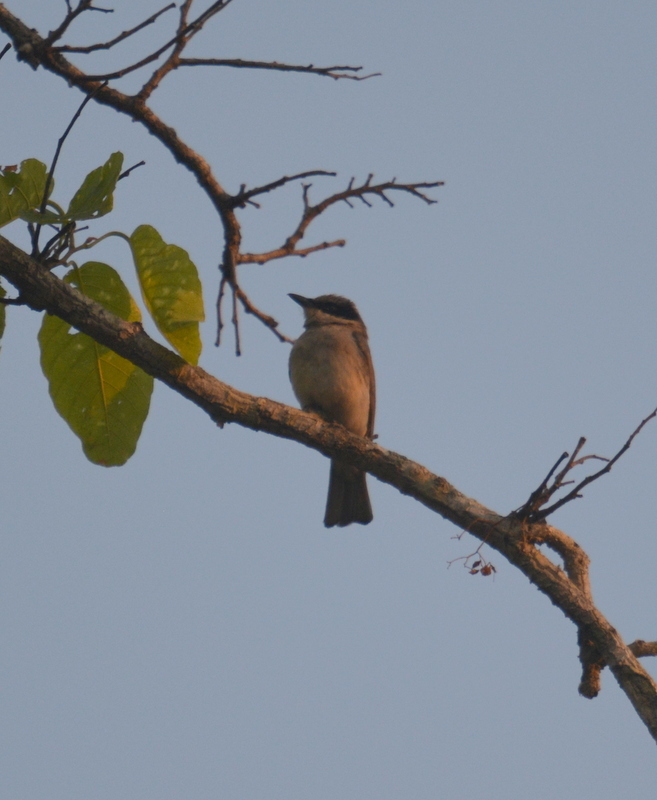
Tephrodornithidae
REDIRECT Vanga

Chloropeta
thumb|Dark-capped yellow warbler (Chloropeta natalensis)
Chloropeta was a genus of Acrocephalidae warblers; formerly, they were placed in the paraphyletic "Old World warblers". Now the papyrus yellow warbler is placed in its monotypic genus Calamonastides, with the others placed in the genus Iduna.

Wilsonia
genus of birds
.jpg)
Parula
Parula was formerly a small genus of New World warblers which breed in North and South America.
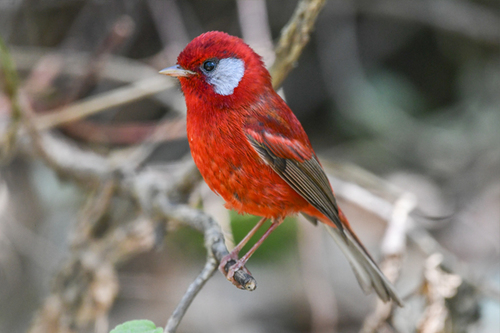
Ergaticus
REDIRECT Cardellina#Taxonomy
Perching duck
tribe of birds
Odontognathae
thumb|230px|Ichthyornis skeletons
Odontornithes
Odontornithes is an obsolete and disused taxonomic term proposed by Othniel Charles Marsh for birds possessing teeth, notably the genera Hesperornis and Ichthyornis from the Cretaceous deposits of Kansas.
Diglossopis
Diglossopis was a genus of blue flowerpiercers in the family Thraupidae. They are now usually placed in the genus Diglossa. They were formerly classified in the bunting and American sparrow family Emberizidae, more recent studies have shown it to belong in the Thraupidae. They are restricted to highland forest and woodland from Venezuela and Colombia, through Ecuador and Peru, to Bolivia.
Sauriurae
Sauriurae (meaning "lizard tails" in Greek) is a now-deprecated subclass of birds created by Ernst Haeckel in 1866. It was intended to include Archaeopteryx and distinguish it from all other birds then known, which he grouped in the sister-group Ornithurae ("bird tails"). The distinction Haeckel referred to in this name is that Archaeopteryx possesses a long, reptile-like tail, while all other birds known to him had short tails with few vertebrae, fused at the end into a pygostyle. The unit was not much referred to, and when Hans Friedrich Gadow in 1893 erected Archaeornithes for basically the