Category
page 1Obsolete calendars
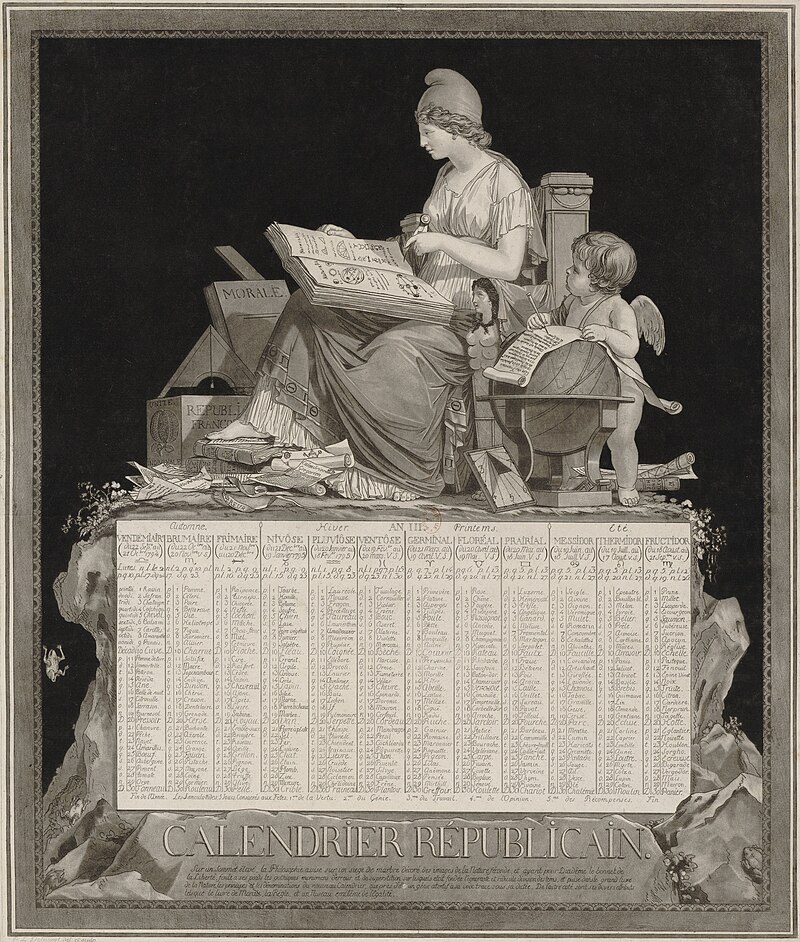
French Republican calendar
calendar

Maya calendar
system of calendars used in pre-Columbian Mesoamerica
Babylonian calendar
lunisolar calendar
Aztec calendar
calendar
Swedish calendar
calendar in use in Sweden from 1700 to 1712
Soviet calendar
modified Gregorian calendar that was used in Soviet Russia between 1918 and 1940
Runic calendar
perpetual calendar based on the 19 year long Metonic cycle of the Moon
Attic calendar
lunisolar calendar
Hellenic calendars
chronometry
Mesoamerican Long Count calendar
non-repeating base-20 and base-18 calendar used by several pre-Columbian Mesoamerican cultures, including the Maya

tōnalpōhualli
right|280px|thumb|Page 11 reverse from , showing four day-symbols of the : ( = one) Flint/Knife , ( = two) Rain , ( = three) Flower , and ( = four) Caiman/Crocodile (), with Spanish descriptions.
thumb|Above is the Codex Telleriano-Remensis: Folio 10r annotated to identify the day signs (Tonalpohualli) and counts on the page. This page includes the later half of a Trecena, starting with 6 grass (6 Malinalli) and ending with 13 rain (13 Quiyahuitl). The Trecena progresses from the second row and the first column and continues to the right. Once it is five columns in the order it progresses down
Ancient Macedonian calendar
lunisolar calendar
Germanic calendar
obsolete Germanic calendars

xiuhpōhualli
The xiuhpōhualli (, from (“year”) + (“count”)) is a 365-day calendar used by the Aztecs and other pre-Columbian Nahua peoples in central Mexico. It is composed of eighteen 20-day "months," which through Spanish usage came to be known as (“scores, groups of twenty”), with an inauspicious, separate 5-day period at the end of the year called the . The name given to the 20-day periods in pre-Columbian times is unknown, and though the Nahuatl word for moon or month, , is sometimes used today to describe them, the sixteenth-century missionary and ethnographer, Diego Durán explained that:
Florentine calendar
calendar used in the Republic of Florence in Italy during the Middle Ages
Pisan calendar
calendar used in Pisa from the Middle Ages until at least 1406
Pentecontad calendar
Mesopotamian calendar, whose year consists of 7 periods of 50 days, with an annual supplement of 15 or 16 days
Bulgar calendar
solar calendar system used by the Bulgars