Category
page 1Oligarchy

theocracy
Theocracy or ethiocracy is a form of autocracy or oligarchy in which one or more deities are recognized as supreme ruling authorities giving divine guidance to human intermediaries with executive, legislative or judicial power who manage the government's daily affairs.

aristocracy
Aristocracy (; ) is a form of government that places power in the hands of a small, privileged ruling class, the aristocrats.
thumb|The Henry Howard, 6th Duke of Norfolk|6th Duke of Norfolk, a 17th-century English aristocrat and politician who held the hereditary office of [[Earl Marshal of England]]
Across Europe, the aristocracy exercised immense economic, political, and social influence. In Western Christian countries, the aristocracy was mostly equal with magnates, also known as the titled or higher nobility, however the members of the more numerous social class, the untitled lower nobilit

oligarchy
Oligarchy (; ) is a form of government in which power rests with a small number of people. Leaders of such regimes are often referred to as oligarchs, and generally are characterized by having titles of nobility or high amounts of wealth.

despotism
thumb|233x233px|Pol Pot, leader of the [[Khmer Rouge, is widely regarded as one of the most brutal despots of the 20th century, responsible for the deaths of an estimated quarter of Cambodia's population.]]
thumb|233x233px|Suharto, who ruled [[Indonesia from 1967 to 1998 under the 'New Order' regime, is regarded as a despot whose rise to power followed the 1965–66 anti-communist purges, during which an estimated half a million people were killed, and whose rule was marked by authoritarianism, repression, and endemic corruption.]]

plutocracy
A plutocracy () or plutarchy is a society that is ruled or controlled by people of great wealth or income. It can be considered a form of oligarchy (rule by the few) where the ruling few are wealthy. The first known use of the term in English dates from 1631. It is not rooted in any established political philosophy.

Republic of Genoa
medieval and early modern maritime republic from (1005-1797)
.jpg)
elite
thumb|upright=1.35|Political cartoon parodying James G. Blaine with his wealthy donors feasting at a table at [[Delmonico's while a poor family begs beneath. Illustrated by Walt McDougall and Valerian Gribayedoff and originally printed in New York World, October 30, 1884.]]

kleptocracy
thumb|upright=1.2|Detail from Corrupt Legislation, painting by Elihu Vedder (1896)

Leviathan
book by Thomas Hobbes
elitism
Elitism is the notion that individuals who form an elite—a select group with desirable qualities such as intellect, wealth, power, fame, physical attractiveness, notability, special skills, experience, lineage—are more likely to be constructive to society and deserve greater influence or authority. The term elitism may be used to describe a situation in which power is concentrated in the hands of a limited number of people. Beliefs that are in opposition to elitism include egalitarianism, anti-intellectualism (against powerful institutions perceived to be controlled by elites), populism, and t

military junta
government led by a committee of military leaders
timocracy
A timocracy (; from Greek τιμή timē, "honor, worth" and -κρατία -kratia, "rule") in Aristotle's Politics referred to a type of government in which citizens were equal in most respects, but their political participation was determined by a hierarchy based on property. Those whose wealth required them to contribute more to public expenses enjoyed greater political privileges in proportion to their means. More advanced forms of timocracy, where power derives entirely from wealth with no regard for social or civic responsibility, may shift in their form and become a plutocracy where the wealthy ru

The Establishment
visible dominant group that holds power or authority in a nation or organization
cronyism
Cronyism is awarding positions, jobs, contracts, loans, privileges, or advantages to friends or colleagues. It is used especially in politics, when referring to partiality between politicians and businesses. A person who supports or partakes in cronyism is referred to as a crony, cronie, or cronyist.
iron law of oligarchy
Political theory claiming that all organizations will eventually become oligarchic

corporatocracy
thumb|Protester holding Adbusters' Corporate American flag at the [[Second inauguration of George W. Bush in Washington, D.C.]]
Corporatocracy or corpocracy is an economic, political and judicial system controlled or influenced by business corporations or corporate interests.

Kritarchy
Kritarchy, also called kritocracy, was the system of rule by Hebrew Bible judges (, see also shophetim) in ancient Israel, started by Moses according to the Book of Exodus, before the establishment of a united monarchy under Saul.
neo-feudalism
Neo-feudalism or new feudalism is a theorized contemporary rebirth of policies of governance, economy, and public life, reminiscent of those which were present in many feudal societies. Such aspects include, but are not limited to: Unequal rights and legal protections for common people and for nobility, dominance of societies by a small and powerful elite, a lack of social mobility, and relations of lordship and serfdom between the elite and the people, where the former are rich and the latter poor.
ethnarch
Ethnarch (pronounced , also ethnarches, ) is a term that refers generally to political leadership over a common ethnic group or homogeneous kingdom. The word is derived from the Greek words (ethnos, "tribe/nation") and (archon, "leader/ruler"). ''Strong's Concordance'' gives the definition of 'ethnarch' as "the governor (not king) of a district".
Mafia state
state system where the government is tied with organized crime
business oligarch
business magnate of great political influence
Meiji oligarchy
ruling class of Meiji period Japan
_-_Synarchie.jpg)
synarchism
thumb|right|alt=Synarchism|Femmes françaises n° 46 (10 August 1945)
Synarchism generally means "joint rule" or "harmonious rule". Beyond this general definition, both synarchism and synarchy have been used to denote rule by a secret elite in Vichy France, Italy, China, and Hong Kong, while also being used to describe a pro-Catholic theocracy movement in Mexico.
post-democracy
The term post-democracy is a term coined by Warwick University political scientist Colin Crouch in 2000 in his book Coping with Post-Democracy. It designates states that operate by democratic systems (elections are held, governments fall, and there is freedom of speech), but whose application is progressively limited. That is, a small elite co-opts democratic institutions to give itself decision-making authority. Crouch further developed the idea in an article called, "Is there a liberalism beyond social democracy?" for the think tank Policy Network and in his subsequent book The Strange Non-D
old money
class of the rich, who have been able to maintain their wealth across multiple generations
Netocracy
Netocracy was a term invented by the editorial board of the American technology magazine Wired in the early 1990s. A portmanteau of Internet and aristocracy, netocracy refers to a perceived global upper-class that bases its power on a technological advantage and networking skills, in comparison to what is portrayed as a bourgeoisie of a gradually diminishing importance.

narco-state
thumb|upright|Panamanian leader [[Manuel Noriega, following his arrest by U.S. authorities]]
shadow government
family of conspiracy theories
Makhzen
Makhzen (, , ) is the governing institution in Morocco and in pre-1957 Tunisia, centered on the monarch and consisting of royal notables, top-ranking military personnel, landowners, security service bosses, civil servants and other well-connected members of the establishment. The term "Makhzen" is also popularly used in Morocco as a word meaning "State" or "Government".

Task Force KleptoCapture
2022 US sanctions task force focused on Russia
Café com leite politics
Brazilian politics under the Old Republic

political family
family in which several members are involved in politics
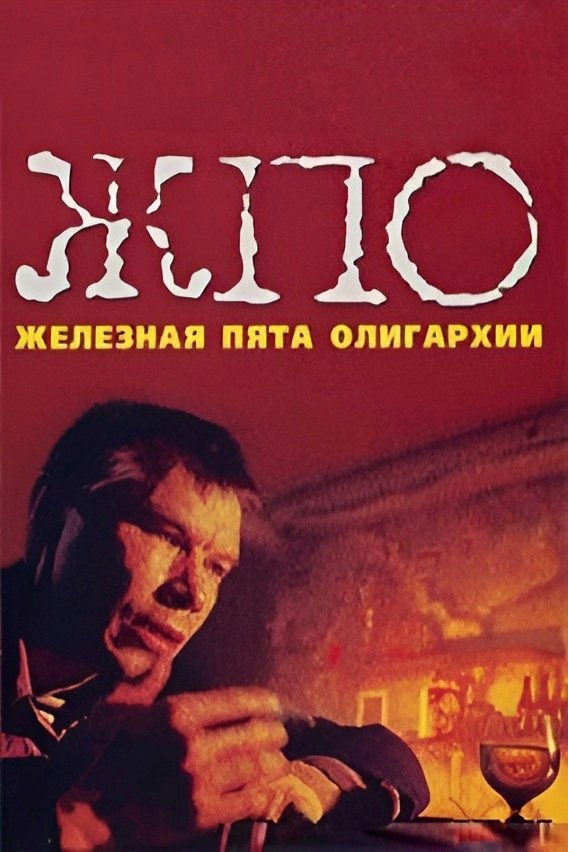
The Iron Heel of Oligarchy
1998 film by Aleksandr Bashirov
gaṇasaṅgha
Gana-Sangha ( Tribal Assembly) or Gana-Rajya (Tribal State) was a type of tribe and clan structure of aristocratic republics in ancient India.
kocabaşı
thumb|150px|right|Ioannis Logothetis, proestos of Livadeia, by Louis Dupré
The kodjabashis (; singular κοτζάμπασης, kotzabasis; ; from from and ) were local Christian notables in parts of the Ottoman Balkans, most often referring to Ottoman Greece and especially the Peloponnese. They were also known in Greek as proestoi or prokritoi (προεστοί/πρόκριτοι, "primates") or demogerontes (δημογέροντες, "elders of the people"). In some places they were elected (such in the islands for example), but, especially in the Peloponnese, they soon became a hereditary oligarchy, who exercised considerable infl
Mankari
thumb|right|A Maratha Empire|Maratha Durbar showing the Chief ([[Raja) and the nobles (Sardars, Jagirdars, Istamuradars & Mankaris of the state]]
thumb|right|Maratha Soldiers
Power behind the throne
informal influence over a political figure
Coronelismo
Coronelism, from the term Coronelismo (), was the Brazilian political machine during the Old Republic (1889–1930), also known as the "rule of the colonels", responsible for the centralization of political power in the hands of a locally dominant oligarch, known as a coronel, who would dispense favors in return for loyalty.
bankocracy
Bankocracy (from the English word bank and Ancient Greek κράτος - kratos, "power, rule") or trapezocracy (from Greek τράπεζα - trapeza, "bank") is a polemic term referring to the excessive power or influence of banks on public policy-making. It can also refer to a form of government where financial institutions rule society.