Category
page 1Oligohymenophorea

Paramecium
Paramecium ( , , plural "paramecia" only when used as a vernacular name) is a genus of eukaryotic, unicellular ciliates, widespread in freshwater, brackish, and marine environments. Paramecia are often abundant in stagnant basins and ponds. Because some species are readily cultivated and easily induced to conjugate and divide, they have been widely used in classrooms and laboratories to study biological processes. Paramecium species are commonly studied as model organisms of the ciliate group and have been characterized as the "white rats" of the phylum Ciliophora.
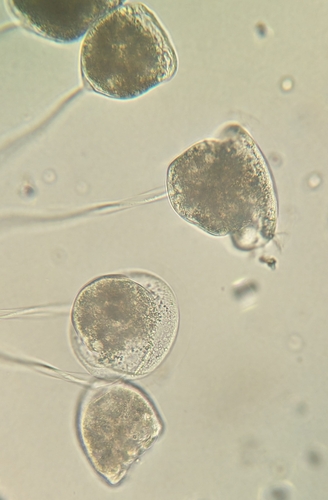
Vorticella
Vorticella is a genus of bell-shaped ciliates that have stalks to attach themselves to substrates. The stalks have contractile myonemes, allowing them to pull the cell body against substrates. The formation of the stalk happens after the free-swimming stage.

Tetrahymena
Tetrahymena is a genus of free-living ciliates, examples of unicellular eukaryotes. The genus Tetrahymena is the most widely studied member of its phylum. It can produce, store and react with different types of hormones. Tetrahymena cells can recognize both related and hostile cells.

Paramecium caudatum
species of unicellular ciliate
Ichthyophthirius multifiliis
Parasitic species of protozoan

Oligohymenophorea
The Oligohymenophorea are a large class of ciliates. There is typically a ventral groove containing the mouth and distinct oral cilia, separate from those of the body. These include a paroral membrane to the right of the mouth and membranelles, usually three in number, to its left. The cytopharynx is inconspicuous and never forms the complex cyrtos found in similar classes. Body cilia generally arise from monokinetids, with dikinetids occurring in limited distribution over part of the body.
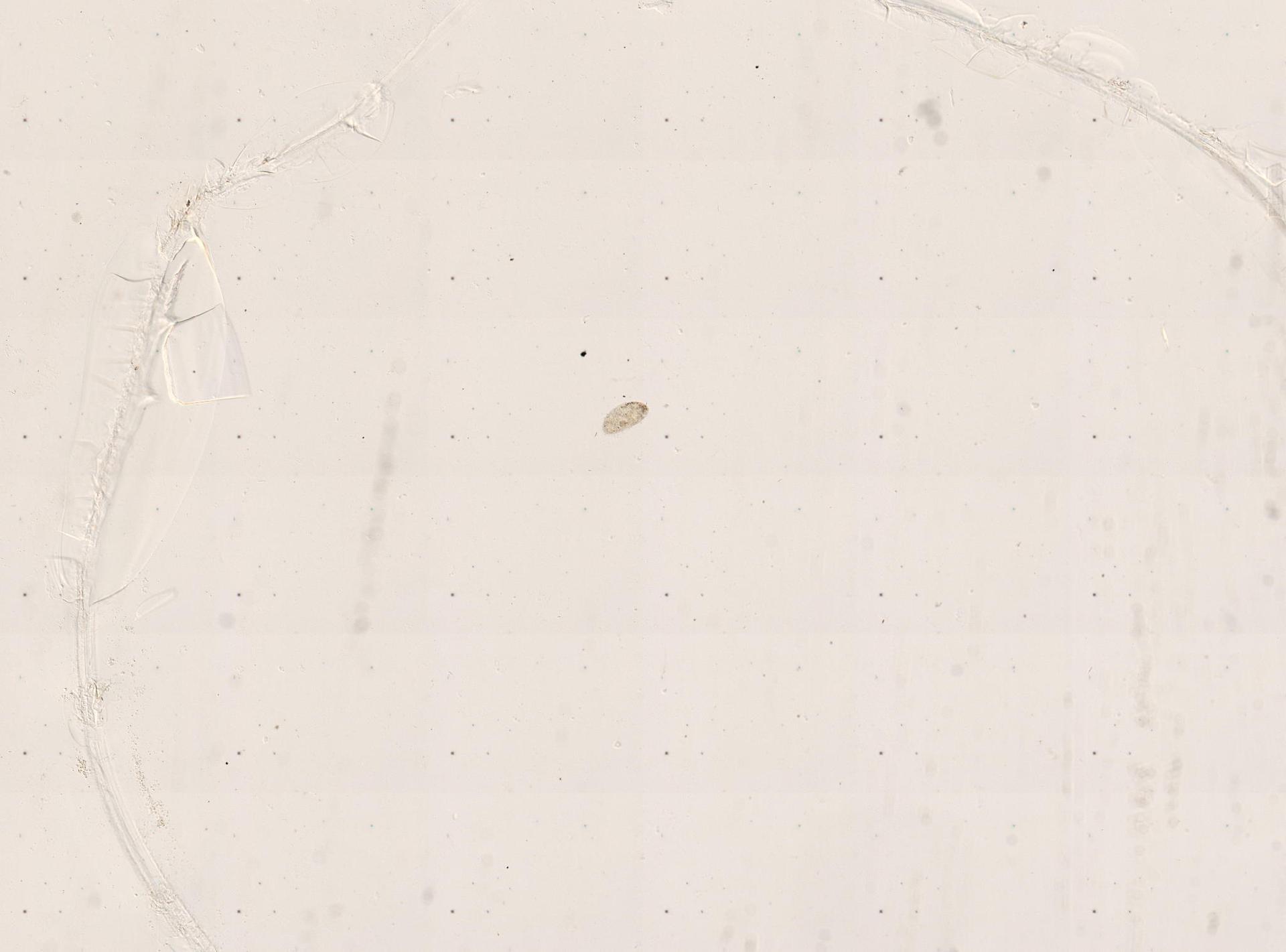
Paramecium bursaria
species of unicellular ciliate

Paramecium aurelia
species of unicellular ciliate

Trichodina
Trichodina is a genus of ciliate alveolates that is ectocommensal or parasitic on aquatic animals, particularly fish. They are characterised by the presence of a ring of interlocking cytoskeletal denticles, which provide support for the cell and allow for adhesion to surfaces including fish tissue.
Vorticellidae
Vorticellidae is a family of ciliates belonging to the order Sessilida. They are colonial or unicellular organisms that are attached to a substrate via a stalk. The distinguishing characteristic of the family is a helical spasmoneme within the stalk that is contractile.
Zoothamnium
Zoothamnium is a genus of ciliate protozoan.
Parameciidae
Parameciidae is a family of ciliates in the order Peniculida. Members of this family have differentiated anterior and posterior regions and are bounded by a hard but elastic pellicle. The family contains the genera Paramecium and Physanter.

Epistylis
Epistylis is a genus of usually colonial peritrich ciliates with a short oral disc and collar, and a rigid stalk. The rigid stalk differentiates Epistylis from the very similar genus Carchesium in which the stalks are contractile like those in Vorticella.
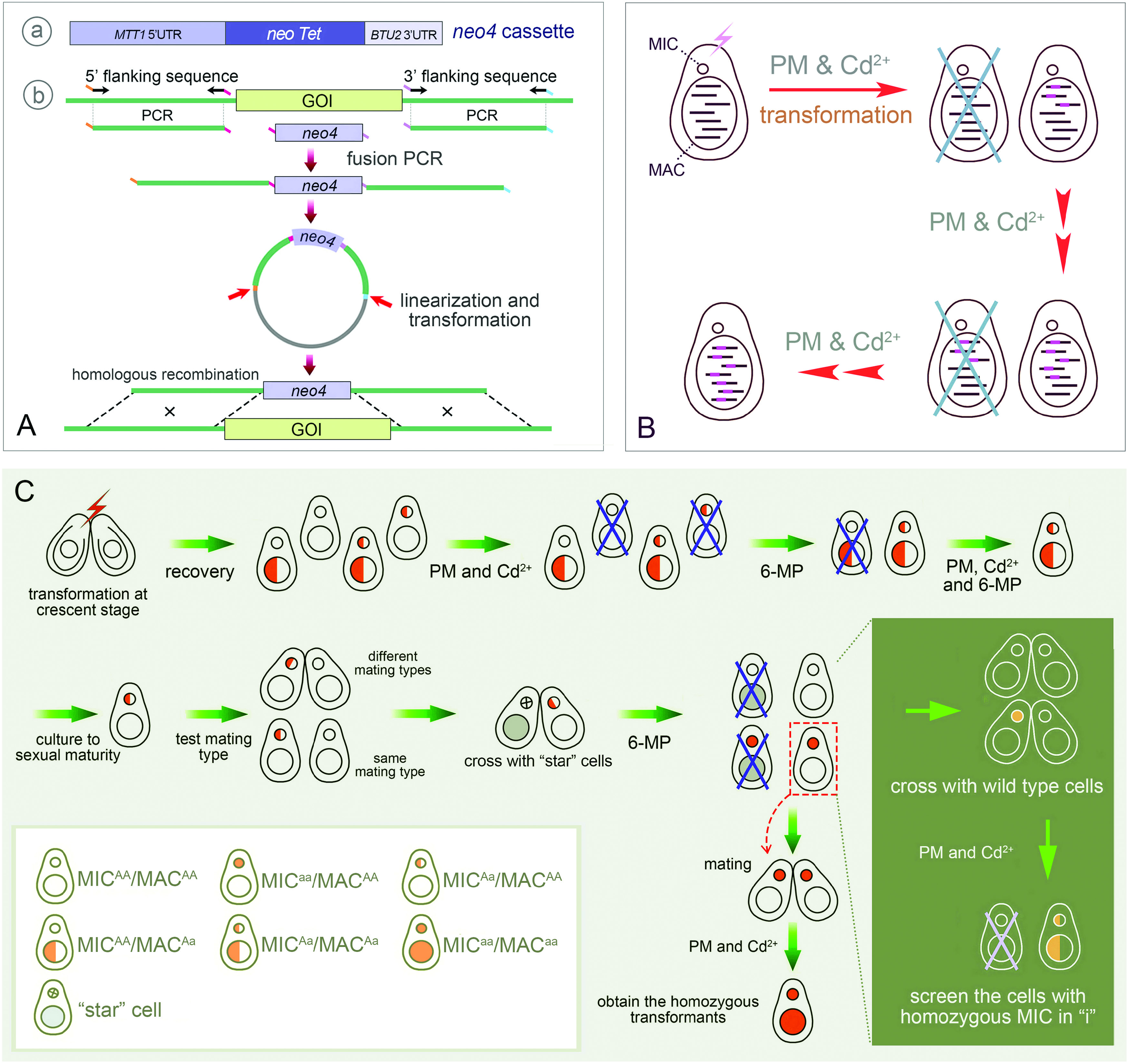
Tetrahymena thermophila
species of ciliate protozoa
Mobilida
Mobilida is a group of parasitic or symbiotic peritrich ciliates, comprising more than 280 species. Mobilids live on or within a wide variety of aquatic organisms, including fish, amphibians, molluscs, cnidarians, flatworms and other ciliates, attaching to their host organism by means of an aboral adhesive disk. Some mobilid species are pathogens of wild or farmed fish, causing severe and economically damaging diseases such as trichodinosis.
Peniculid
The peniculids are an order of ciliate protozoa, including the well-known Paramecium and related genera, such as Frontonia, Stokesia, Urocentrum and Lembadion. Most are relatively large, freshwater forms that feed by sweeping smaller organisms into the mouth. They have simple life cycles, and in many cases do not even form resting cysts.
Peritrichia
The peritrichs (Latin: Peritrichia) are a large and distinctive group of ciliates.
Frontonia
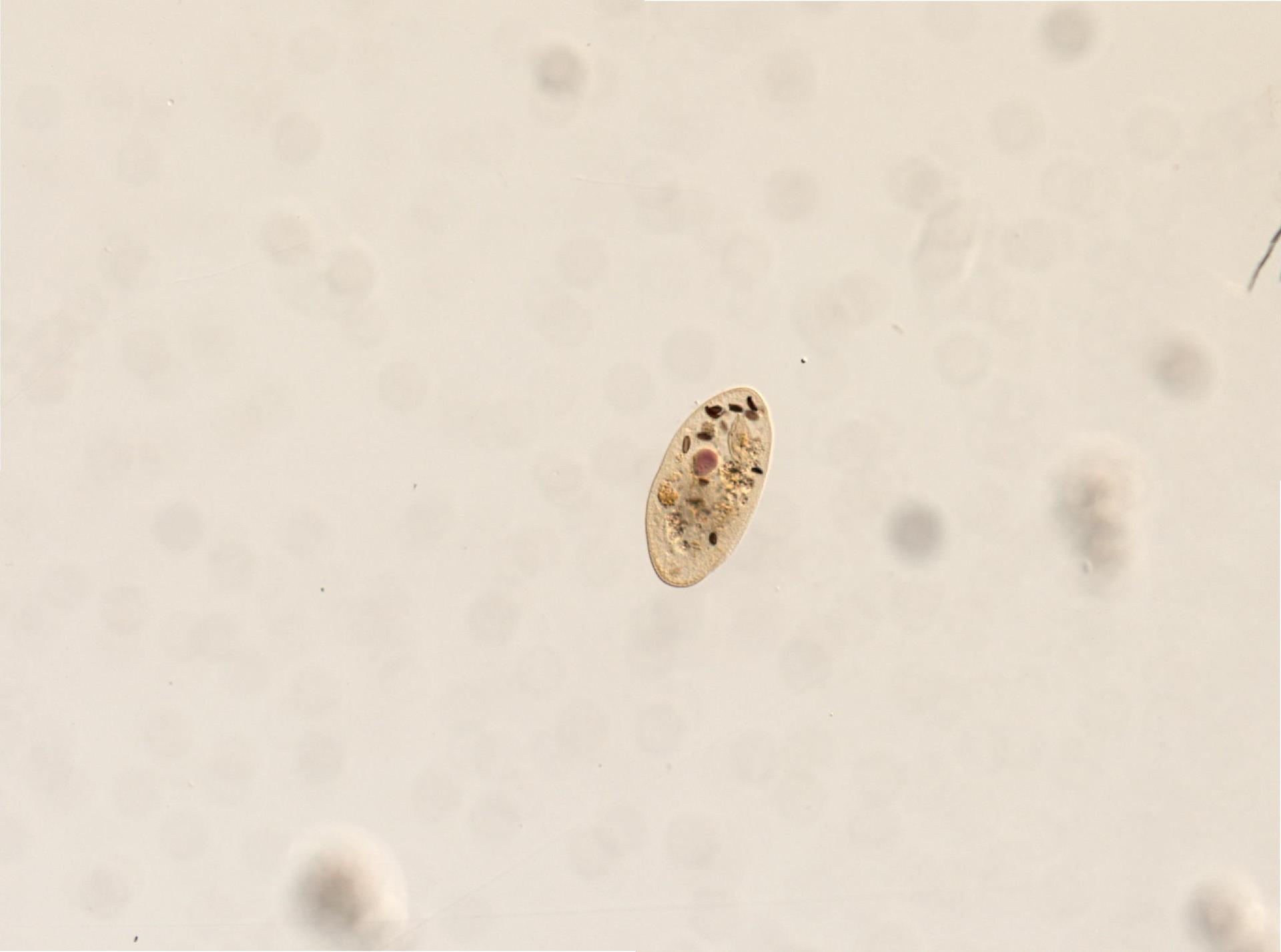
Frontonia is a genus of free-living unicellular ciliate protists, belonging to the order Peniculida. As Peniculids, the Frontonia are closely related to members of the genus Paramecium. However, whereas Paramecia are mainly bacterivores, Frontonia are capable of ingesting large prey such as diatoms, filamentous algae, testate amoebas, and even, in some circumstances, members of their own species. In bacteria-rich saprobic conditions, Frontonia leucas can live as a facultative bacterivore.
Astomatida
Astomes (order Astomatida) are a group of ciliate eukaryotes commonly found in the guts of annelid worms, especially oligochaetes, and other invertebrates. As their name implies, these parasites are characterized by an absence of mouth. The cell is covered by uniform cilia; in addition, some astomes attach themselves to their hosts by suckers, while others use various hooks or barbs.
Trichodinidae
Trichodinidae is a family of ciliates of the order Mobilida, class Oligohymenophorea. Members of the family are ectoparasites (or, alternatively, ectocommensals) of a wide variety of aquatic organisms, including fish, amphibians, hydrozoans, molluscs and crustaceans.

Colpidium
Colpidium is a genus of ciliates.
Sessilida
Sessilida is the largest order of the peritrich ciliates.
Tetrahymenidae
Tetrahymenidae is a family of ciliates.
Pleuronematida
Pleuronematida is an order of predominantly free-living ciliates in the subclass Scuticociliatia.