Category
page 1Onychophora genera

Peripatus
Peripatus is a genus of velvet worms in the Peripatidae family. The name "peripatus" (unitalicised and uncapitalised) is also used to refer to the Onychophora as a whole, although this group comprises many other genera besides Peripatus. The genus Peripatus is found in Central America, the Caribbean and northern South America. This genus is viviparous, with mothers supplying nourishment to their embryos through a placenta.
Eoperipatus
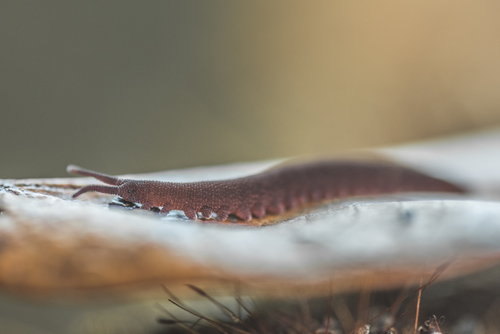
Eoperipatus is a genus of velvet worms in the family Peripatidae. These velvet worms have been reported from locations throughout Southeast Asia, including Malaysia, Singapore, Thailand, and Vietnam. This genus exhibits lecithotrophic ovoviviparity; that is, mothers in this genus retain yolky eggs in their uteri.
Peripatoides
Peripatoides is a genus of velvet worms in the family Peripatopsidae. Velvet worms in this genus are found throughout New Zealand. Like all velvet worms, these animals are nocturnal predators that spit a sticky slime to trap their prey. Unlike the species in the only other genus of velvet worms found in New Zealand, Ooperipatellus, which lay eggs (that is, are oviparous), the species in the genus Peripatoides are live-bearing (ovoviviparous).

Peripatopsis
Peripatopsis is a genus of velvet worms in the Peripatopsidae family. These velvet worms are found in the KwaZulu-Natal, Western Cape, and Eastern Cape provinces of South Africa. This genus was proposed by the British zoologist Reginald I. Pocock in 1894 with Peripatopsis capensis designated as the type species.
Euperipatoides
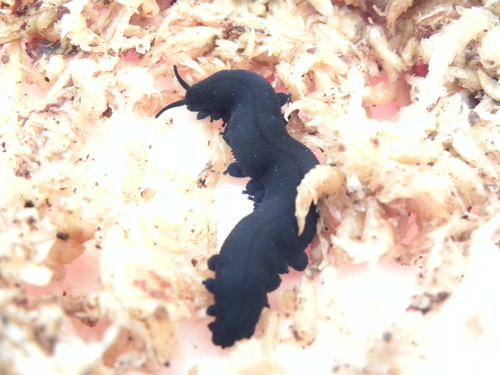
Euperipatoides is a genus of ovoviviparous velvet worms in the family Peripatopsidae. All species in this genus have 15 pairs of legs in both sexes. All species are found in New South Wales, Australia. E. rowelli is also found in the Australian Capital Territory.
Epiperipatus
Epiperipatus is the most diverse genus of neotropical velvet worms in the family Peripatidae. Species in this genus are found in Central and South America. This genus is viviparous, with mothers supplying nourishment to their embryos through a placenta.
Macroperipatus
Macroperipatus is a genus of Neotropical velvet worms in the Peripatidae family. Velvet worms in this genus can have as few as 24 pairs of legs (in M. guianensis) or as many as 42 leg pairs (in M. torquatus). This genus is viviparous, with mothers supplying nourishment to their embryos through a placenta.
Opisthopatus
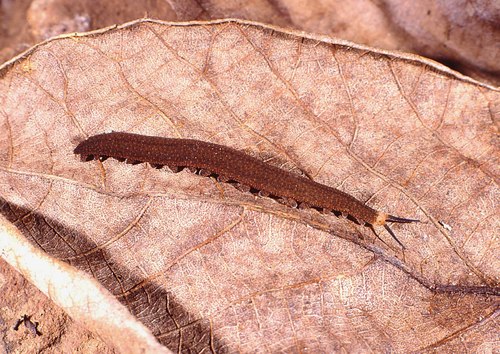
Opisthopatus is a genus of South African velvet worms in the family Peripatopsidae. Velvet worms in this genus are found in South Africa, in the Eastern Cape, KwaZulu-Natal, and Mpumalanga provinces, as well as in Lesotho and Eswatini. This genus was first proposed in 1899 by the zoologist William F. Purcell to contain the newly discovered species O. cinctipes, which he designated as the type species.
Paraperipatus
Paraperipatus is a genus of velvet worms in the family Peripatopsidae. This genus exhibits matrotrophic viviparity, that is, mothers in this genus retain eggs in their uteri and supply nourishment to their embryos, but without any placenta. Species in this genus are found in New Guinea and the surrounding islands, including the Maluku achipelago.
Cephalofovea
Cephalofovea is a genus of velvet worms in the Peripatopsidae family. All species in this genus are ovoviviparous and have 15 pairs of oncopods (legs), and both sexes possess a pitted-head which the male everts and uses to pass his spermatophore to the female. They are found in New South Wales, Australia.
Helenodora inopinata
Helenodora is an extinct basal onychophoran or lobopodian genus known from the Carboniferous Carbondale Formation of Illinois. The only known species described is H. inopinata. The ecology of this animal is not well known, but it is thought that it may have lived on land and/or underwater.
Ooperipatus
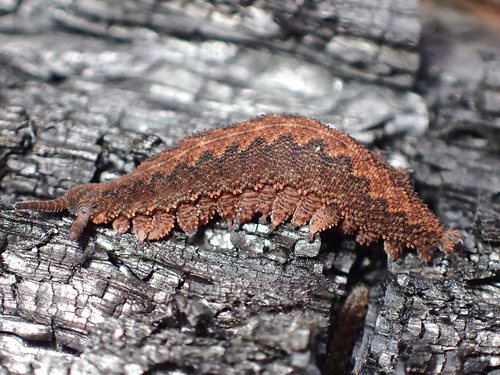
Ooperipatus is a genus of velvet worms in the family Peripatopsidae. They are found in Australia. All species in this genus are oviparous and have 15 pairs of lobopods (legs).
Nodocapitus
Nodocapitus is a genus of velvet worms in the family Peripatopsidae. All species in this genus have 15 pairs of legs in both sexes. N. formosus is found in Queensland, Australia, N. inornatus is found in New South Wales, and N. barryi is found in both of these states. In each species, the males are distinguished by enlarged papillae on the head, between the antennae.
Kumbadjena
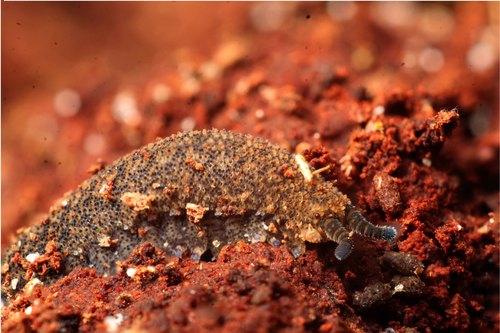
Kumbadjena is a genus of velvet worms in the family Peripatopsidae. All species in this genus are ovoviviparous, all have 15 pairs of oncopods (legs), and all are found in the southwest of Western Australia.
Hylonomoipos
Hylonomoipos is a genus of velvet worms in the family Peripatopsidae. All species in this genus have 15 pairs of legs in both sexes. They are found in southeastern Queensland, Australia.
Ruhbergia
Ruhbergia is a genus of velvet worms in the family Peripatopsidae. All species in this genus are ovoviviparous (with yolky ova) and have 15 pairs of legs in both sexes. They are found in New South Wales, Australia.
Heteroperipatus
Heteroperipatus is a genus of Central American velvet worms in the Peripatidae family. The number of legs in this genus varies within species as well as among species and ranges from 26 pairs (in H. clarki) to 32 pairs (in H. engelhardi). This genus is viviparous, with mothers supplying nourishment to their embryos through a placenta.
Planipapillus
Planipapillus is a genus of velvet worms in the family Peripatopsidae, whose species are found in eastern Victoria and southeastern New South Wales, Australia. They are unique in that the males of this genus may bear patches of reduced papillae on the head, posterior to the eyes; the generic name refers to this fact, and likewise they have been vernacularly referred to as lawn-headed onychophorans. All species in this genus are oviparous and have 15 pairs of legs.
Austroperipatus
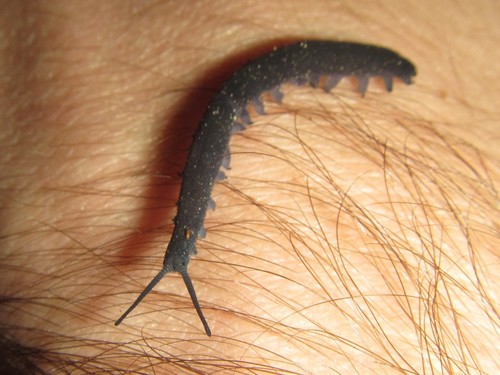
Austroperipatus is a genus of oviparous and ovoviviparous velvet worms in the family Peripatopsidae and the genus Austroperipatus. This genus has 15 pairs of legs in both sexes. The species in this genus are found in northern Queensland, Australia.
Ooperipatellus
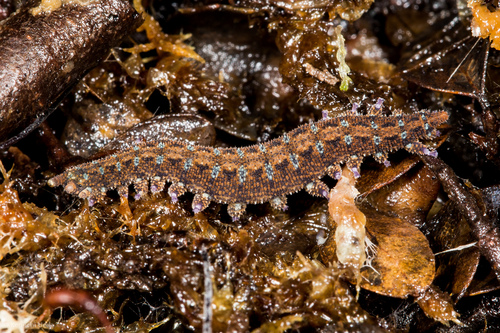
Ooperipatellus is a genus of velvet worms in the Peripatopsidae family. These velvet worms are found in Australia and New Zealand. Species in this genus are oviparous. This genus was proposed by the German zoologist Hilke Ruhberg in 1985, with Ooperipatellus insignis designated as the type species. This genus is notable as the only one in which velvet worms have no more than 14 pairs of legs.
Oroperipatus
Oroperipatus is a genus of Neotropical velvet worms in the family Peripatidae. Species in this genus are found in South America west of the Andes and in Mexico. This genus is viviparous, with mothers supplying nourishment to their embryos through a placenta.