Category
page 1Ophiocordycipitaceae

Ophiocordyceps sinensis
species of fungus

Ophiocordyceps unilateralis
species of fungus
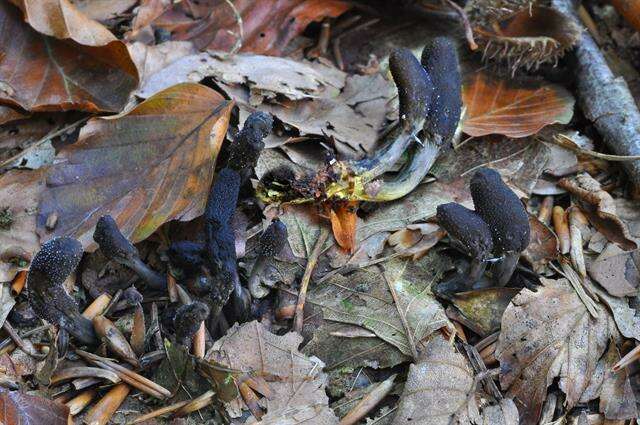
Ophiocordycipitaceae
Ophiocordycipitaceae is a family of parasitic fungi in the phylum Ascomycota, class Sordariomycetes. It was created in 2007 to resolve the paraphyly of Calvicipitaceae. It was updated in 2020.

Ophiocordyceps
Ophiocordyceps is a genus of fungi within the family Ophiocordycipitaceae. The widespread genus, first described scientifically by British mycologist Tom Petch in 1931, contains about 140 species that grow on insects. Anamorphic genera that correspond with Ophiocordyceps species are Hirsutella, Hymenostilbe, Isaria, Paraisaria, and Syngliocladium.

Purpureocillium lilacinum
species of fungus

Tolypocladium ophioglossoides
species of fungus
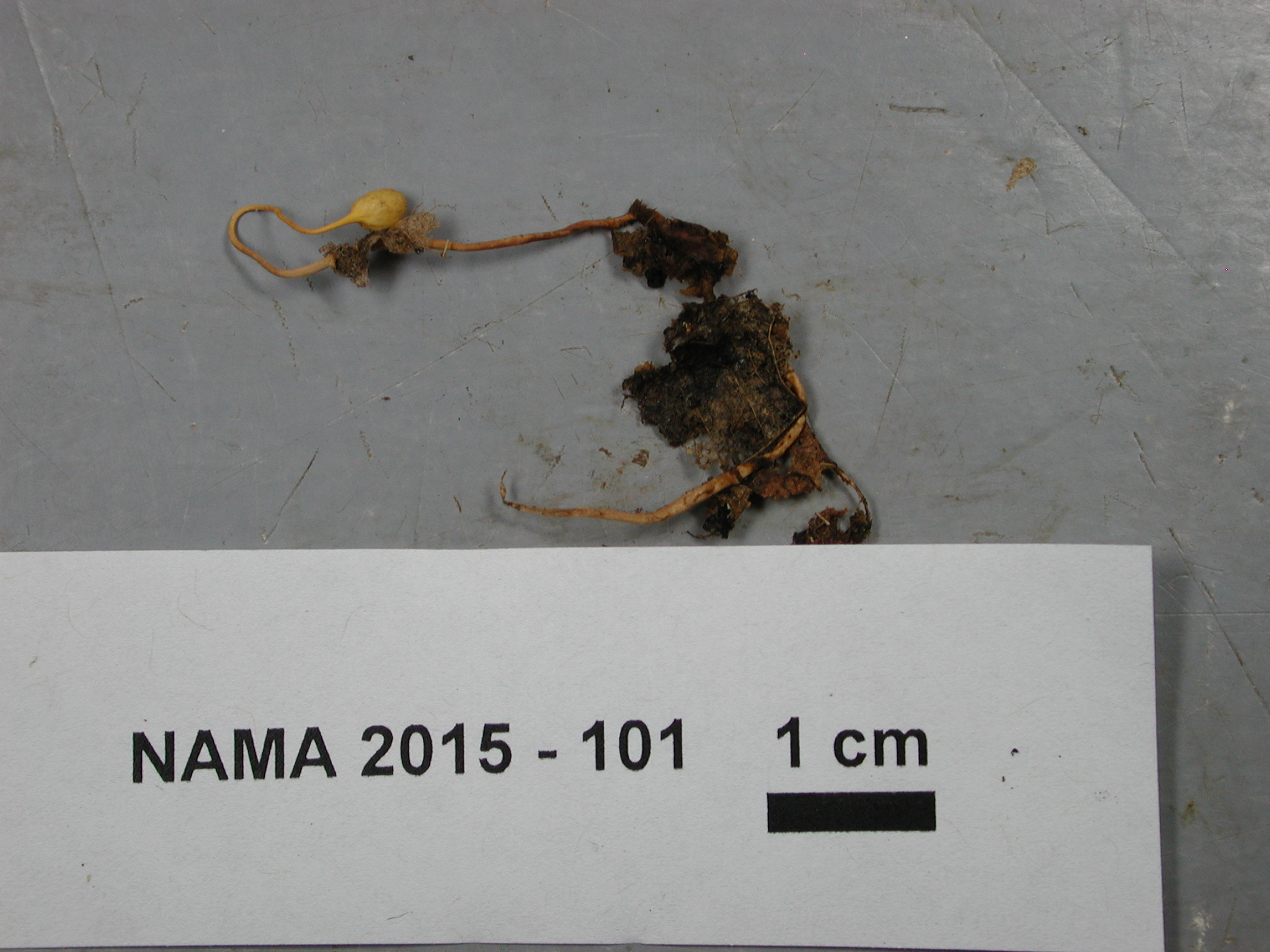
Ophiocordyceps sphecocephala
species of fungus
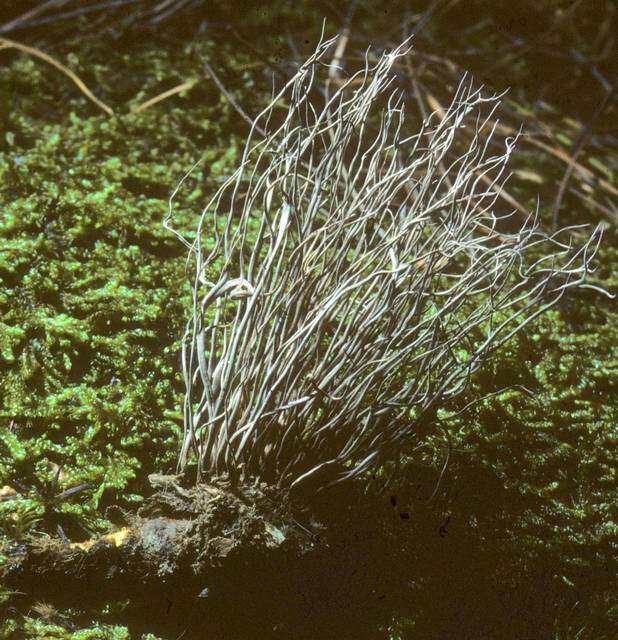
Hirsutella
Hirsutella is a genus of asexually reproducing fungi in the Ophiocordycipitaceae family. Originally described by French mycologist Narcisse Théophile Patouillard in 1892, this genus includes species that are pathogens of insects, mites and nematodes; there is interest in the use of these fungi as biological controls of insect and nematode pests. The teleomorphs of Hirsutella species are thought to belong to the genus Ophiocordyceps.
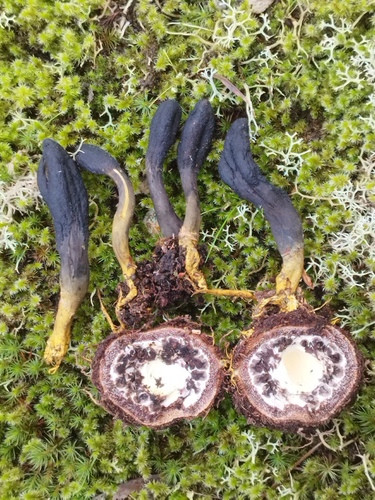
Tolypocladium
Tolypocladium is a genus of fungi within the family Ophiocordycipitaceae. It includes species that are parasites of other fungi, insect pathogens, rotifer pathogens and soil inhabiting species with uncertain ecological roles.
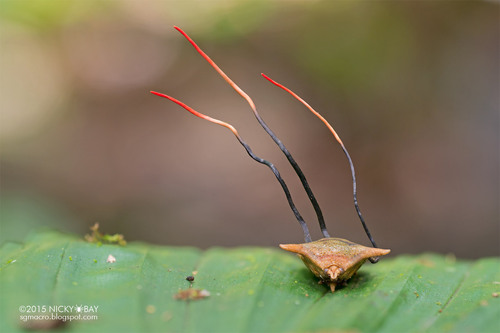
Hymenostilbe
Hymenostilbe is a genus of fungi in the Ophiocordycipitaceae family. All members are anamorph names of Ophiocordyceps.

Purpureocillium atypicola
species of fungus
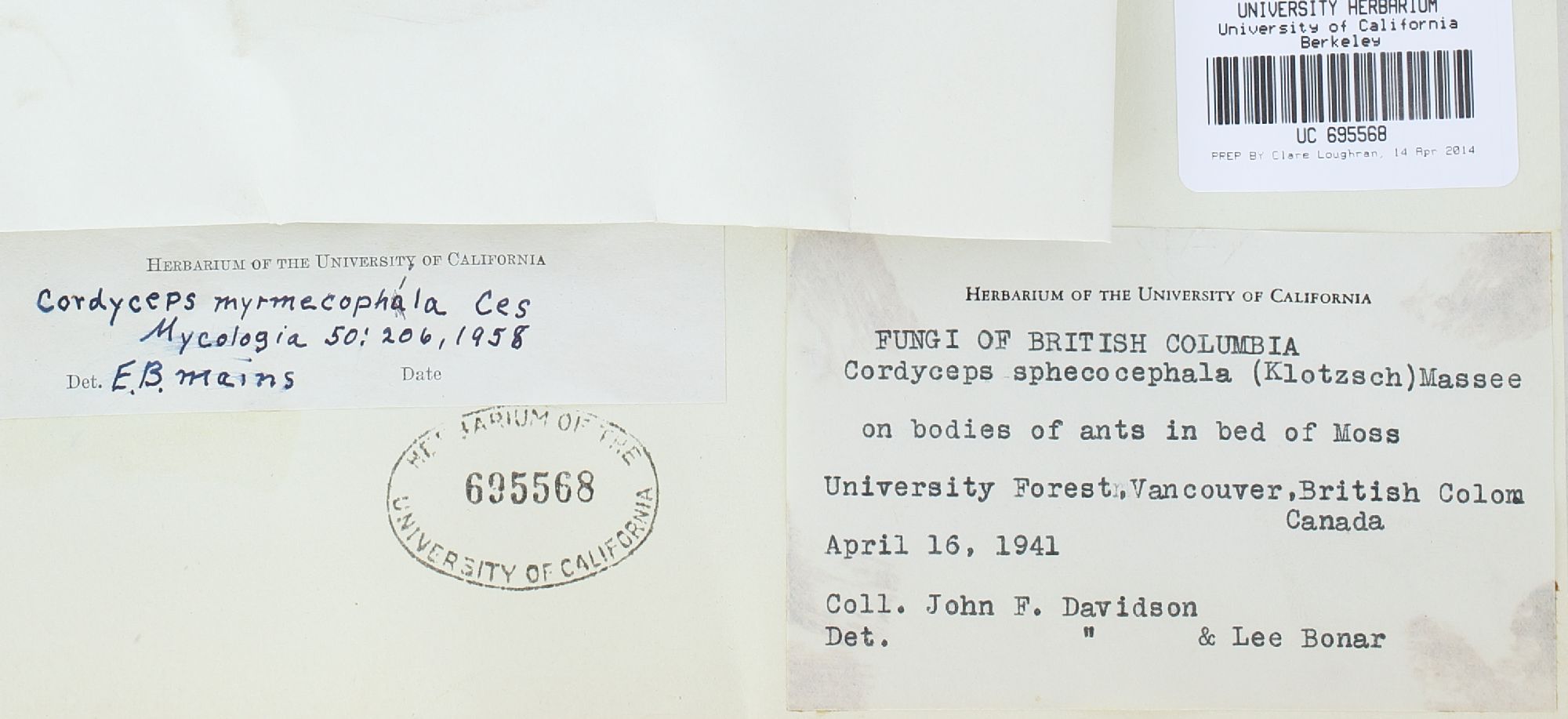
Ophiocordyceps myrmecophila
species of fungus
Tolypocladium inflatum
species of fungus

Ophiocordyceps robertsii
species of fungus
Purpureocillium
Purpureocillium is a fungal genus in the Ophiocordycipitaceae family. The genus now contains at least 5 species with the type species Purpureocillium lilacinum, a common soil mold. It has been isolated from a wide range of habitats, including cultivated and uncultivated soils, forests, grassland, deserts, estuarine sediments and sewage sludge, and insects. It has also been found in nematode eggs, and occasionally from females of root-knot and cyst nematodes. In addition, it has frequently been detected in the rhizosphere of many crops. The species can grow at a wide range of temperatures – fro