Category
page 2Optical illusions

Kaiserpanorama
thumb|A drawing of a Kaiserpanorama with 25 viewing stations.
The Kaiserpanorama (or Kaiser-Panorama) is a form of stereoscopic entertainment medium used chiefly in the 19th and early 20th centuries, and is considered a precursor to film. It was invented by August Fuhrmann (1844–1925), and patented by him in 1890. It consisted of a number of viewing stations from which people would peer through a pair of lenses to view a number of rotating stereoscopic glass slides. By 1910 Fuhrmann is said to have controlled exhibitions in over 250 branches across Europe, and to have held up to 100,000 slides

Chinese magic mirror
metallic mirrors of ancient China

Benham's top
irradiation illusion
type oder illusion
Siemens star
A device used to test the resolution of optical instruments, printers or displays.
color constancy
how humans perceive color

micropsia
Micropsia is a condition affecting human visual perception in which objects are perceived to be smaller than they actually are. Micropsia can be caused by optical factors (such as wearing glasses), by distortion of images in the eye (such as optically, via swelling of the cornea or from changes in the shape of the retina such as from retinal edema, macular degeneration, or central serous retinopathy), by changes in the brain (such as from traumatic brain injury, epilepsy, migraines, or drugs), and from psychological factors. Dissociative phenomena are linked with micropsia, which may be the re
wagon-wheel effect
optical illusion
Fraser spiral illusion
optical illusion
Delboeuf illusion
optical illusion
three hares
traditional motif showing three hares sharing ears
illusory contour
visual illusion that evokes the perception of an edge without a luminance or color change across that edge
autokinetic effect
optical illusion

McCollough effect
Human visual perception phenomenon
Hidden faces
perception or recognition of faces in something essentially different
Oregon Vortex
Roadside attraction in Gold Hill, Oregon, US
Cornsweet illusion
optical illusion
Anorthoscope
An anorthoscope is a device that demonstrates an optical illusion that turns an anamorphic picture on a disc into a normal image by rotating it behind a counter-rotating disk with four radial slits. It was invented in 1829 by Belgian physicist Joseph Plateau, whose further studies of the principle led him to the 1832 invention of a stroboscopic animation that would become known as the phénakisticope (commonly regarded as a pinnacle in the development of cinematography, and thus as an important step in the history of modern media).
White's illusion
optical illusion
leaning tower illusion
visual illusion seen in a pair of identical images of the Leaning Tower of Pisa
Chubb illusion
optical illusion
Ehrenstein illusion
optical illusion
figure–ground
humans' ability to separate foreground from background in visual images
Ames trapezoid
trapezoid that appears as rectangular
Shepard tables
optical illusion
Pulfrich effect
perception of 3D scene from a sideways moving image
hybrid image
image that is perceived in one of two different ways, depending on viewing distance

Schroeder stairs
optical illusion
motion aftereffect
optical illusion
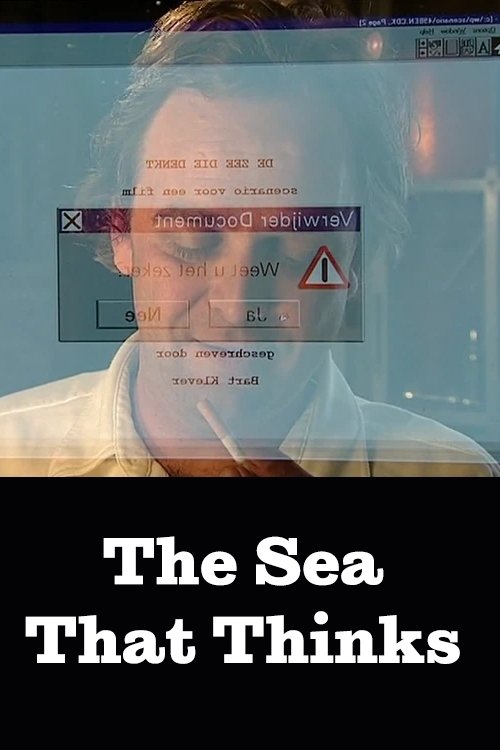
The Sea That Thinks
2000 film by Gert de Graaff
Fechner color
illusion of color seen when looking at certain rapidly changing or moving black-and-white patterns
Numerosity adaptation effect
phenomenon in numerical cognition
vertical–horizontal illusion
optical illusion
horsemaning
thumb|Modern horsemaning
thumb|A modern example of horsemaning
flash lag illusion
optical illusion
lilac chaser
optical illusion
Chromostereopsis
thumb|Blue–red contrast demonstrating depth perception effects
thumb|3 Layers of depths "Rivers, Valleys & Mountains"
Chromostereopsis is a visual illusion whereby the impression of depth is conveyed in two-dimensional color images, usually of red–blue or red–green colors, but can also be perceived with red–grey or blue–grey images. Such illusions have been reported for over a century and have generally been attributed to some form of chromatic aberration.
Hollow-Face illusion
optical illusion
multistable perception
perceptual phenomenon
Objects in mirror are closer than they appear.
safety warning