Category
page 1Optics

optics
thumb|A researcher working on an optical system|300x300px

photon
A photon () is an elementary particle that is a quantum of the electromagnetic field, including electromagnetic radiation such as light and radio waves, and the force carrier for the electromagnetic force. Photons are massless particles that can only move at one speed, the speed of light measured in a vacuum. The photon belongs to the class of boson particles.

parallax
thumb|upright=1.4|right|A simplified illustration of the parallax of an object against a distant background due to a perspective shift. When viewed from "Viewpoint A", the object appears to be in front of the blue square. When the viewpoint is changed to "Viewpoint B", the object appears to have moved in front of the red square.
thumb|right|This animation is an example of parallax. As the viewpoint moves side to side, the objects in the distance appear to move more slowly than the objects close to the camera. In this case, the white cube in front appears to move faster than the green cube in t

dioptre
thumb|Illustration of the relationship between optical power in dioptres and focal length in metres.
A dioptre (British spelling) or ' (American spelling), symbol dpt or D', is a unit of measurement with dimension of reciprocal length, equivalent to one reciprocal metre, . It is normally used to express the optical power of a lens or curved mirror, which is a physical quantity equal to the reciprocal of the focal length, expressed in metres. For example, a 3-dioptre lens brings parallel rays of light to focus at metre. A flat window has an optical power of zero dioptres, as it does not cause l

geometrical optics
model of optics describing light as geometric rays
.jpg)
photonics
thumb|A sea mouse (Aphrodita aculeata), showing colorful spines, an example of Biophotonics
Photonics is a branch of optics that involves the application of generation, detection, and manipulation of light in the form of photons through emission, transmission, modulation, signal processing, switching, amplification, and sensing. Even though photonics is a commonly used term, there is no widespread agreement on a clear definition of the term or on the difference between photonics and related fields, such as optics.

coherence
ideal property of waves that enables stationary (i.e. temporally and spatially constant) interference

iridescence
thumb|upright=1.25|Iridescence in soap bubbles
Fermat's principle
principle of least time
physical optics
branch of optics that studies interference, diffraction, polarization
angular resolution
ability of any image-forming device to distinguish small details of an object
quantum optics
sub-field of quantum physics and optics

wavefront
In physics, the wavefront of a time-varying wave field is the set (locus) of all points having the same phase. The term is generally meaningful only for fields that, at each point, vary sinusoidally in time with a single temporal frequency (otherwise the phase is not well defined).
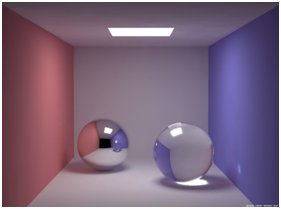
gloss
optical property describing the ability of a surface to reflect light in a specular direction
nonlinear optics
branch of physics

turbidity
thumb|Turbidity standards of 5, 50, and 500 NTU

magnification
right|thumb|The postage stamp appears larger with the use of a magnifying glass.
thumb|thumbtime=0|Stepwise magnification by 6% per frame into a 39-megapixel image. In the final frame, at about 170x, an image of a bystander is seen reflected in the man's cornea.

optogenetics
Optogenetics is a biological technique used to characterize and manipulate the activity of neurons or other cell types with light. This is achieved by expression of light-sensitive ion channels, pumps or enzymes in the target brain cells.

opacity
thumb|250px|right|Comparisons of 1. opacity, 2. translucency, and 3. transparency; behind each panel is a star.
Opacity is the measure of impenetrability to electromagnetic or other kinds of radiation, especially visible light. In radiative transfer, it describes the absorption and scattering of radiation in a medium, such as a plasma, dielectric, shielding material, glass, etc. An opaque object is neither transparent nor translucent. When light strikes an interface between two substances, in general, some may be reflected, some absorbed, some scattered, and the rest transmitted (also see refr

vignetting
thumb|210px|right|A vignette is often added to an image to draw interest to the center and to frame the center portion of the photo.
thumb|right|210px|Vignetting is a common feature of photographs produced by toy cameras such as this shot taken with a [[Holga.]]
thumb|right|210px|This example shows both vignetting and restricted field of view (FOV). Here a "[[point-and-shoot camera" is used together with a microscope to create this image. Pronounced vignetting (fall off in brightness towards the edge) is visible as the optical system is not well adapted. A further circular restriction of the F
atmospheric optics
academic discipline
numerical aperture
dimensionless number that characterizes the range of angles over which the system can accept or emit light
optical engineering
field centered around the applications of optics

photoelasticity
thumb|Plastic utensils in a photoelasticity experiment
lenticular printing
technology for creating optical illusions
point spread function
impulse response function to a point light source of an optical imaging system

dichroism
thumb|right|lampworking|Lampworked [[dichroic glass bead]]
In optics, a dichroic material refers to:
a material which causes visible light to be split up into two distinct beams of different wavelengths (colours), one of which is reflected and one of which is transmitted (not to be confused with dispersion), or
a material in which light rays having different polarization directions are absorbed differently.
bidirectional reflectance distribution function
function of four real variables that defines how light is reflected at an opaque surface
collimated light
light whose rays are parallel, and therefore will spread minimally as it propagates
optical resolution
the capability of an optical system to distinguish, find, or record details
evanescent wave
oscillating electric and/or magnetic field that does not propagate as an electromagnetic wave but whose energy is spatially concentrated in the vicinity of the source
Jones calculus
system for describing optical polarization
history of optics
study of the development of optics with lenses and theories of light and vision over time
Cauchy's equation
empirical relationship between the refractive index and wavelength
optical medium
material through which electromagnetic waves propagate
light field
vector function that describes the amount of light flowing in every direction through every point in space
list of refractive indices
Wikimedia list article
dioptrics
Dioptrics is the branch of optics dealing with refraction, especially by lenses. In contrast, the branch dealing with mirrors is known as catoptrics. Telescopes that create their image with an objective that is a convex lens (refractors) are said to be "dioptric" telescopes.
Gradient-index optics
Science of using a material's refractive index for optical effects

Optical transfer function
function that specifies how different spatial frequencies are handled by the system; describes how the optics project light from the object or scene onto a photographic film, detector array, retina, screen, etc.
X-ray optics
branch of optics
entrance pupil
optical image of the physical aperture stop
%20versus%20X-ray%20microtomography%20(X-ray%20%CE%BCCT)%20of%20a%20Lego%20minifigure%20-%201-s2.0-S2949673X22000018-gr4%20lrg.jpg)
imaging
thumb|Comparison of two imaging modalities, optical tomography (A, C) and [[computed tomography (B, D), as applied to a Lego minifigure]]
schlieren
thumb|This video demonstrates a single-pass high-speed schlieren system capturing the transitional ballistic sequence of a handgun.
thumb|Colored schlieren image of the thermal plume from a burning candle, disturbed by a breeze from the right
photoelectrochemical process
electrochemical processes involving photons and the emission or absorption of light
catoptrics
thumb|right|Light path of a Newtonian (catoptric) telescope
Sellmeier equation
empirical relationship between refractive index and wavelength
Lorentz–Lorenz equation
equation relating the refractive index of a substance to its polarizability
Group delay and phase delay
delays experienced through a linear time-invariant system
Gladstone–Dale relation
equation in optical analysis of liquids
Dawes' limit
formula to express the maximum resolving power of a microscope or telescope
defocus aberration
quality of an image being out of focus
exit pupil
virtual aperture in an optical system
Flat-field correction
digital imaging calibration technique
index ellipsoid
aspect of crystal optics
dichromatism
Dichromatism (or polychromatism) is a phenomenon where a material or solution's hue is dependent on both the concentration of the absorbing substance and the depth or thickness of the medium traversed. In most substances which are not dichromatic, only the brightness and saturation of the colour depend on their concentration and layer thickness.
optical property
property of light and its interaction with substances or objects
eye relief
optical instrument
visual appearance
how someone or something looks
Nonimaging optics
branch of optics