Category
page 1Orientation (geometry)

east
thumb|250px|right|A 16-point compass rose with east highlighted to the right
East is one of the four cardinal directions or points of the compass. It is the opposite direction from west and is the direction from which the Sun rises on the Earth.

west
thumb|250px|right|A 16-point compass rose with west highlighted in black

south
thumb|250px|right|A 16-point compass rose with south highlighted at the bottom
South is one of the cardinal directions or compass points. The direction is the opposite of north and is perpendicular to both west and east.

north
thumb|250px|right|A 16-point compass rose with north highlighted and at the top

cardinal direction
one of directions of north, east, south, and west

zenith
thumb|upright=1.25|right|Diagram showing the relationship between the zenith, the nadir, and different types of [[horizon]]
The zenith (, ) is the imaginary point on the celestial sphere directly "above" a particular location. "Above" means in the vertical direction (plumb line) opposite to the gravity direction at that location (nadir). The zenith is the "highest" point on the celestial sphere. The direction opposite of the zenith is the nadir.

Qibla
thumb|Muslims surrounding and facing the [[Kaaba for prayer]]
The qibla () is the direction towards the Kaaba in the Sacred Mosque in Mecca, which is used by Muslims in various religious contexts, particularly the direction of prayer for the salah. According to Islamic tradition, the Kaaba is believed to be a sacred site built by prophets Abraham and Ishmael, and that its use as the qibla was ordained by God in several verses of the Quran revealed to Muhammad in the second Hijri year. Prior to this revelation, Muhammad and his followers in Medina faced Jerusalem for prayers. Most mosques conta

rotation
right|thumb|A sphere rotating (spinning) about an axis
nadir
thumb|300px|right|Diagram showing the relationship between the zenith, the nadir, and different types of [[horizon. Note that the zenith is opposite the nadir.]]

mihrab
thumb|Mihrab in the Prophet's Mosque, Medina
Mihrab (, ', pl. ') is a niche in the wall of a mosque that indicates the qibla, the direction of the Kaaba in Mecca towards which Muslims should face when praying. The wall in which a mihrab appears is thus the "qibla wall".

parallelism
relation used in geometry
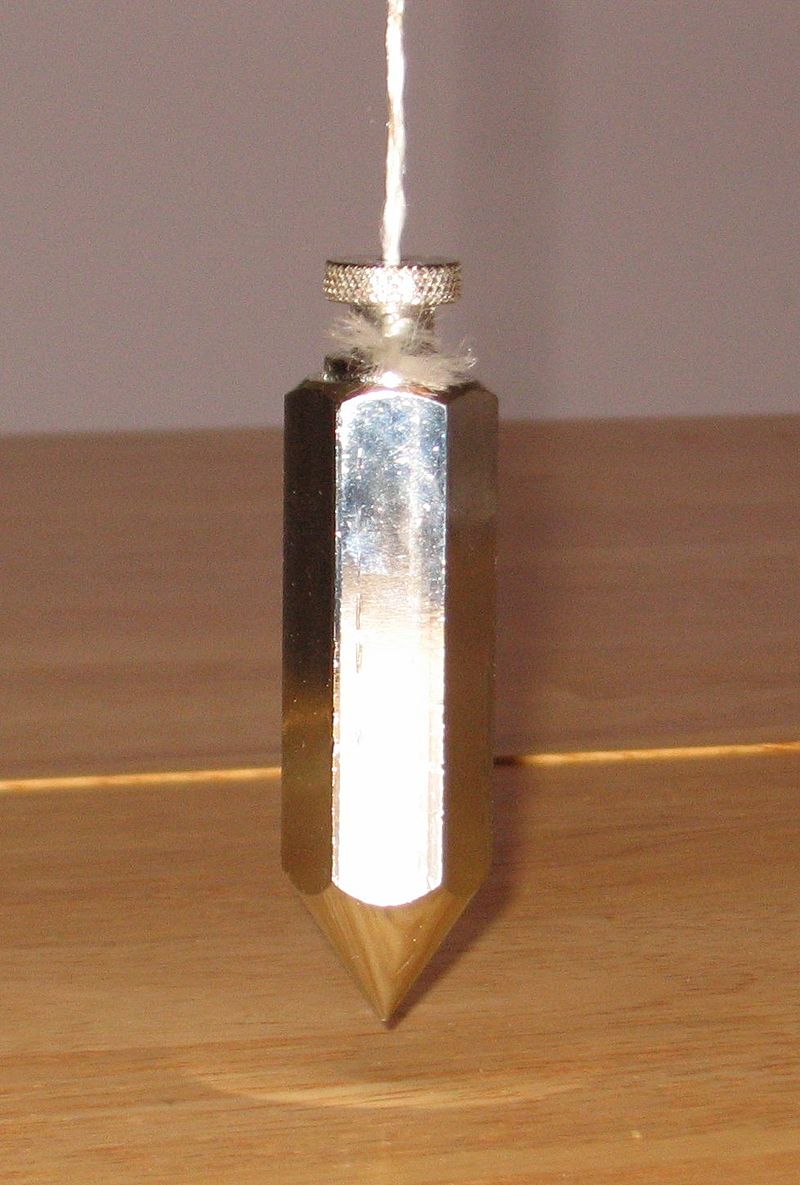
plumbline
weight, usually with a pointed tip on the bottom, suspended from a string and used as a vertical reference line

right-hand rule
common mnemonic for understanding orientation of axes in three-dimensional space
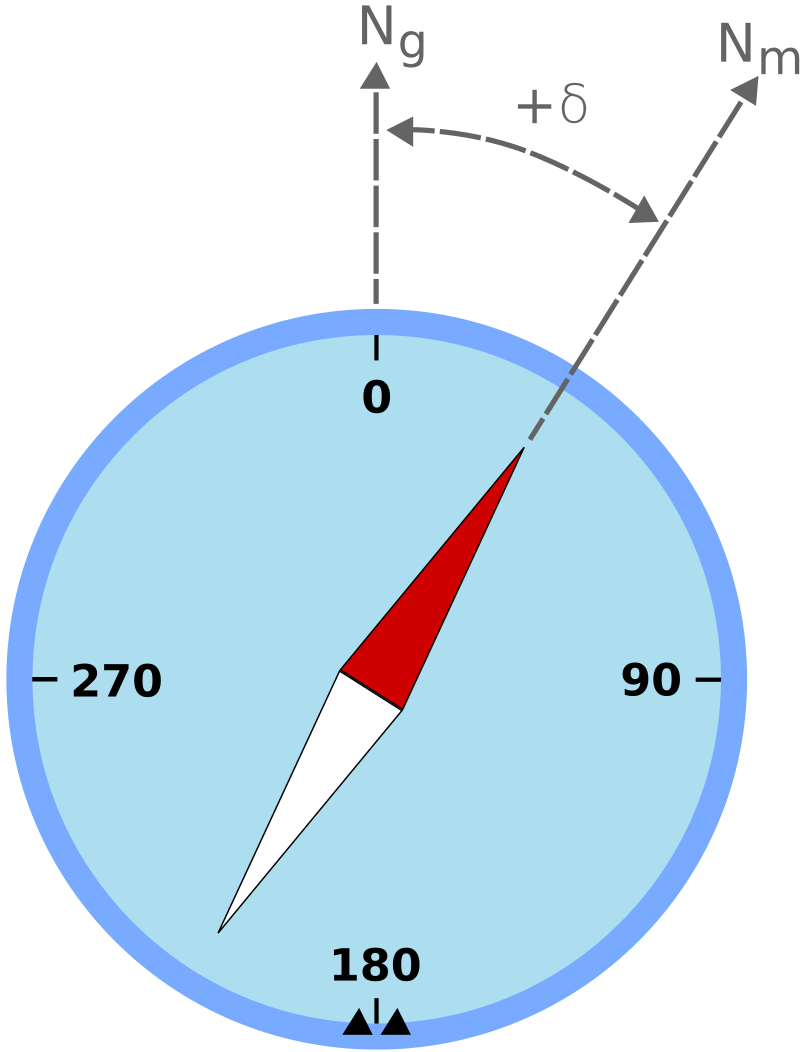
magnetic declination
angle on the horizontal plane between magnetic north and true north

isotropy
thumb|A sphere is isotropic

cis–trans isomerism
distinct arrangements of substituents around double bonds in chemistry
galactic coordinate system
celestial coordinate system in spherical coordinates, with the Sun as its center

anisotropy
thumb|upright=1.36|Wilkinson Microwave Anisotropy Probe|WMAP image of the tiny anisotropies in the [[cosmic microwave background radiation]]
Anisotropy () is the structural property of non-uniformity in different directions, as opposed to isotropy. An anisotropic object or pattern has properties that differ according to direction of measurement. For example, many materials exhibit very different physical or mechanical properties when measured along different axes, e.g. absorbance, refractive index, conductivity, and tensile strength.

anatomical placement
standard terms for unambiguous description of relative placement of body parts

North Magnetic Pole
point in the Arctic at which Earth's magnetic field points vertically downwards, at 86°N 175°E in the Arctic Ocean as of 2019
South Magnetic Pole
wandering point on the Earth where the geomagnetic field lines are directed vertically upwards, at 64°S 137°E as of 2015 in the Southern Ocean

clockwise direction
Two-dimensional rotation can occur in two possible directions, or senses of rotation. Clockwise motion (abbreviated CW) proceeds in the same direction as a clock's hands relative to the observer: from the top to the right, then down and then to the left, and back up to the top. The opposite sense of rotation or revolution is (in Commonwealth English) anticlockwise (ACW) or (in North American English) counterclockwise (CCW). Three-dimensional rotation can have similarly defined senses when considering the corresponding angular velocity vector.
skew lines
lines in 3D that do not intersect and neither do they point the same direction
port and starboard
position relative to vessel direction
magnetic dip
angle made with the horizontal by the Earth's magnetic field lines
True north
direction on Earth's surface
windward and leeward
position relative to wind direction
toilet paper orientation
orientation of the free end of a roll of toilet paper, either over or under the roll, when used with a holder with an axle parallel to both the wall and floor

luopan
The luopan or geomantic compass is a Chinese magnetic compass, also known as a feng shui compass. It is used by a feng shui practitioner to determine the precise direction of a structure, place or item. Luo Pan contains a lot of information and formulas regarding its functions. The needle points towards the south magnetic pole.
Este
Este may refer to:
orientation
description of the rotation of an item relative to defined coordinate axes of the space it occupies
body relative direction
direction that is dependent on the orientation of an observer (up, down, right, left, forwards or backwards)
Northwest
Wikimedia disambiguation page
points of the compass
varying quantity (4, 8, 16, 32, rarely more than 32, or special value 24) or directional divisions marked on a compass
kamal
celestial navigation device that determines latitude
Position of the Sun
Apparent location of the Sun in the sky
colatitude
In a spherical coordinate system, a colatitude is the complementary angle of a given latitude, i.e. the difference between a right angle and the latitude. In geography, Southern latitudes are defined to be negative, and as a result the colatitude is a non-negative quantity, ranging from zero at the North pole to 180° at the South pole.
Pelorus
navigational instrument
Ad orientem
describes in Christian worship, the prayer direction of liturgists (pray in east direction)

Upstream and downstream
terms meaning relative to the direction that transcription takes place

Qiblih
__NOTOC__
thumb|The Shrine of Baháʼu'lláh near [[Acre, Israel, the Qiblih and holiest site on Earth for Baháʼís]]

clock position
relative direction using a dial

vertical and horizontal
oriented planes
galactic quadrant
one of four circular sectors in the division of the Milky Way Galaxy
Magnetic anisotropy
directional dependence of substances' magnetic susceptibilities
dexter and sinister
heraldic terminology
geomagnetic pole
one of two antipodal points in the Arctic and in the Antarctic where the axis of a best-fitting dipole intersects the surface of Earth
Rodrigues' rotation formula
vector formula for a rotation in space, given its axis
Northeast
Wikimedia disambiguation page
orthotropic material
type of anisotropic material
orientation of churches
type of orientation
solar compass
navigational instrument
Mizrah
thumb|right|Mizrah papercut, Eastern Europe, 19th century (from [[Pidkamin, Ukraine)]]
orientation (vector space)
handedness of a vector space with ordered bases
Versus populum
Liturgical stance
sinistral and dextral
two types of chirality
Magnetocrystalline anisotropy
direction dependence of magnetization in a crystal
land navigation
discipline of following a route through unfamiliar terrain on foot or by vehicle
transverse isotropy
Geological concept
Obangsaek
The traditional Korean color spectrum, also known as obangsaek (), is the color scheme of the five Korean traditional colors of white, black, blue, red and yellow. In Korean traditional arts and traditional textile patterns, the colors of obangsaek represent five cardinal directions: obangsaek theory is a combination of Five Elements and Five Colours theory and originated in China.