Category
page 1Origin myths
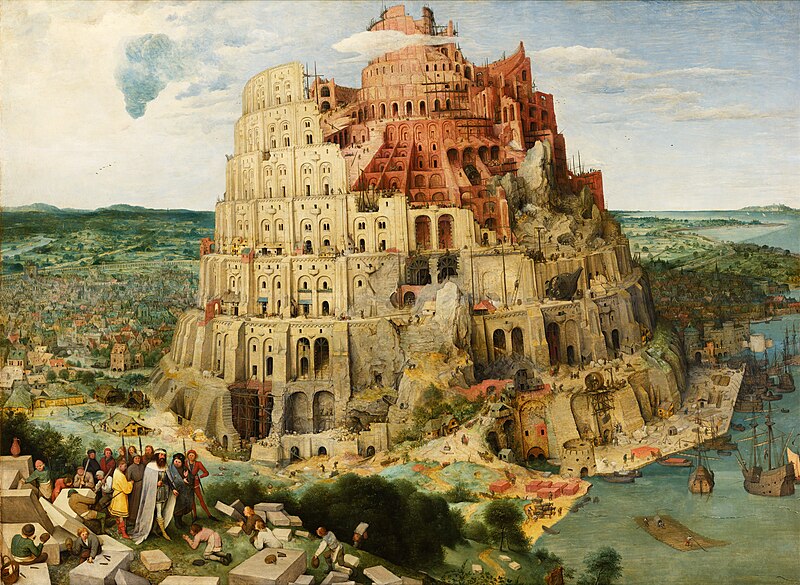
Tower of Babel
biblical pericope about hubris and the origin of languages

Resurrection of Jesus
event in the Christian faith, Gospel episode represented in the cycle of the Passion of Christ Central teaching of Christianity; Luke 24:1-11

Romulus and Remus
twin brothers and central characters of Rome's foundation myth
etiology
Etiology (; alternatively spelled aetiology or ætiology) is the study of causation or origination. The word is derived from the Greek word (), meaning "giving a reason for" (). More completely, etiology is the study of the causes, origins, or reasons behind the way that things are, or the way they function, or it can refer to the causes themselves. The word is commonly used in medicine (pertaining to causes of disease or illness) and in philosophy, but also in physics, biology, psychology, political science, geography, cosmology, spatial analysis and theology in reference to the causes or orig

tribes of Israel
Hebrew tribes descended from the 12 sons of Jacob in the Hebrew Bible

founding of Rome
mythical tale
myth of origins
myth that purports to describe the origin of some feature of the natural or social world
The Exodus
story of the freeing of the Israelites from bondage in Egypt, narrated in the Torah
Lech, Czech, and Rus
3 legendary brothers, each the mythical founder of the 3 Slavic peoples (Poles, Czechs, and the Rus'), appearing in the Wielkopolska Chronicle

Ukemochi
thumb | right | Kagoshima Jingu Overseas Hoshoku Shrine
, commonly known as , the daughter of the deities Izanagi and Izanami, is a goddess of food in Japan and appears as a dema deity. Ukemochi is referred to as both male and female in different contexts. When shown in other forms, Ukemochi takes the shape of a fox.
Hengist and Horsa
legendary brothers said to have led the invasion of Britain in 5th century

Asena
thumb|Namık İsmail's proposed coat of arms of [[Turkey, bearing the wolf Asena]]
Asena is the name of a she-wolf associated with the Göktürks' foundation myth. According to the myth, the ancestress of the Göktürks was a she-wolf, mentioned, yet unnamed in two different "Wolf Tales". The legend of Asena tells of a young boy who survived a battle; a female wolf finds the injured child and nurses him back to health. The she-wolf, impregnated by the boy, escapes her enemies by crossing the Western Sea to a cave near the Qocho mountains and a city of the Tocharians, giving birth to ten half-wolf, h
Hotu Matu'a
"supreme chief" of Easter Island
Hina
Polynesian goddess

Madog ab Owain Gwynedd
thumb|upright=0.7|Madog. Book illustration by A.S. Boyd, 1909.

Chicomoztoc
thumb|350px|right|The seven caves of Chicomoztoc, from Historia Tolteca-Chichimeca. The depiction of a 'curved mountain' at the top of this painting is meant as a referent to Culhuacan.
'''''' () is the name for the mythical origin place of the Aztec Mexicas, Tepanecs, Acolhuas, and other Nahuatl-speaking peoples (or Nahuas) of Mesoamerica, in the Postclassic period.
Kosovo Myth
Serbian nation-building myth based on legends about events related to the Battle of Kosovo (1389)
Ergenekon
founding myth of Turkic and Mongolic peoples
Kyi, Shchek and Khoryv
founders of the medieval city of Kyiv

Hainuwele
thumb|Coconut flower
Hainuwele, "The Coconut Girl", is a figure from the Wemale and Alune folklore of the island of Seram in the Maluku Islands, Indonesia. Her story is an origin myth.
Tribute of 100 virgins
Spanish national myth
Baranis
al-Baranis (Arabic: البرنوصي, Al-Barnoussi), spelled sometimes as Barnès or Branes, are one of the two major groups to which Berbers (Amazigh) in the Maghreb and al-Andalus were divided by mediaeval genealogists and in some mediaeval Arabic sources, the other being called al-Butr.
mythical origins of language
origin of language according to diverse mythologies
The Exodus: sources and parallels
sources and parallels of the Exodus narrative
Origin of the Eucharist
religious history
calling of the Varangians
historical legend about the origins of Rus
Anteias
Anteias or Antias () was in Roman mythology a figure in some versions of Rome's foundation myth. He was one of the three sons of Odysseus by Circe, and brother to Rhomos and Ardeas, each of whom were said to have founded a major Roman city, much like the Romulus and Remus myth. The town of Anteia or Antium in Italy was said to have been founded by, and taken its name from, this Anteias.