Category
page 1Orthogonal coordinate systems
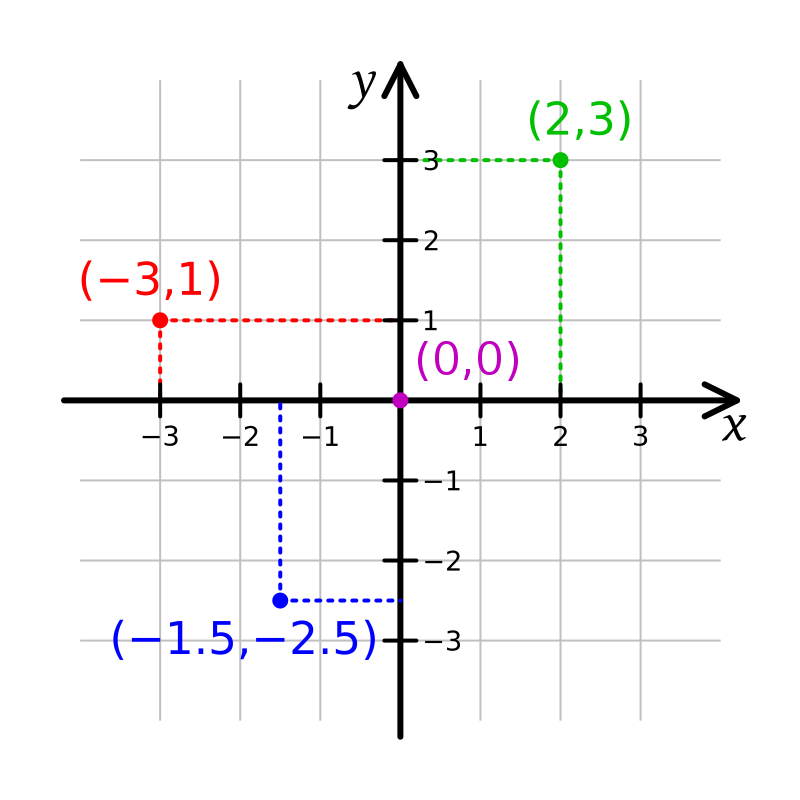
Cartesian coordinate system
coordinate system that specifies each point uniquely by a pair of real numbers called coordinates

polar coordinate system
two-dimensional coordinate system where each point is determined by a distance from reference point and an angle from a reference direction
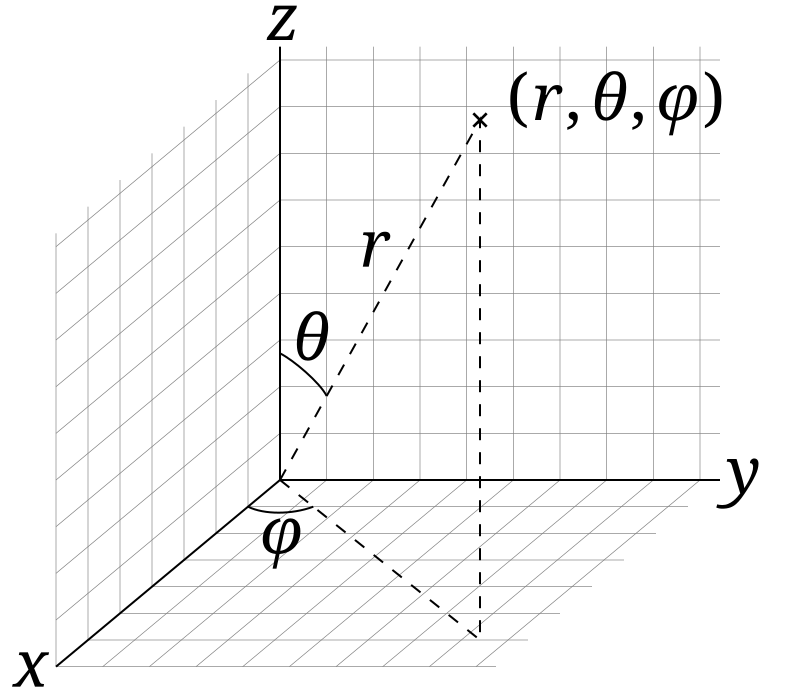
spherical coordinate system
coordinate system based around angle and distance from the origin

cylindrical coordinate system
three-dimensional orthogonal coordinate system
orthogonal coordinate system
bipolar coordinates
2-dimensional orthogonal coordinate system based on Apollonian circles
parabolic coordinates
two-dimensional orthogonal coordinate system
parabolic cylindrical coordinates
three-dimensional orthogonal coordinate system
ellipsoidal coordinates
three-dimensional orthogonal coordinate system
Geodetic coordinates
geographic coordinate system
toroidal coordinates
three-dimensional orthogonal coordinate system
conical coordinates
3D orthogonal coordinate system consisting of concentric spheres (described by their radius r) and by two families of perpendicular cones, aligned along the z- and x-axes
paraboloidal coordinates
three-dimensional orthogonal coordinate system
bispherical coordinates
3D orthogonal coordinate system that results from rotating the 2D bipolar coordinate system about the axis that connects the two foci
prolate spheroidal coordinates
three-dimensional orthogonal coordinate system
oblate spheroidal coordinates
three-dimensional orthogonal coordinate system