Category
page 1Oryzomyini

Pseudoryzomys simplex
Pseudoryzomys simplex, also known as the Brazilian false rice rat or false oryzomys, is a species of rodent in the family Cricetidae from south-central South America. It is found in lowland palm savanna and thorn scrub habitats. It is a medium-sized species, weighing about , with gray–brown fur, long and narrow hindfeet, and a tail that is about as long as the head and body. The IUCN has assessed its conservation status as being of least concern, although almost nothing is known about its diet or reproduction.
Mindomys hammondi
species of mammal

Oreoryzomys balneator
species of mammal
Oryzomyini
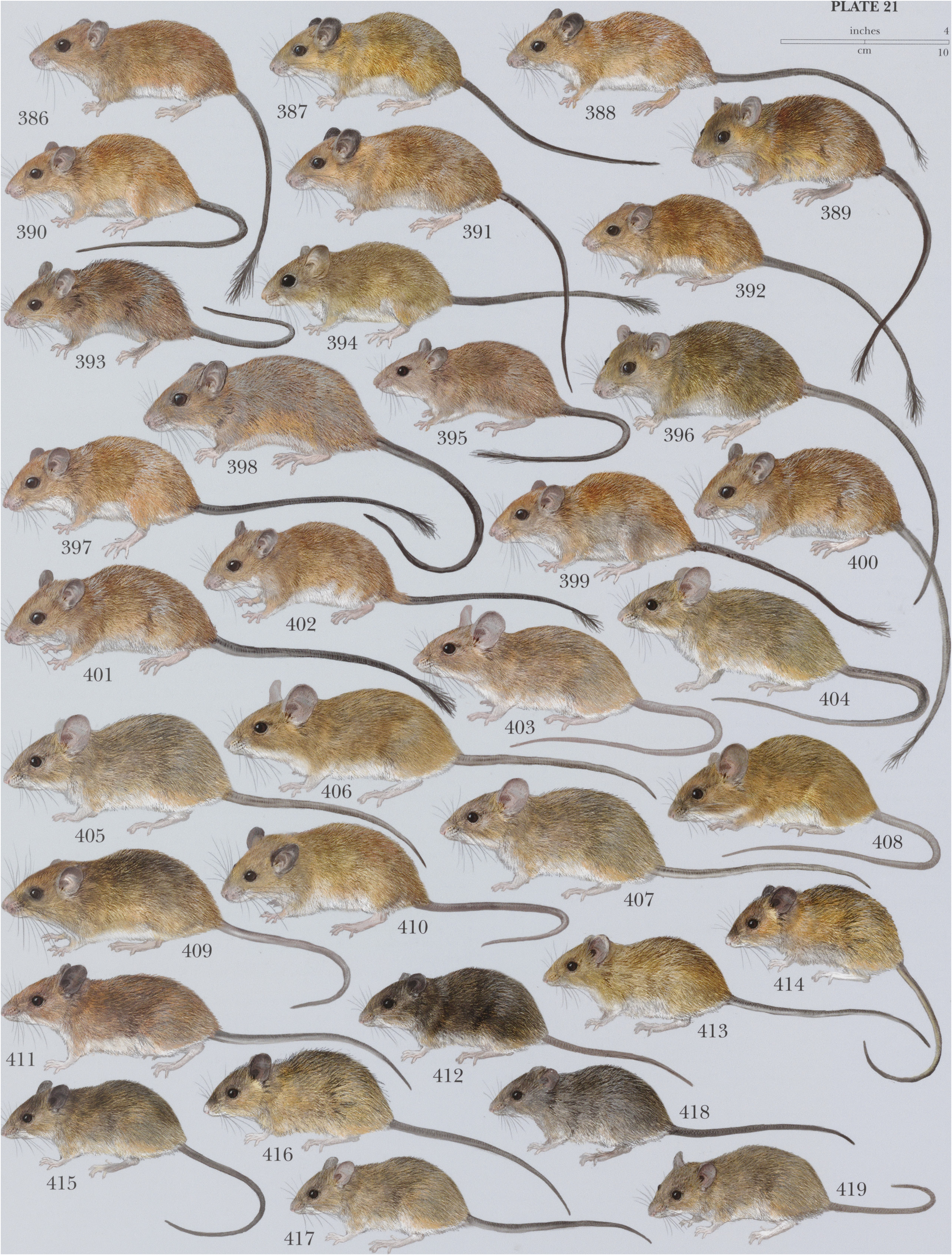
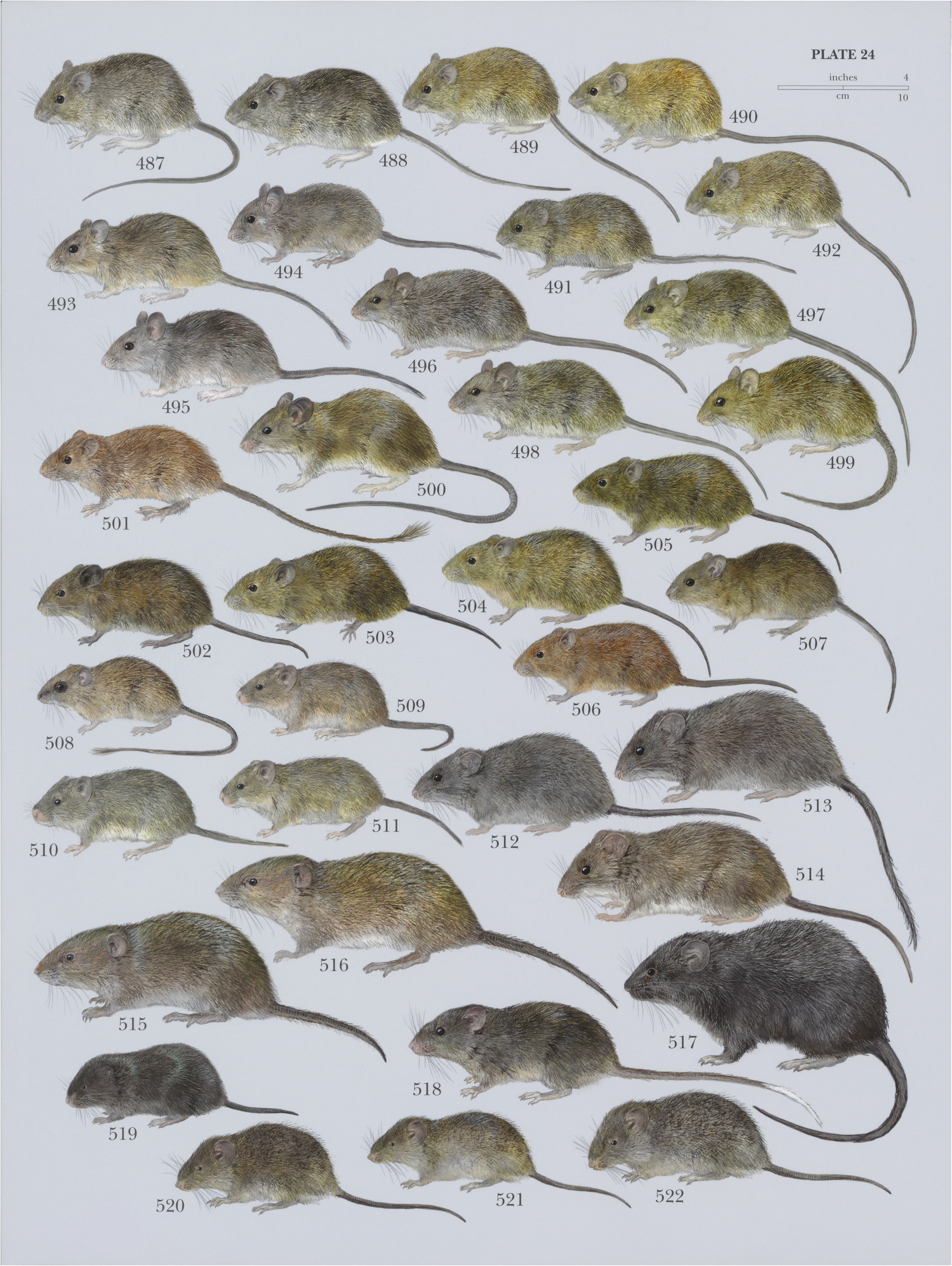
Oryzomyini is a tribe of rodents in the subfamily Sigmodontinae of the family Cricetidae. It includes about 120 species in about thirty genera, distributed from the eastern United States to the southernmost parts of South America, including many offshore islands. It is part of the clade Oryzomyalia, which includes most of the South American Sigmodontinae.
Microakodontomys transitorius
species of mammal

Pennatomys nivalis
Eremoryzomys
Eremoryzomys polius, also known as the gray rice rat or the Marañon oryzomys, is a rodent species in the tribe Oryzomyini of the family Cricetidae. Discovered in 1912 and first described in 1913 by Wilfred Osgood, it was originally placed in Oryzomys and named Oryzomys polius. In 2006, a cladistic analysis found that it was not closely related to Oryzomys in the strict sense or to any other oryzomyine then known, so that it is now placed in its own genus, Eremoryzomys. The Brazilian genus Drymoreomys, named in 2011, is probably the closest relative of Eremoryzomys. Eremoryzomys has a limited d
Carletonomys cailoi
Carletonomys cailoi is an extinct rodent from the Pleistocene (Ensenadan) of Buenos Aires Province, Argentina. Although known only from a single maxilla (upper jaw) with the first molar, its features are so distinctive that it is placed in its own genus, Carletonomys. Discovered in 1998 and formally described in 2008, it is part of a well-defined group of oryzomyine rodents that also includes Holochilus, Noronhomys, Lundomys, and Pseudoryzomys. This group is characterized by progressive semiaquatic specializations and a reduction in the complexity of molar morphology.

Sooretamys
Sooretamys angouya, also known as the rat-headed rice rat, and Paraguayan rice rat, is a rodent species from South America. It is found in northeastern Argentina, southern Brazil and Paraguay in forested areas within the Atlantic Forest and cerrado. Since 2006, it has been classified as the only species in the genus Sooretamys; previously, it was included in the genus Oryzomys. Its taxonomic history has been complex, with the names Oryzomys angouya, Oryzomys buccinatus, and Oryzomys ratticeps in use for various parts of the species at different times. Some variation in its karyotype has been r
Amphinectomys
Amphinectomys savamis, also known as the Ucayali water rat or amphibious rat, is a rodent from the Peruvian Amazon. It is placed as the only member of genus Amphinectomys in the tribe Oryzomyini of family Cricetidae. It is similar to Nectomys, but its discoverers considered it to be different enough (with more expansive interdigital webbing and a significantly broader interorbital region) to require its own genus. When it was described as a new genus in 1994, knowledge of the variation within Nectomys was much more limited than it is now, and it has been suggested that the status of the taxon
Agathaeromys
Agathaeromys is an extinct genus of oryzomyine rodents from the Pleistocene of Bonaire, Netherlands Antilles. Two species are known, which differ in size and some details of tooth morphology. The larger A. donovani, the type species, is known from hundreds of teeth that are probably 900,000 to 540,000 years old, found in four localities. A. praeuniversitatis, the smaller species, is known from 35 teeth found in a single fossil site, which is probably 540,000 to 230,000 years old.
Mindomys
Mindomys is a genus of sigmodontine rodents in the family Cricetidae. It includes two species known only from Ecuador, Hammond's rice rat (Mindomys hammondi) and the Kutukú rat (Mindomys kutuku).

Lundomys
Lundomys molitor, also known as '''Lund's amphibious rat or the greater marsh rat''', is a semiaquatic rat species from southeastern South America.
Noronhomys
Noronhomys vespuccii, also known as '''Vespucci's rodent''', is an extinct rat species from the islands of Fernando de Noronha off northeastern Brazil. Italian explorer Amerigo Vespucci may have seen it on a visit to Fernando de Noronha in 1503, but it subsequently became extinct, perhaps because of the exotic rats and mice introduced by the first explorers of the island. Numerous but fragmentary fossil remains of the animal, of uncertain but probably Holocene age, were discovered in 1973 and described in 1999.
Drymoreomys
Drymoreomys is a rodent genus in the tribe Oryzomyini that lives in the Atlantic Forest of Brazil. The single species, D. albimaculatus, is known only from the states of São Paulo and Santa Catarina and was not named until 2011. It lives in the humid forest on the eastern slopes of the Serra do Mar and perhaps reproduces year-round. Although its range is relatively large and includes some protected areas, it is patchy and threatened, and the discoverers recommend that the animal be considered "Near Threatened" on the IUCN Red List. Within Oryzomyini, Drymoreomys appears to be most closely
Mindomys kutuku
species of mammal
Reigomys
Reigomys primigenus is an extinct oryzomyine rodent known from Pleistocene deposits in Tarija Department, southeastern Bolivia. It is known from a number of isolated jaws and molars which show that its molars were almost identical to those of the living Lundomys. On the other hand, the animal possesses a number of derived traits of the palate which document a closer relationship to living Holochilus, the genus of South American marsh rats, and for this reason it was placed in the genus Holochilus when it was first described in 1996. The subsequent discoveries of Noronhomys and Carletonomys, wh