Category
page 1Osiris

Osiris
Osiris (, from Egyptian wsjr) was the god of fertility, agriculture, the afterlife, the dead, resurrection, life, and vegetation in ancient Egyptian religion. He was classically depicted with a pharaoh's beard, partially mummy-wrapped at the legs, wearing a distinctive atef crown and holding a symbolic crook and flail. He was one of the first to be associated with the mummy wrap. When his brother Set cut him to pieces after killing him, with her sister Nephthys, Osiris's sister-wife, Isis, searched Egypt to find each part of Osiris. She collected all but one – Osiris's genitalia. She then wrap

Serapis
thumb|Antoninianus of Postumus with Serapis on the reverse.
Serapis or Sarapis is a Graeco-Egyptian god. A syncretic deity derived from the worship of the Egyptian Osiris and Apis, Serapis was extensively popularized in the third century BC on the orders of Greek Pharaoh Ptolemy I Soter, as a means to unify the Greek and Egyptian subjects of the Ptolemaic Kingdom.

Abraxas
thumb|Engraving from an Abraxas stone.
Gods of Egypt
2016 film directed by Alex Proyas
Aaru
thumb|Depiction of Aaru within a work of Art of ancient Egypt|ancient Egyptian art, from Dayr al-Madīnah
Osiris myth
story in ancient Egyptian mythology
Young Sherlock Holmes
1985 film by Barry Levinson

Djed
thumb|right|100px|The djed, an ancient Egyptian symbol meaning 'stability', is the symbolic vertebral column|backbone of the god [[Osiris.|class=skin-invert-image]]
The djed, also djt ( 𓊽, Coptic jōt "pillar", anglicized /dʒɛd/) is one of the more ancient and commonly found symbols in ancient Egyptian religion. It is a pillar-like symbol in Egyptian hieroglyphs representing stability. It is associated with the creator god Ptah and Osiris, the Egyptian god of the afterlife, the underworld, and the dead. It is commonly understood to represent his spine.
Banebdjedet
Banebdjedet also spelled Banebdjed or Banebdjetet is an Ancient Egyptian ram god with a cult centre at Mendes. Khnum was the equivalent god in Upper Egypt. He is most notable for appearing in the myth of Horus and Set.
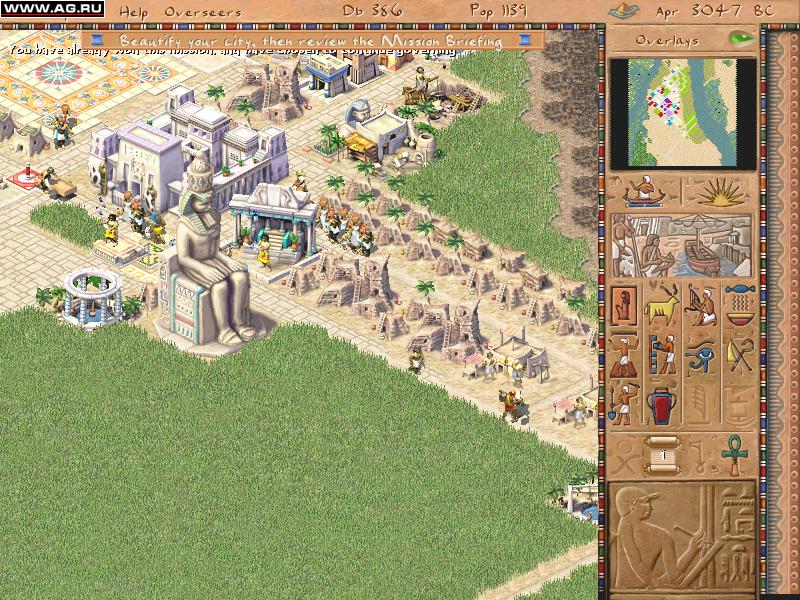
Pharaoh
1999 video game
Atef
Atef () is the specific feathered white crown of the ancient Egyptian deity Osiris. It combines the Hedjet, the white crown of Upper Egypt, with curly ostrich feathers on each side of the crown for the Osiris cult. The feathers are identified as ostrich from their curl or curve at the upper ends, with a slight flare toward the base. They are the same feather as (singly) worn by Maat. They may be compared with the falcon tail feathers in two-feather crowns such as those of Amun, which are more narrow and straight without curve.

scourge
thumb|right|upright|Medical examination photo of Gordon (slave)|Gordon showing his scourged back, widely distributed by Abolitionists to expose the brutality of slavery.
A scourge is a whip or lash, especially a multi-thong type, used to inflict severe corporal punishment or self-mortification. It is usually made of leather.

Milcom
thumb|Statue potentially depicting Milcom or a deified Ammonite ruler as Milcom, 8th century BCE
Milcom, also spelled Milkom (Ammonite: 𐤌𐤋𐤊𐤌 *Mīlkām; Hebrew: ), was either the national god, or an important god, of the Ammonites. He is attested in the Hebrew Bible and in archaeological finds from the former territory of Ammon. His connections to other deities with similar names attested in the Bible and archaeologically are debated, as well as his relationship to the Canaanite supreme deity El, or the putative deity Moloch.
crook and flail
symbols of ancient Egyptian royalty
Ikhernofret Stela
ancient Egyptian stela

Creatures of Light and Darkness
1969 novel by Roger Zelazny