Category
page 1Outlaws
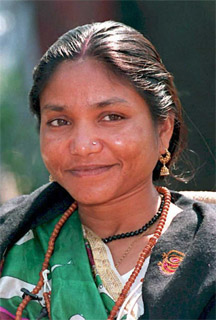
Phoolan Devi
Indian bandit, politician (1963-2001)

hajduk
thumb|Illustration of a Hungarian Hajduk, from an 1703 book from Bavaria.
thumb|Portrait of Hajduk-Veljko, a prominent Serbian outlaw fighting against Ottoman occupation during the first half of the 19th century.

bashi-bazouk
thumb|A group of bashi-bazouks, Ottoman postcard
thumb|Bashi-bazouks in Bulgaria, ca. 1877
A bashi-bazouk ( , , , roughly "leaderless" or "disorderly") was an irregular soldier of the Ottoman army, raised in times of war. The army primarily enlisted Albanians and sometimes Circassians as bashi-bazouks, but recruits came from all ethnic groups of the Ottoman Empire, including slaves from Europe or Africa. Bashi-bazouks had a reputation for being undisciplined and brutal, notorious for looting and preying on civilians as a result of a lack of regulation and of the expectation that they would sup

outlaw
thumb|right|Newton Knight (1837–1922) was an anti-Confederate rebel soldier and founder of the "Free State of Jones" in the area in and around [[Jones County, Mississippi, at the height of the American Civil War.]]

Thugee
Thuggee ( , ; Hindustani: or , ) was a phenomenon of highway robbery in the Indian subcontinent that saw gangs of thugs (sometimes spelled thags) traverse the region murdering and robbing travellers, often by strangling. However, there is a general consensus among historians against the cultic portrayal held by the British colonial authorities and popularised in the 19th century.

brigandage
thumb|Italian Brigands Surprised by Papal Troops ([[Horace Vernet, 1831)]]
Grettis saga
13th-century Icelandic saga
Oleksa Dovbush
Ukrainian outlaw

zeybek
thumb|Group of Zeybeks
thumb|Two Zeybeks in their attire 1873 a.d.

Ayyār
thumb|16th-century Indian painting depicting members of the 'Ayyarun slitting the throats of prison guards from the Hamzanama.
Ayyār (, pl. ʿayyārūn; , pl. Ayyârân) refers to a person associated with a class of warriors in Iraq and Persia from the 9th to the 12th centuries. The word literally means vagabond. The 'Ayyarun were associated with futuwwa, or medieval Islamic organizations located in cities. They were notable for being youth groups, typically from lower classes, that engaged in violent acts, thievery, assassinations, and violent rebellions against established systems in many Islamic
Cangaço
thumb|upright=1.3|Lampião and his companions with cinematographer Benjamin Abrahão Botto
Fjalla-Eyvindur
thumb|Victor Sjöström as Fjalla-Eyvindur in the 1918 film The Outlaw and His Wife.
Opryshoks
thumb|A portrait of famous Opryshky leader Oleksa Dovbush, 1746
Opryshky (, opryshok, ) were groups of brigands active in the region of Ukrainian Carpathians between the 16th and early 19th century. Consisting of runaway peasants, noblemen's servants and, in a latter period, dodgers from conscription, they formed small groups headed by individual leaders and attacked noble estates, keeps, tax farmers, tavern keepers, merchants and wealthy peasants. In some cases part of their booty would be distributed among the poorer peasantry. This contributed to the image of Opryshky as popular heroes and
Dacoity
thumbnail|A family of dacoits

The mountain bandits in Ottoman Rumelia
thumb|300px|right|A Kirdzhali reenactment band in Bulgaria.
The kırcalı or kirdzhali (, from meaning "mountain", , ) is a term used for a type of bandits, brigands and rebels active in the Balkans at the end of the 18th- and beginning of 19th century, in the prelude of national revolutions and liberation of Bulgarians, Greeks and Serbs. According to some the name is derived from the town of Kardzhali in the Rhodopes, one of the important retreats of "mountain bandits" (dağlı eşkıyası) that emerged after the Ottoman Empire lost territory by the Black Sea and made Rumelia a borderland filled wit
betyár
thumb|upright|right|Portrait of Sándor Rózsa
thumb|upright|Jóska Sobri (painted by [[Sándor Száva)]]
Jan de Lichte
Flemish outlaw and gang leader (1723-1748)
Nicefor Czernichowski
Polish noble
Jóska Sobri
Hungarian bandit
Andrij Savka
Lemko bandit
Shifta
Shifta is a term mostly used in Ethiopia, Eritrea, Kenya, Tanzania, and Somalia that can be translated as "bandit" or "outlaw", but can include anyone who rebels against an authority or an institution that is seen as illegitimate, like the Arbegnoch guerillas during the Italian occupation of Ethiopia. The Swahili word was loaned from the Somali shufta during the Shifta War, and is in turn derived from Amharic ሽፍታ (šəfta).
Yevhen Deidei
Ukrainian politician