Category
page 1Oxygen compounds
.svg)
water
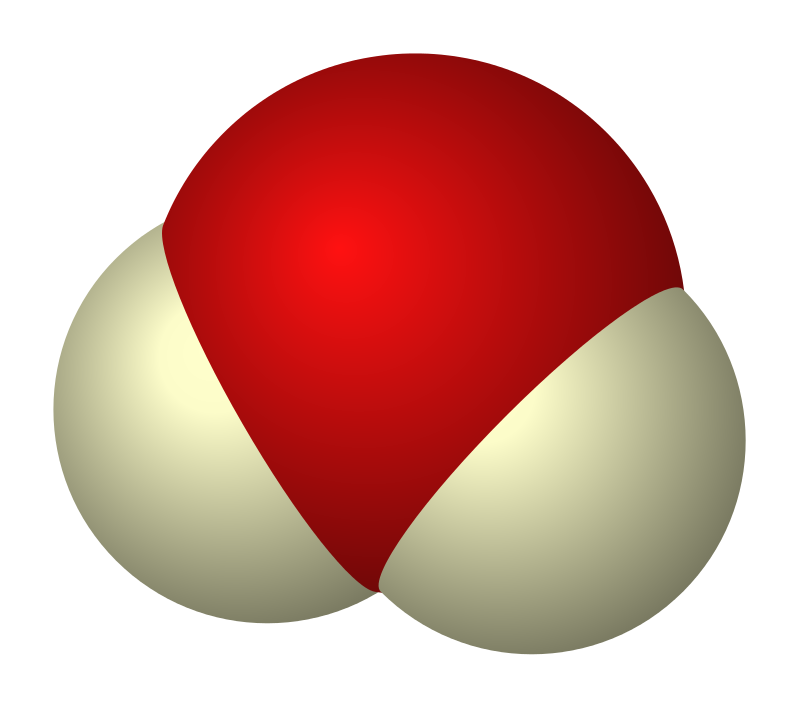
Water is an inorganic compound with the chemical formula . It is a transparent, tasteless, odorless, and nearly colorless chemical substance. It is the main constituent of Earth's streams, lakes, and oceans and the fluids of all known living organisms, in which it acts as a solvent. Water, being a polar molecule, undergoes strong intermolecular hydrogen bonding which is a large contributor to its physical and chemical properties. It is vital for all known forms of life, despite not providing food energy or being an organic micronutrient. Due to its presence in all organisms, its chemical stabi
heavy water
chemical compound
superoxide
In chemistry, a superoxide is a compound that contains the superoxide ion, which has the chemical formula . The systematic name of the anion is dioxide(1−). The reactive oxygen ion superoxide is particularly important as the product of the one-electron reduction of dioxygen , which occurs widely in nature. Molecular oxygen (dioxygen) is a diradical containing two unpaired electrons, and superoxide results from the addition of an electron which fills one of the two degenerate molecular orbitals, leaving a charged ionic species with a single unpaired electron and a net negative charge of −
properties of water
overview about physical and chemical properties of pure water
sodium bismuthate
chemical compound

nitrosyl hydride
Nitroxyl (common name) or azanone (IUPAC name) is the chemical compound HNO. It is well known in the gas phase. Nitroxyl can be formed as a short-lived intermediate in solution. Its conjugate base, NO−, the nitroxide anion, is the reduced form of nitric oxide (NO) and is isoelectronic with dioxygen. The bond dissociation energy of H−NO is , which is unusually weak for a bond to the hydrogen atom.
Template:Oxygen compounds
Wikimedia template
lithium nickel manganese cobalt oxides
mixed metal oxides of lithium, nickel, manganese and cobalt, used for storing ions in lithium-ion batteries
carbon–oxygen bond
chemical bond
dioxygenyl hexafluoroplatinate
chemical compound
chlorosulfonic anhydride
chemical compound
Silsesquioxane
220x220px|thumbnail|right|A cubic silsesquioxane
A silsesquioxane is an organosilicon compound with the chemical formula [RSiO3/2]n (R = H, alkyl, aryl, alkenyl or alkoxyl.). Silsesquioxanes are colorless solids that adopt cage-like or polymeric structures with Si-O-Si linkages and tetrahedral Si vertices. Silsesquioxanes are members of polyoctahedral silsesquioxanes ("POSS"), which have attracted attention as preceramic polymer precursors to ceramic materials and nanocomposites. Diverse substituents (R) can be attached to the Si centers. The molecules are unusual because they feature an inorg
astrocyanite-(Ce)
Astrocyanite-(Ce) is a bright blue mineral with the chemical formula . Its type locality is Kamoto East Open Cut, Kamoto, Kolwezi, Lualaba, Congo
benzoyl fluoride
chemical compound
iodite
The iodite ion, or iodine dioxide anion, is the halite with the chemical formula . Within the ion, the iodine exists in the oxidation state of +3.
lithium nickel cobalt aluminium oxides
group of chemical compounds
apuanite
Apuanite (IMA symbol: Apu) is a rare iron antimony mineral with the chemical formula FeFeSbOS whose type locality is the Province of Lucca in Italy.
Oxoborane
In chemistry, an oxoborane is any chemical compound containing a boron atom with a terminal oxygen atom (a functional group). The compound class is of some relevance to academic research. The parent compound, HBO, itself called "oxoborane", together with derivatives , , , and have been detected in matrix isolation or in the gaseous phase at high temperature. In these compounds the boron and oxygen form a triple bond prone to cyclotrimerization to boroxines.
Lanthanum oxysulfide
chemical compound