Category
page 1Pachycormiformes

Leedsichthys
Leedsichthys is an extinct genus of pachycormid fish that lived in the oceans of the Middle to Late Jurassic. It was the largest ray-finned fish, and amongst the largest fish known to have ever existed.

Pachycormiformes
Pachycormiformes is an extinct order of marine ray-finned fish known from the Early Jurassic to the end of the Cretaceous. Depending on the treatment, it only includes a single family, Pachycormidae, or two families: the mostly filter-feeding Pachycormidae and the carnivorous Protosphyraenidae. They were characterized by having serrated pectoral fins (though more recent studies demonstrated that fin shape diversity in this group was high), reduced pelvic fins and a bony rostrum. Pachycormiformes are morphologically diverse, containing both tuna and swordfish-like carnivorous forms, as well as

Protosphyraena
Protosphyraena is a fossil genus of swordfish-like marine fish, that thrived worldwide during the Cretaceous period (Albian-Maastrichtian). Fossil remains of this taxon are mainly discovered in North America and Europe, and potential specimens are also known from Asia, Africa and Australia. Its fossils are best known from the Smoky Hill Member of the Niobrara Formation of Kansas (Late Coniacian-Early Campanian).
Pachycormidae
REDIRECT Pachycormiformes
Pachycormus
genus of fishes (fossil)
Hypsocormus
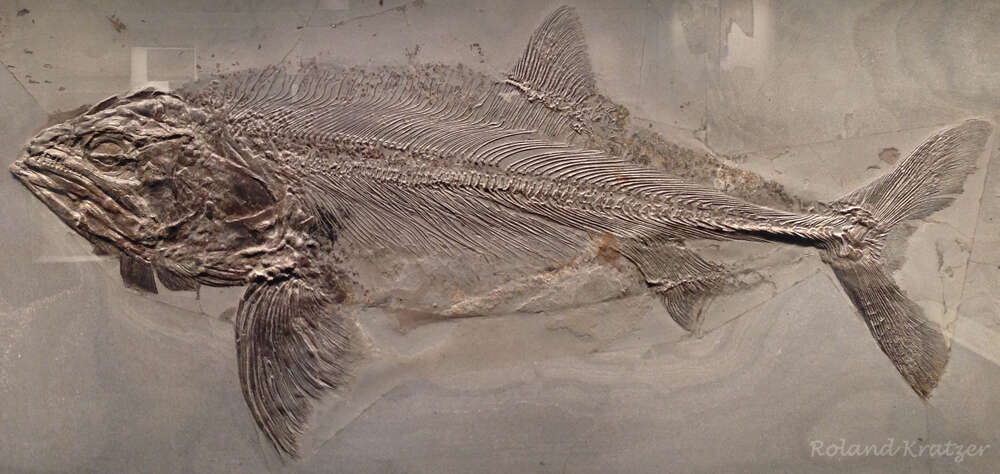
Hypsocormus (from , 'height' and 'timber log') is an extinct genus of pachycormid fish from the Middle to Late Jurassic of Europe. Fossils have been found in Germany, France and the UK.
Bonnerichthys
Bonnerichthys is a genus of fossil fishes within the family Pachycormidae that lived during the Coniacian to Maastrichtian stage of the Late Cretaceous. Fossil remains of this taxon were first described from the Smoky Hill Member of the Niobrara Chalk Formation of Kansas (Late Coniacian-Early Campanian), and additional material was later reported from the Pierre Shale, Mooreville Chalk, Demopolis Chalk, Wenonah Formation, and Moreno Formation, among other localities. It has also been reported in European Russia, specifically from the Rybushka Formation of the Saratov Region. It grew to at leas
Euthynotus
Euthynotus is an extinct genus of prehistoric marine ray-finned fish that lived in Europe during the Early Jurassic epoch. It is generally considered the basalmost pachycormiform, although more recent studies instead place it as the most basal member of the predatory lineage within the pachycormiforms, the Protosphyraenidae.
Sauropsis
Sauropsis (from , 'lizard' and 'looking') is an extinct genus of prehistoric bony fish.
Saurostomus
thumb|left|Model
Ohmdenia
Ohmdenia is an extinct genus of prehistoric bony fish that lived from the Toarcian stage of the Early Jurassic period. Ohmdenia was first described in 1953 by Bernhard Hauff, based on a fossil found in the well-known Posidonia Shale in Holzmaden, Germany. For a long time this animal has been considered a close relative of Birgeria, a great predator typical of the Triassic period with an uncertain systematic position. Further studies have shown similarities with the Pachycormiformes, a group considered close to the origin of teleosts and also including giant forms and planktivores (e.g., Leedsi
Asthenocormus
thumb|left|Restoration

Rhinconichthys
Rhinconichthys is an extinct genus of bony fish which existed during the Cenomanian stage of the Late Cretaceous.
Orthocormus
Orthocormus is an extinct genus of prehistoric pachycormiform bony fish. It is known from three species found in Late Jurassic (Kimmeridgian) aged plattenkalk deposits in Bavaria, Germany. The species "Hypsocormus" tenuirostris Woodward 1889 from the late Middle Jurassic (Callovian) Oxford Clay is not closely related to the type species of Hypsocormus, and is more closely related to Orthocormus + Protosphyraena, and thus has sometimes been referred to in open nomenclature as Orthocormus? tenuirostris. The species of Orthocormus reached over a metre in length, and are thought to have been pelag