Category
page 1Packaging materials

glass
thumb|300px|A glass building facade|alt=Refer to caption

straw
thumb|Bundles of rice straw
thumb|Pile of stacked small rectangular straw bales sheltered under a clear tarpaulin
thumb|Straw lines and a Combine Harvester|combine harvester
Straw is an agricultural byproduct consisting of the dry stalks of cereal plants after the grain and chaff have been removed. It makes up about half of the yield by weight of cereal crops such as barley, oats, rice, rye and wheat. It has a number of different uses, including fuel, livestock bedding and fodder, thatching and basket making.

adhesive
thumb|right|Nitrocellulose adhesive dispensed from a tube

polyethylene
thumb|140px|The repeating unit within polyethylene in the most stable staggered conformation

polystyrene
thumb|Expanded polystyrene packaging
thumb|A polystyrene yogurt container
thumb|Bottom of a vacuum forming|vacuum-formed cup; fine details such as the glass and fork [[food contact materials symbol and the resin identification code symbol are easily molded]]

polyester
thumb|Ester group (blue) which defines polyesters. This diagram shows just one ester linkage per repeat unit.
Polyester is a category of polymers that contain one or two ester linkages in every repeat unit of their main chain. As a specific material, it most commonly refers to a type called polyethylene terephthalate (PET). Polyesters include some naturally occurring chemicals, such as those found in plants and insects. Natural polyesters and a few synthetic ones are biodegradable, but most synthetic polyesters are not. Synthetic polyesters are used extensively in clothing.

polypropylene
Polypropylene (PP), also known as polypropene, is a thermoplastic polymer used in a wide variety of applications. It is produced via chain-growth polymerization from the monomer propylene.

jute
thumb|Jute fiber
thumb|A jute field in Bangladesh
thumb|Jute rope

cellophane
thumb|Chocolates wrapped in cellophane
Cellophane is a thin, transparent sheet made of regenerated cellulose. Its low permeability to air, oils, greases, bacteria, and liquid water makes it useful for food packaging. Cellophane is highly permeable to water vapour, but may be coated with nitrocellulose lacquer to prevent this.

label
thumb|USDA Organic milk cap label
thumb|A bunch of bananas with a label
thumb|A label with faux Embossing (paper)|embossing
thumb|A label made with embossing tape
thumb|Shirt with labels
A label (as distinct from signage) is a piece of paper, plastic film, cloth, metal, or other material affixed to a container or product. Labels are most often affixed to packaging and containers using an adhesive, or sewing when affixed to clothing. Labels contain printed information or symbols about the product or item. Information printed directly on a container or article can also be considered labelling.
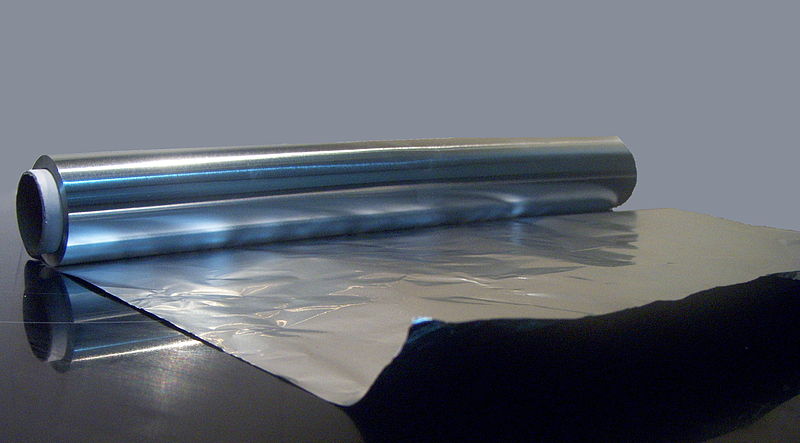
aluminium foil
thin, flexible sheets of aluminium, used for wrapping food, and other purposes
bubble wrap
pliable transparent plastic material
tissue paper
lightweight paper or, light crêpe paper
corrugated fiberboard
paper-based material consisting of a fluted corrugated sheet and one or two flat linerboards
plastic wrap
thin plastic film typically used for sealing food
kraft paper
paper or paperboard produced from chemical pulp produced in the kraft process
hessian
woven fabric from jute or sisal
low-density polyethylene
polymer
hot-melt adhesive
solvent-free and at room temperature more or less solid products which are applied to the adhesive surface when hot
coated paper
paper which has been coated by a compound or polymer

paperboard
thumb|upright=1.35|Corrugated fiberboard made from paperboard
Polymethylpentene
Polymethylpentene (PMP), also known as poly(4-methyl-1-pentene). It is used for gas-permeable packaging, autoclavable medical and laboratory equipment, microwave components, and cookware. It is commonly called TPX, which is a trademark of Mitsui Chemicals.
pullulan
Pullulan is a polysaccharide consisting of maltotriose units, also known as α-1,4- ;α-1,6-glucan'. Three glucose units in maltotriose are connected by an α-1,4 glycosidic bond, whereas consecutive maltotriose units are connected to each other by an α-1,6 glycosidic bond. Pullulan is produced from starch by the fungus Aureobasidium pullulans. Pullulan is mainly used by the cell to resist desiccation and predation. The presence of this polysaccharide also facilitates diffusion of molecules both into and out of the cell.
stone paper
strong, durable paper-like product manufactured from calcium carbonate bonded with high-density polyethylene
plastic foil
thin continuous polymeric material

strapping
Styrene-acrylonitrile resin
polymer
wrapping tissue
thin tissue paper for wrapping and cushioning items
linear low-density polyethylene
polymer
shrink wrap
polymer used to bundle boxes on a pallet for transport
liquid packaging board
type of paperboard
beeswax wrap
textile fabric impregnated with beeswax, impermeable to water
corrugated plastic
wide range of extruded twinwall plastic-sheet products produced from high-impact polypropylene resin
BoPET
thumb|right|Metallised film|Metallized boPET film, 32 layers of ~14 μm thickness each
expanded polyethylene
closed-cell polyethylene foam made from non-crosslinked, low-density polyethylene (LDPE) resins
Polybutylene succinate
chemical compound
molded pulp
packaging material

pressure-sensitive tape
type of tape
Saran
polyethylene food wrap
six-pack rings
set of connected plastic rings that are used as packaging
smart label
type of radio-frequency identification (RFID) transponder
dunnage
Dunnage is inexpensive or waste material used to load and secure cargo during transportation; more loosely, it refers to miscellaneous baggage, brought along during travel. The term can also refer to low-priority cargo used to fill out transport capacity which would otherwise ship underweight.