Category
page 1Pan-Slavism

Interslavic
Interslavic ( / ) is a pan-Slavic auxiliary language. Its purpose is to facilitate communication between speakers of various Slavic languages, as well as to allow people who do not speak a Slavic language to communicate with Slavic speakers by being mutually intelligible with most, if not all, Slavic languages. For Slavs and non-Slavs, it can be used for educational purposes as well. Its use spans a broad range of fields, including tourism and education.
.svg)
pan-slavism
alt=|thumb|Contemporary map of the Slavic people|Slavic-speaking countries of [[Europe. South Slavs appear in dark green, East Slavs in green, and West Slavs in light green.]]
Pan-Slavism is a political ideology that originated in the mid-19th century, emphasizing integrity and unity among the Slavic peoples. Its main impact occurred in the Balkans, where non-Slavic empires had ruled the South Slavs for centuries. These were mainly the Byzantine Empire, Austria-Hungary, the Ottoman Empire, and Venice.

Hey, Slavs
patriotic Slavic song
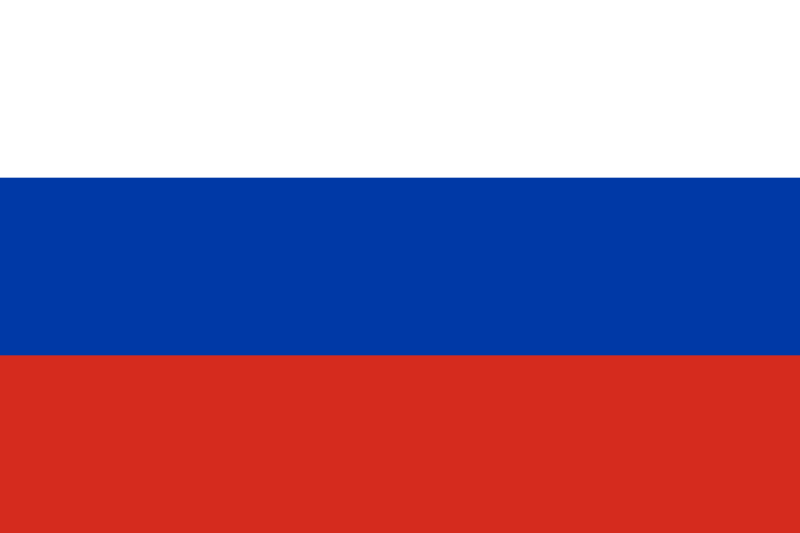
White movement
major faction in the Russian Civil War

Liberal Democratic Party of Russia
far-right nationalist political party in Russia
Pan-Slavic colors
red, blue and white
Young Bosnia
Revolutionary movement during Austro-Hungarian rule in Bosnia and Herzegovina
slavophilia
Slavophilia () was a movement originating from the 19th century that wanted the Russian Empire to be developed on the basis of values and institutions derived from Russia's early history. Slavophiles opposed the influences of Western Europe in Russia. Depending on the historical context, the opposite of Slavophilia could be seen as Slavophobia (a fear of Slavic culture) or also what some Russian intellectuals (such as Ivan Aksakov) called zapadnichestvo (westernism).
For example:
Illyrian movement
cultural and literary movement among the South Slavs in the Habsburg Empire in the nineteenth century
.jpg)
Yugo-nostalgia
thumb|Yugoslav symbols during a carnival in Ptuj, Slovenia, in 2013
thumb|Yugoslav flag on a street in Mostar, Bosnia and Herzegovina, in 2009
Nikolay Pavlovich Ignatyev
Russian politician (1832-1908)
Jan Arnošt Smoler
Sorbian philologist and writer (1816–1884)
Czech Corridor
proposed corridor running from Yugoslavia to Czechoslovakia
Mavro Orbin
Croatian writer, pan-slavist, and historian
Russian National Unity (1990)
political party

Austro-Slavism
thumb|300px|"Distribution of Races in Austria-Hungary", showing the areas inhabited by Slavic peoples (in the Historical Atlas by William R. Shepherd, 1911)
Zveno
Zveno (), Politicheski krag "Zveno", officially Political Circle "Zveno" was a Bulgarian political organization that was founded in 1930 by Bulgarian politicians, intellectuals and Bulgarian Army officers and was associated with a newspaper with the same name.
Juraj Križanić
Croatian Catholic missionary, theologist, linguist and pan-Slavist (1618-1683)
.png)
Yugoslavism
Yugoslavism, Yugoslavdom, or Yugoslav nationalism is an ideology supporting the notion that the South Slavs, namely the Bosniaks, Bulgarians, Croats, Macedonians, Montenegrins, Serbs, and Slovenes, belong to a single Yugoslav nation separated by diverging historical circumstances, forms of speech, and religious divides. During the interwar period, Yugoslavism became predominant in, and then the official ideology of, the Kingdom of Yugoslavia. There were two major forms of Yugoslavism in the period, the first of which is the regime-favoured integral Yugoslavism, promoting unitarism, centralisat
The Slav Epic
cycle of paintings by Alphonse Mucha
Prague Slavic Congress
gathering of nearly all Slav populations of Europe
Marche Slave
orchestral Tone poem by Pyotr Ilyich Tchaikovsky
Slavic Union
Russian Neo-Nazi political movement

Tsargrad
thumb|270px|Selim II with the "crown of Tsarigrad", in a 1757 illustration by [[Wallachia's Constantin Săidăcar of Mogoșoaia]]
Tsargrad (or Tsarigrad, Tsargorod, Czargrad or Tzargrad) is a Slavic name for the city or land of Constantinople (present-day Istanbul in Turkey), the capital of the Byzantine Empire.
Uz Maršala Tita
song
People's Radical Party
political party in Serbia and Yugoslavia
National Republican Army
alleged Russian anti-Putin armed rebel group

Czechoslovakism
thumb|300px|Three tilias, symbol of Czech and Slovak unity, near [[Bratislava castle]]
Czechoslovakism (, ) is a concept which underlines reciprocity of the Czechs and the Slovaks. It is best known as an ideology which holds that there is one Czechoslovak nation, though it might also appear as a political program of two nations living in one common state. The climax of Czechoslovakism fell on 1918–1938, when as a one-nation-theory it became the official political doctrine of Czechoslovakia; its best known representative was Tomáš Masaryk. Today Czechoslovakism as political concept or ideology
Yugoslav irredentism
ideology advocating a large Yugoslavia
Vienna Literary Agreement
literary agreement in March 1850, when writers from Croatia, Serbia and Slovenia met to standardize the Serbo-Croatian language
Progressive Socialist Party of Ukraine
political party in Ukraine
Liberal Democratic Party of Belarus
Belarusian political party
Serbian–Montenegrin unionism
political movement after the break up of former Yugoslavia
Vinko Pribojević
Croatian historian
Matica
A Matica or Matice or Matitsa or Matka is a Slavic concept of a foundation which promotes national culture and gained prominence during the 19th-century romantic nationalism.

Yugosphere
thumb|The region of the former Yugoslavia with EU member states (Slovenia 2004, Croatia 2013) in dark green and non-EU states in light green.
Yosyf Semashko
Uniate bishop and Orthodox Metropolitan
National Fascist Community
political movement
National Party
political party in the Czech Republic
International Agrarian Bureau
organization

Arthur Cherep-Spiridovich
Russian noble
First Serbian Volunteer Division
Serbian Volunteer unit in WWI
Adam Gurowski
Polish Journalist, Essayist, Reformer, Historian, Lecturer, Translator. (1805–1866)
Aleksandr Fyodorovich Rittikh
Russian general (1831-1914)
Nicholas Hartwig
Russian diplomat (1857-1914)
Neo-Slavism
thumb|300px|right|Contemporary map of the Slavic people|Slavic-speaking nations of Europe. [[South Slavs are highlighted in dark green, East Slavs in medium green, and West Slavs in light green.]]Neo-Slavism was a short-lived movement originating in Austria-Hungary around 1908 and influencing nearby Slavic states in the Balkans as well as Russia. Neo-Slavists promoted cooperation between Slavs on equal terms in order to resist Germanization, pursue modernization and liberal reforms, and wanted to create a democratic community of Slavic nations without the dominating influence of Russia.
pan-Slavic language
type of constructed language
Aleksandar Komulović
dalmatian Catholic priest and diplomat
United Serbian Youth

Western Russianism
historical and ideological trend of scientific, socio-political, ethno-confessional and cultural life that arose in the North-Western Region, based on the postulate that Belarusians are an ethnographic group of the All-Russian people

Omladina Trial
1894 trial in Prague

Russian Bloc
banned Ukrainian political party
Stemmatographia (1741)
1741 work by Hristofor Zhefarovich
Illyrian Armorials
collection of coats of arms