Category
page 1Papaveroideae

Chelidonium majus
species of plant in the poppy family

Chelidonium
Chelidonium, commonly known as celandines, is a small genus of flowering plants in the poppy family, This genus is native to northern Africa and Eurasia, where they are widespread, ranging from western Europe to east Asia.

Macleaya cordata
species of plant

poppy
upright=1.2|thumb|Poppies on Lake Geneva, [[Montreux]]
A poppy is a flowering plant in the subfamily Papaveroideae of the family Papaveraceae. Poppies are herbaceous plants, often grown for their colourful flowers. One species of poppy, Papaver somniferum, is the source of the narcotic drug mixture opium, which contains powerful medicinal alkaloids such as morphine and has been used since ancient times as an analgesic and narcotic medicinal and recreational drug. It also produces edible seeds. Following the trench warfare in the poppy fields of Flanders, Belgium, during World War I, poppies, s

Macleaya
Macleaya, or plume poppy, is a genus of two or three species of flowering plants in the poppy family Papaveraceae, native to Japan (Macleaya cordata) and China (M. cordata and Macleaya microcarpa). They are large rhizomatous herbaceous perennials with palmately lobed, frilly leaves of olive green or grey colour, long, and tall stems with airy plumes of petal-less, tubular, off-white or cream flowers.
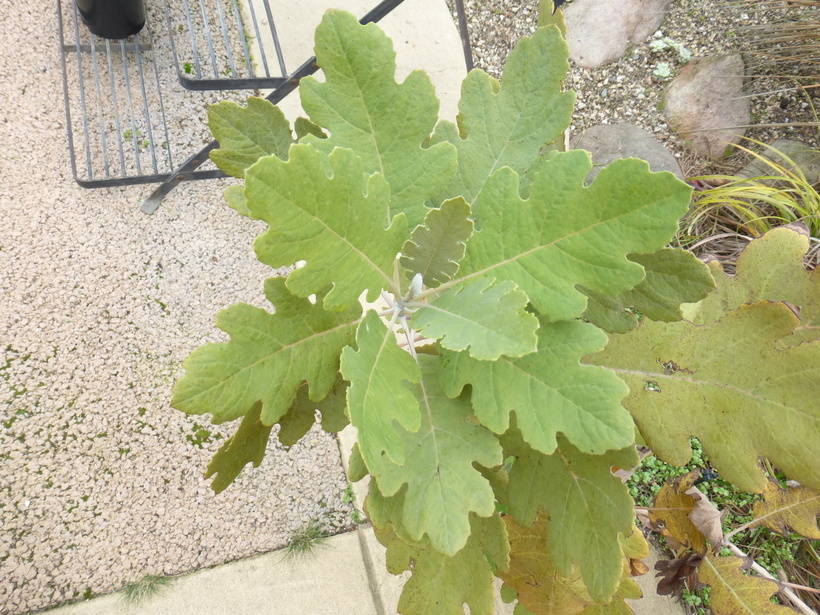
Bocconia
genus of plants

Arctomecon
Arctomecon is a genus of the poppy family Papaveraceae commonly called the bear poppies or bear-paw poppies, after the distinctive appearance of the leaves. The three species occur only in the northeastern part of the Mojave Desert of North America, and are all uncommon.

Stylophorum
Stylophorum (celandine-poppy) is a genus of three species of herbaceous perennial plants native to woodland in eastern North America and China.

Romneya
Romneya () is a genus of flowering plants belonging to the poppy family (Papaveraceae). There are two species in the genus Romneya, which was named for Irish astronomer John Thomas Romney Robinson. They are known commonly as Matilija poppies ( ), bush poppies, California poppies, or tree poppies. The common name "Matilija" is said to come from the Chumash leader, Chief Matilija. They are also known as the "fried egg flower" or the "fried egg plant" due to their bright yellow stamen, which creates the image of a sunny-side-up egg. They are native to chaparral and coastal scrub habitats in South
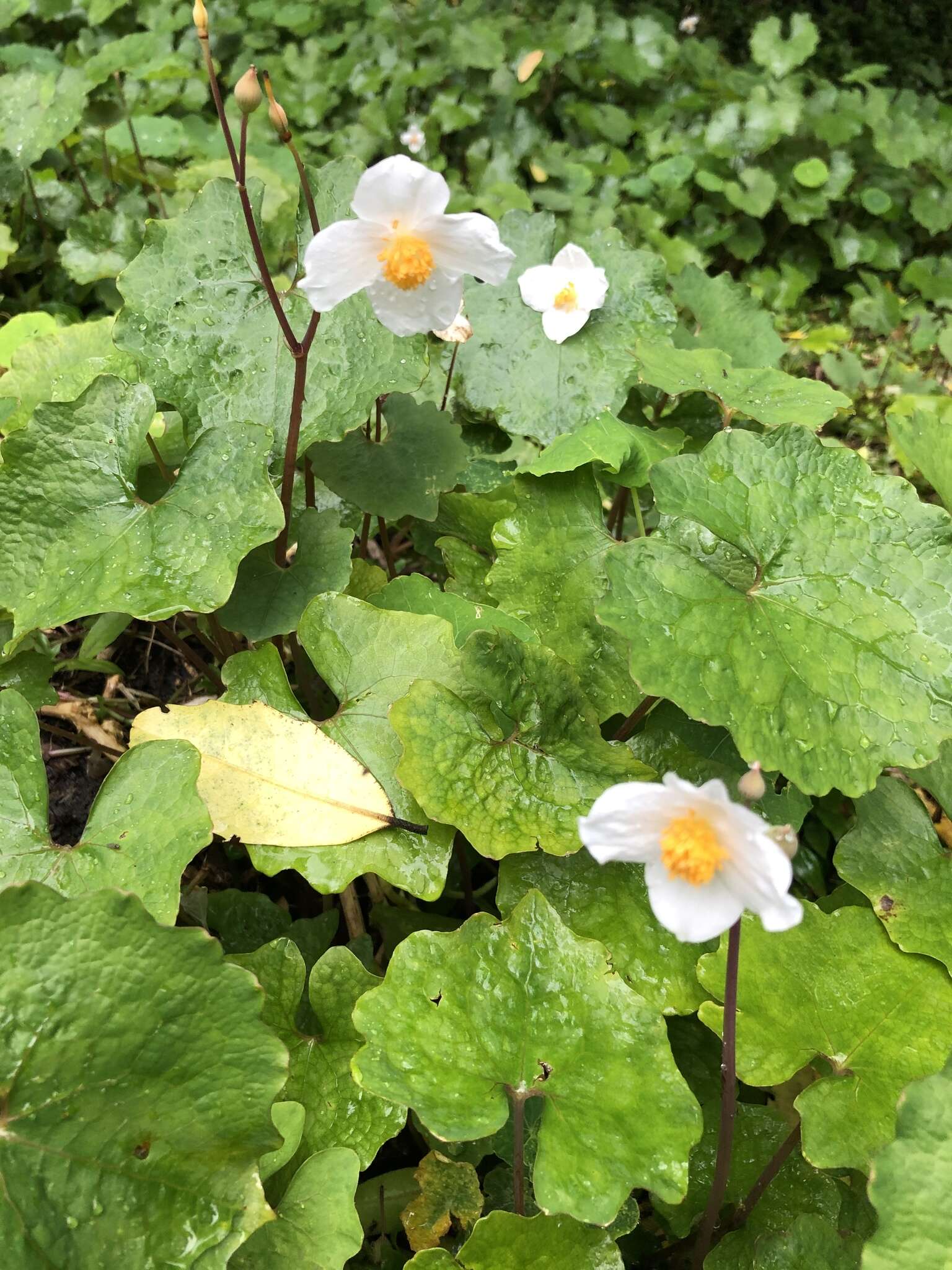
Eomecon
Eomecon is a monotypic genus of flowering plants in the poppy family containing the single species Eomecon chionantha. Its common names include snow-poppy and dawn-poppy. It is native to China.

Sanguinaria
Sanguinaria canadensis, bloodroot, is a perennial, herbaceous flowering plant native to eastern North America. It is the only species in the genus Sanguinaria, included in the poppy family Papaveraceae, and is most closely related to Eomecon of eastern Asia.

Dendromecon
Dendromecon, the tree poppy, is a genus of one or two species of shrubs to small trees, native to California and northern Baja California.

Hunnemannia
Hunnemannia is a monotypic genus of flowering plants in the poppy family Papaveraceae, containing the single species Hunnemannia fumariifolia (tulip poppy or Mexican tulip poppy) native to the highlands of Mexico. It is typically found at elevations of in the Chihuahuan Desert and south into central Mexico, where it favors rocky habitats, occurring along roadsides as well.
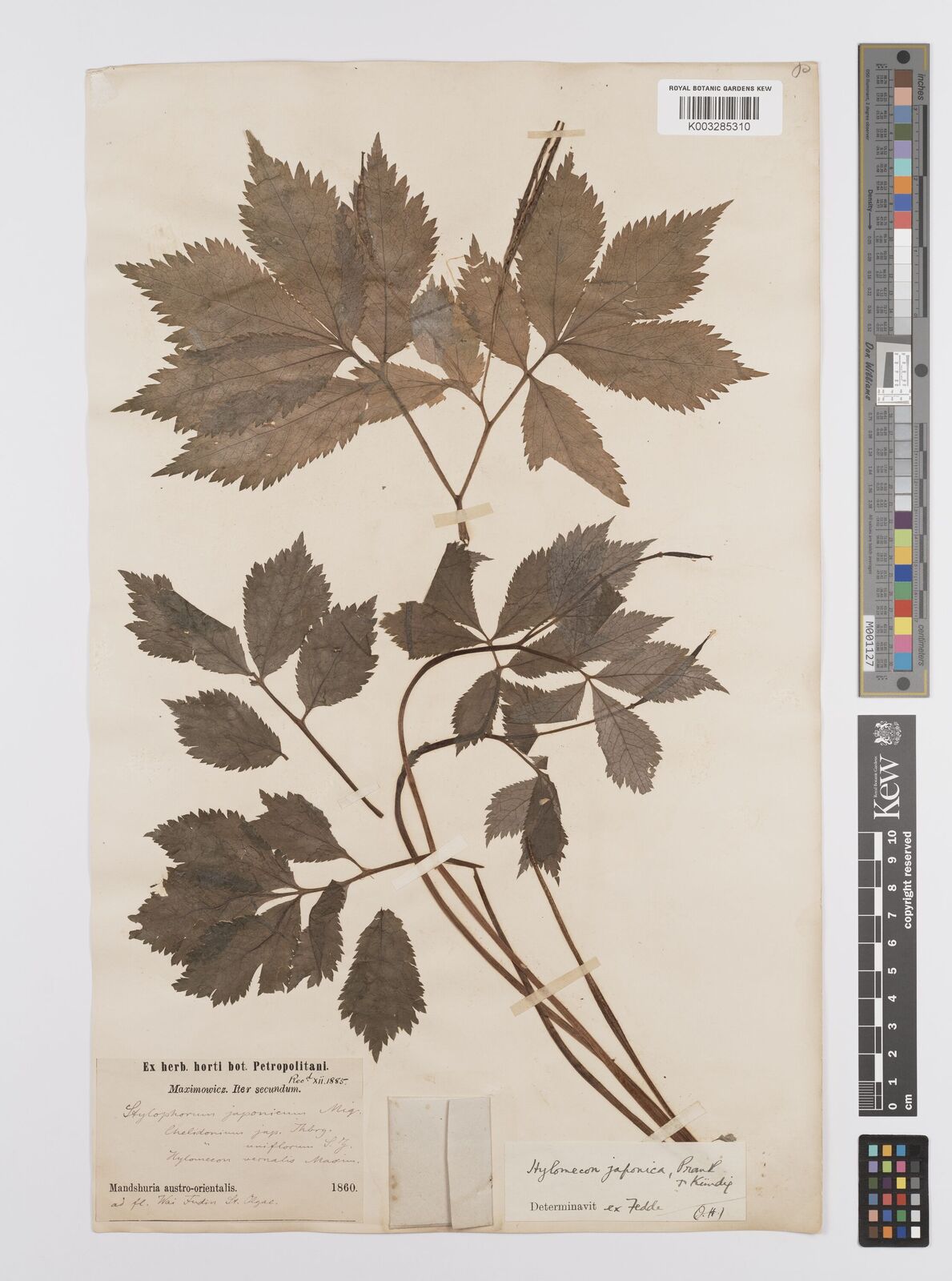
Hylomecon
Hylomecon is a genus of flowering plants in the family Papaveraceae. Its species are native to China, Korea, Japan and the Russian Far East.

Stylophorum diphyllum
species of plant

Canbya
Canbya, also known as the pygmy poppies, is a genus of the poppy family Papaveraceae consisting of two species found in the dry parts of western North America. Both species are small, no more than a few centimeters tall, with flowers less than 10 mm across.

Platystemon
Platystemon is a monotypic genus of flowering plants in the poppy family containing the single species Platystemon californicus, which is known by the common name creamcups. It is native to Oregon, California, Arizona, Utah and Baja California, and is found in open grasslands and sandy soils below elevation.

Papaveroideae
Papaveroideae is a subfamily of the family Papaveraceae (the poppy family).
Hylomecon japonica
species of plant

Macleaya microcarpa
species of plant

Romneya coulteri
species of plant

Dicranostigma
Dicranostigma, also known as the eastern horned poppies, is a genus in the poppy family Papaveraceae, the species of which are native to the Himalaya and western China. Although resembling the true horned poppies of Glaucium, they have stigmas with two lobes and fruit with only traces of the "horns".
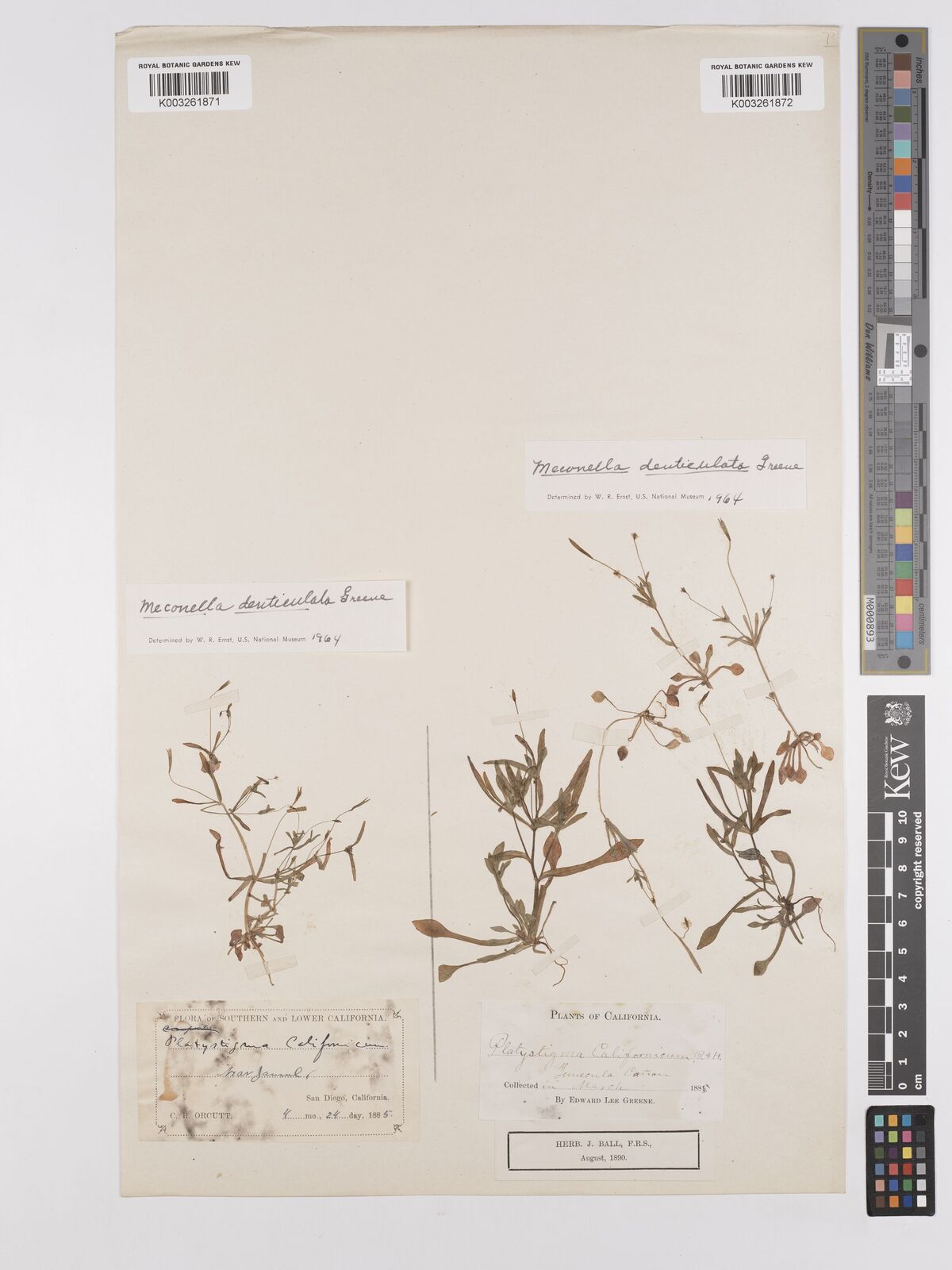
Meconella
Meconella is a small genus of flowering plants in the poppy family. They are known generally as fairypoppies.
==Species==
There are about 3 species:
{| class="wikitable"
|-
! Image !! Name!! Distribution
|-
| ||Meconella californica – California fairypoppy||around the San Francisco Bay Area and the Sierra foothills
|-
|120px ||Meconella denticulata – smallflower fairypoppy|| from around the San Francisco Bay Area to the Peninsular Ranges
|-
| ||Meconella oregana – white fairypoppy|| Oregon, California, Washington and British Columbia.
|-
|}
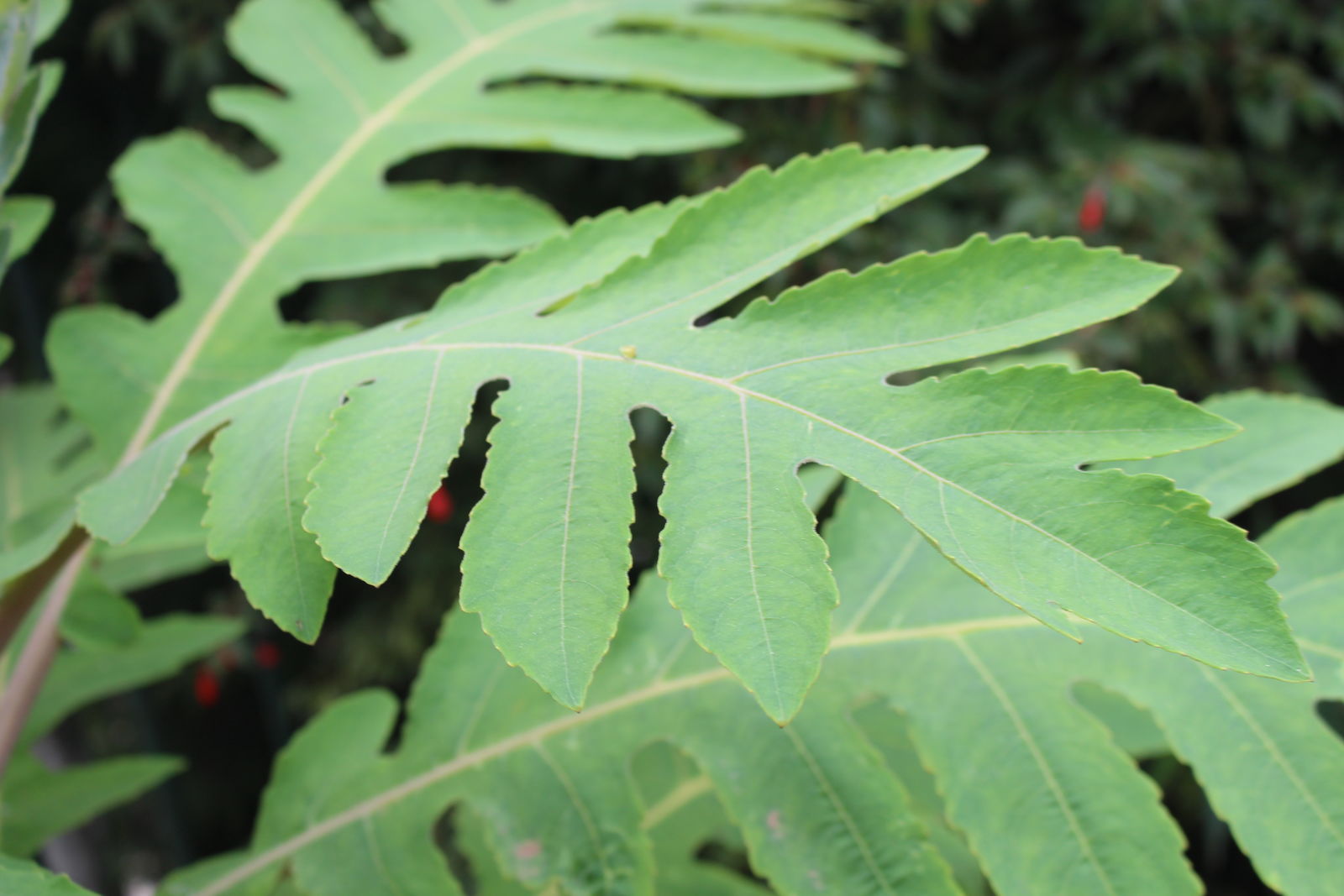
Bocconia frutescens
species of plant

Arctomecon californica
species of plant

Arctomecon merriamii
species of plant
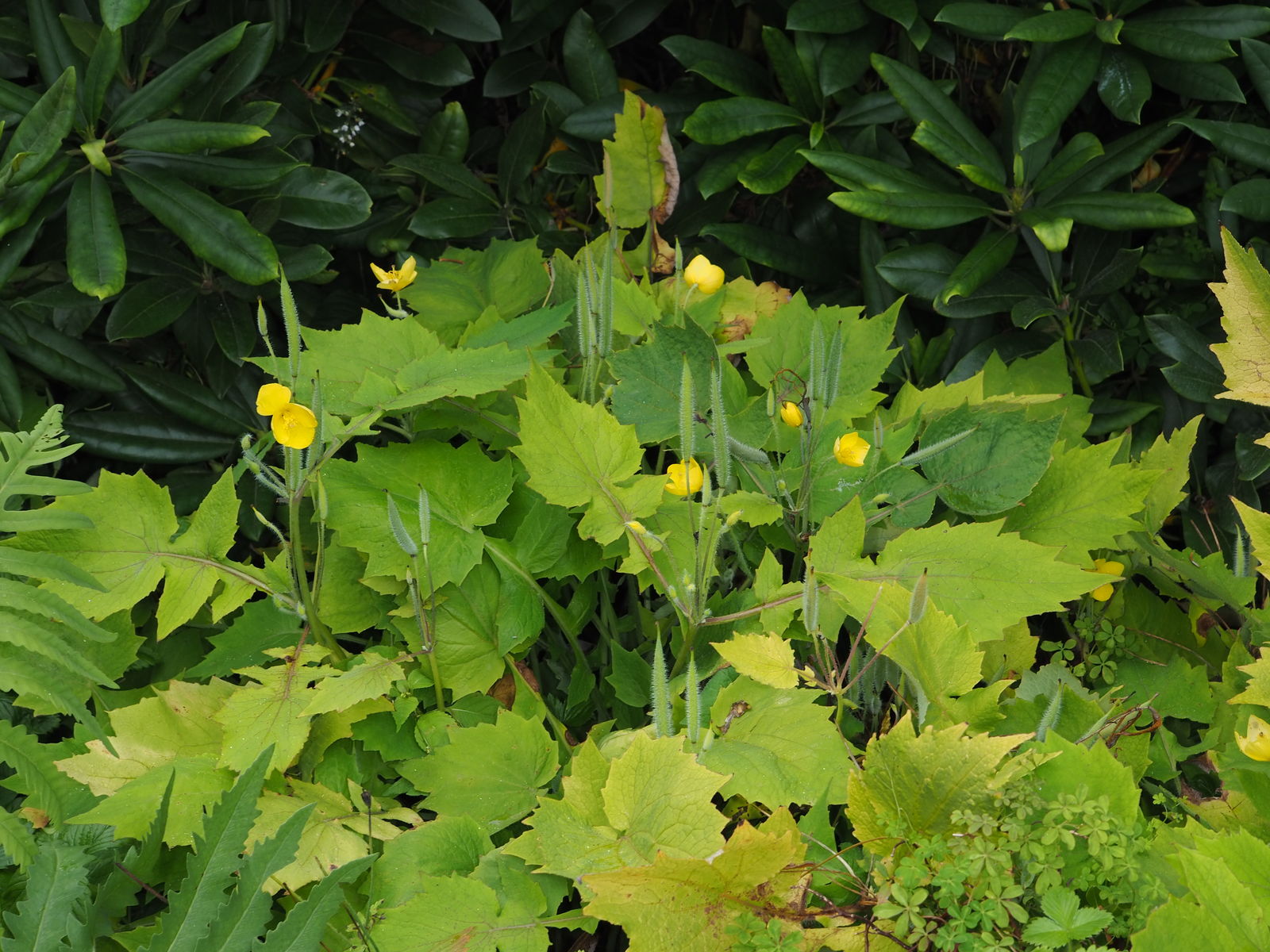
Stylophorum lasiocarpum
species of plant
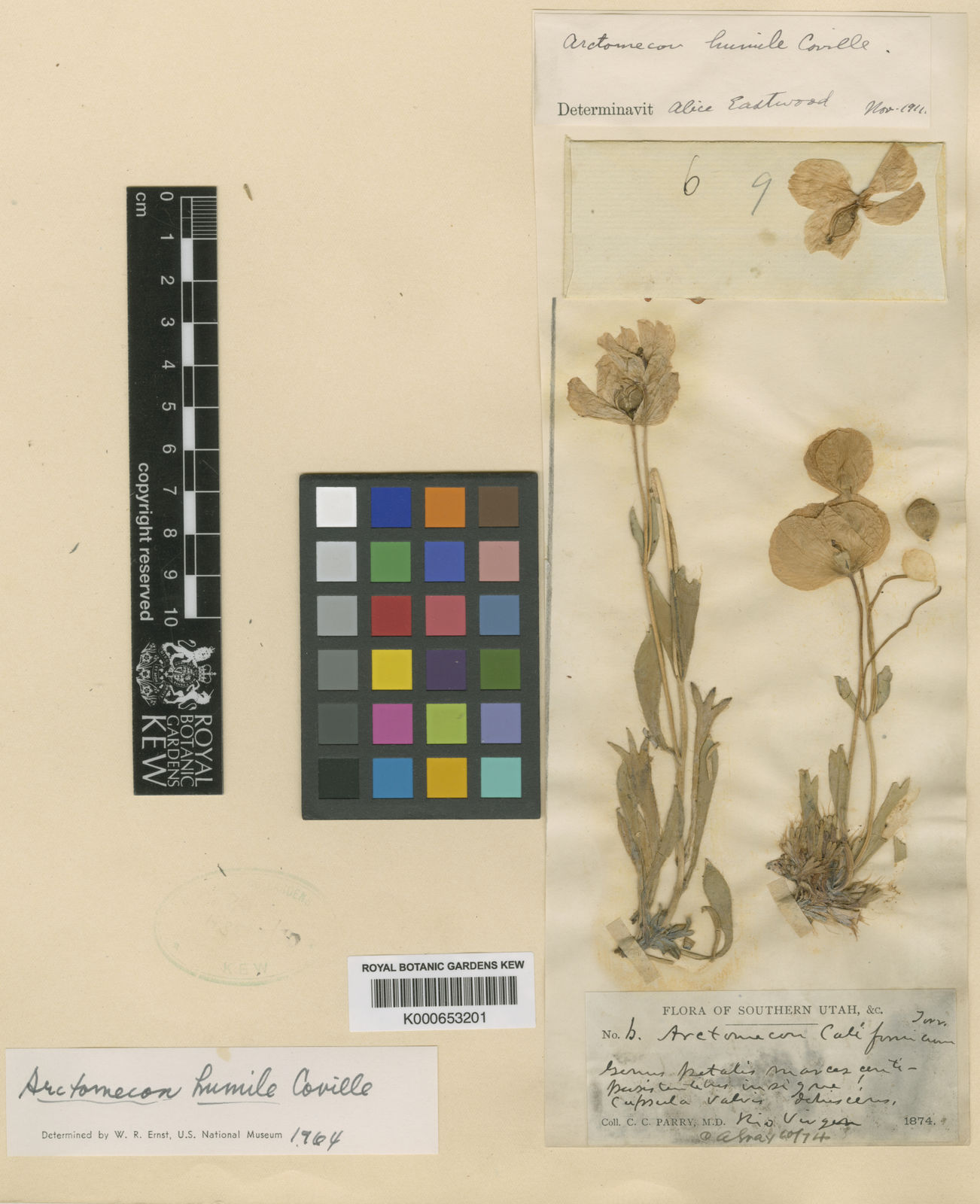
Arctomecon humilis
species of plant

Canbya candida
species of plant
Meconella denticulata
species of plant

Dendromecon rigida
species of plant

Canbya aurea
species of plant

Dendromecon harfordii
species of plant
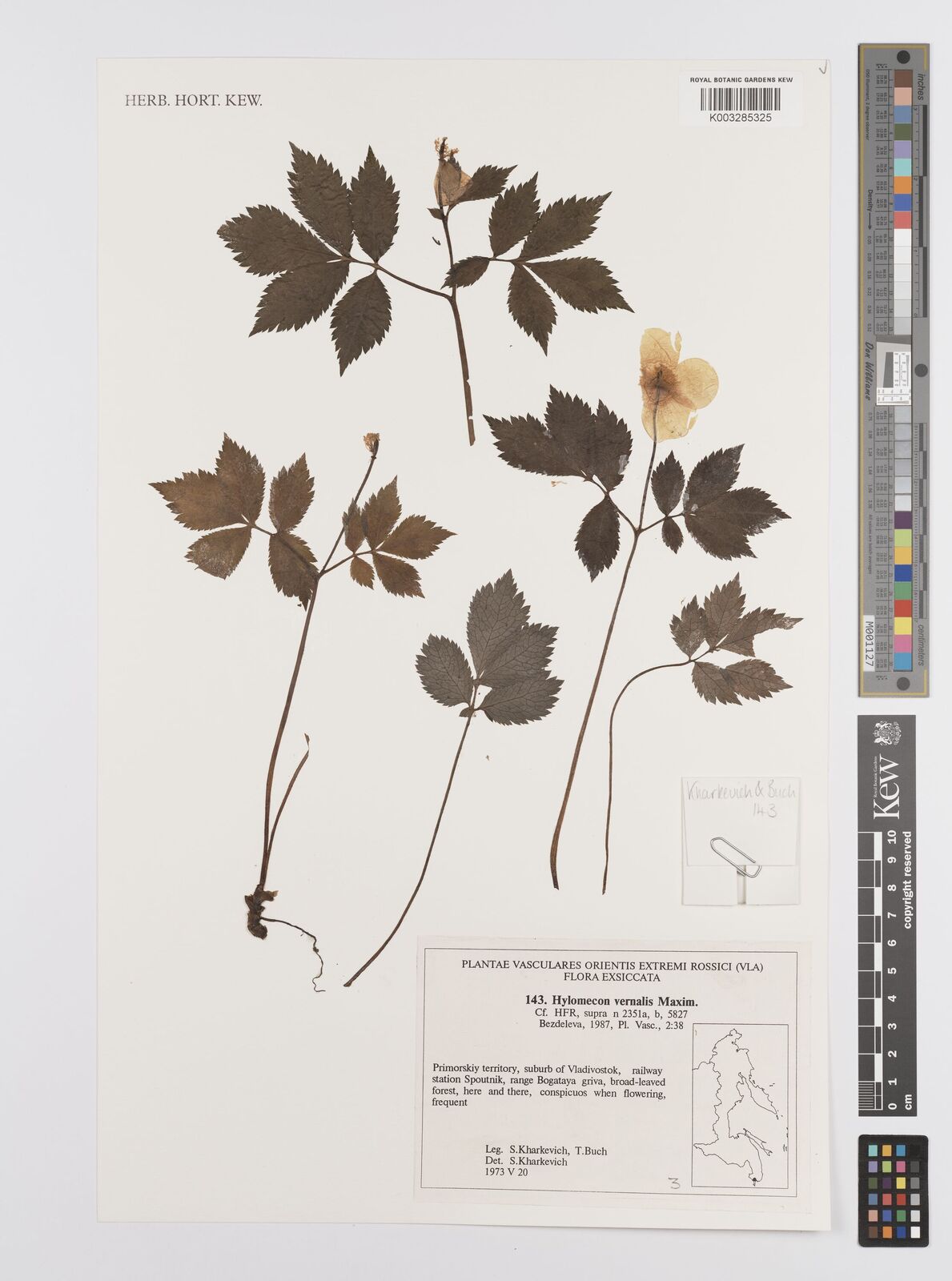
Hylomecon vernalis
species of plant
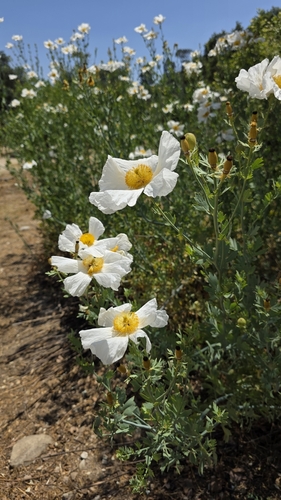
Romneya trichocalyx
species of plant

Meconella oregana
species of plant