Category
page 1Parasitic worms of humans
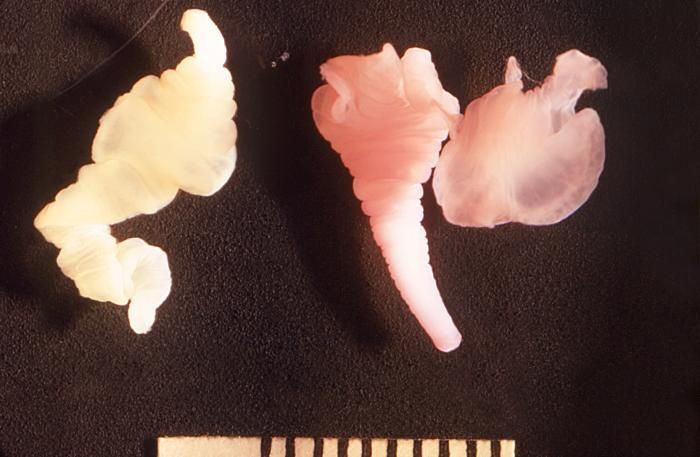
Taenia solium
species of Cestoda

Schistosoma
Schistosoma is a genus of trematodes, commonly known as blood flukes. They are parasitic flatworms responsible for a highly significant group of infections in humans termed schistosomiasis, which is considered by the World Health Organization to be the second-most socioeconomically devastating parasitic disease (after malaria), infecting millions worldwide.

Clonorchis sinensis
species of worm

Schistosoma mansoni
species of worm
Cyclophyllidea
Cyclophyllidea (the cyclophyllid cestodes) is an order of Cestoda (tapeworm). It is the largest and most diverse order of Cestoda (tapeworm), encompassing species that infect all classes of terrestrial tetrapods including humans and domesticated animals, and includes species with some of the most severe health impact on wildlife, livestock, and humans.
Opisthorchis viverrini
species of trematode
Paragonimus westermani
taxon in the invertebrate family Paragonimidae
Schistosoma haematobium
species of worm
Heterophyes heterophyes
species of worm

Diphyllobothrium
Diphyllobothrium is a genus of tapeworms which can cause diphyllobothriasis in humans through consumption of raw or undercooked fish. The principal species causing diphyllobothriasis is Diphyllobothrium latum, commonly known as the broad or fish tapeworm, or broad fish tapeworm. D. latum is a pseudophyllid cestode that infects fish and mammals. D. latum is native to Scandinavia, western Russia, and the Baltics, though it is now also present in North America, especially the Pacific Northwest. In Far East Russia, D. klebanovskii, having Pacific salmon as its second intermediate ho

Schistosoma japonicum
species of worm
Schistosoma mekongi
species of worm

Hymenolepis
genus of worms
Spirometra erinaceieuropaei
species of worm

Brachylaima
Brachylaima is a genus of trematodes that can infect the gastrointestinal tract of human beings.
Dipylidium
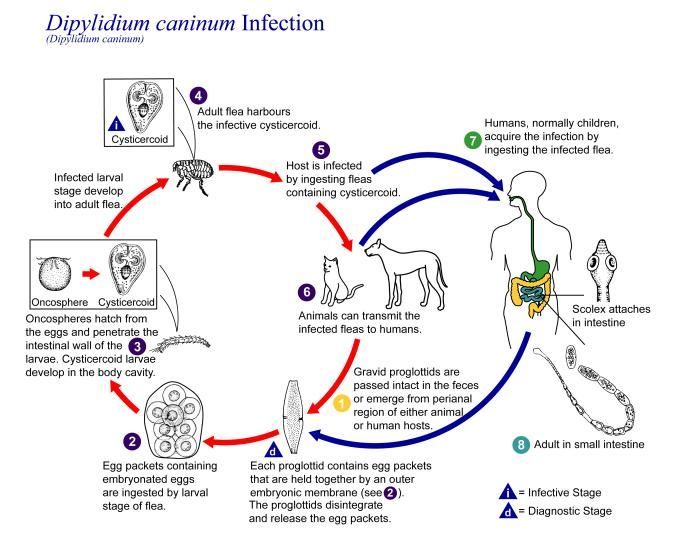
thumb|250px|Dipylidium life cycle
Trichobilharzia regenti
species of worm