Category
page 3Pegasus (constellation)
V391 Pegasi b
extrasolar planet
HR 8799 e
extrasolar planet
Tau Pegasi
variable star
Pease 1
planetary nebula
Upsilon Pegasi
star

Xi Pegasi
star in the constellation Pegasus

HAT-P-8 b
HAT-P-8b is an extrasolar planet located approximately 720 light years away in the constellation of Pegasus, orbiting the 10th magnitude star GSC 02757-01152. This planet was discovered by transit on December 5, 2008. Despite the designation as HAT-P-8b, it is the 11th planet discovered by the HATNet Project. The mass of the planet is 50% more than Jupiter while the radius is also 50% more than Jupiter. The mass of this planet is exact since the inclination of the orbit is known, typical for transiting planets. This is a so-called “hot Jupiter” because this Jupiter-like gas giant planet orbits
Q9364003
barred spiral galaxy
Omicron Pegasi
star in the constellation Pegasus
S Pegasi
variable star in the constellation Pegasus

BX44
BX442 (Q2343-BX442) is a grand design spiral galaxy of type Sc. It has a companion dwarf galaxy. It is the most distant known grand design spiral galaxy in the universe, with a redshift of z=2.1765 ± 0.0001.
It is commonly referred to as the oldest known grand design spiral galaxy in the universe,
NGC 7752 and NGC 7753
pair of Galaxies in the constellation of Pegasus
Q3679767
galaxy
UGC 12591
massive spiral galaxy
Q3680386
galaxy
EQ Pegasi
star system in the constellation Pegasus
WASP-10b
WASP-10b is an extrasolar planet discovered in 2008 by SuperWASP using the transit method. It takes about 3 days to orbit around WASP-10. Follow-up radial velocity observations showed that it is three times more massive than Jupiter, while the transit observations showed that its radius is only 8% larger than Jupiter's, giving the planet a density more similar to the Moon than a normal gas giant.
It is currently the only confirmed planet around WASP-10, as WASP-10c is still unconfirmed.
Pirx
extrasolar planet
LUH 4
star in the constellation Pegasus
HD 219828 b
extrasolar planet
Pi2 Pegasi
star in the constellation Pegasus
1 Pegasi
star in the constellation Pegasus
CTA-102
CTA 102, also known by its B1950 coordinates as 2230+114 (QSR B2230+114) and its J2000 coordinates as J2232+1143 (QSO J2232+1143), is a blazar-type quasar discovered in the early 1960s by a radio survey carried out by the California Institute of Technology. It has been observed by a large range of instruments since its discovery, including WMAP, EGRET, GALEX, VSOP and Parkes, and has been regularly imaged by the Very Long Baseline Array since 1995. It has also been detected in gamma rays, and a gamma-ray flare has been detected from it.
HD 210702
star
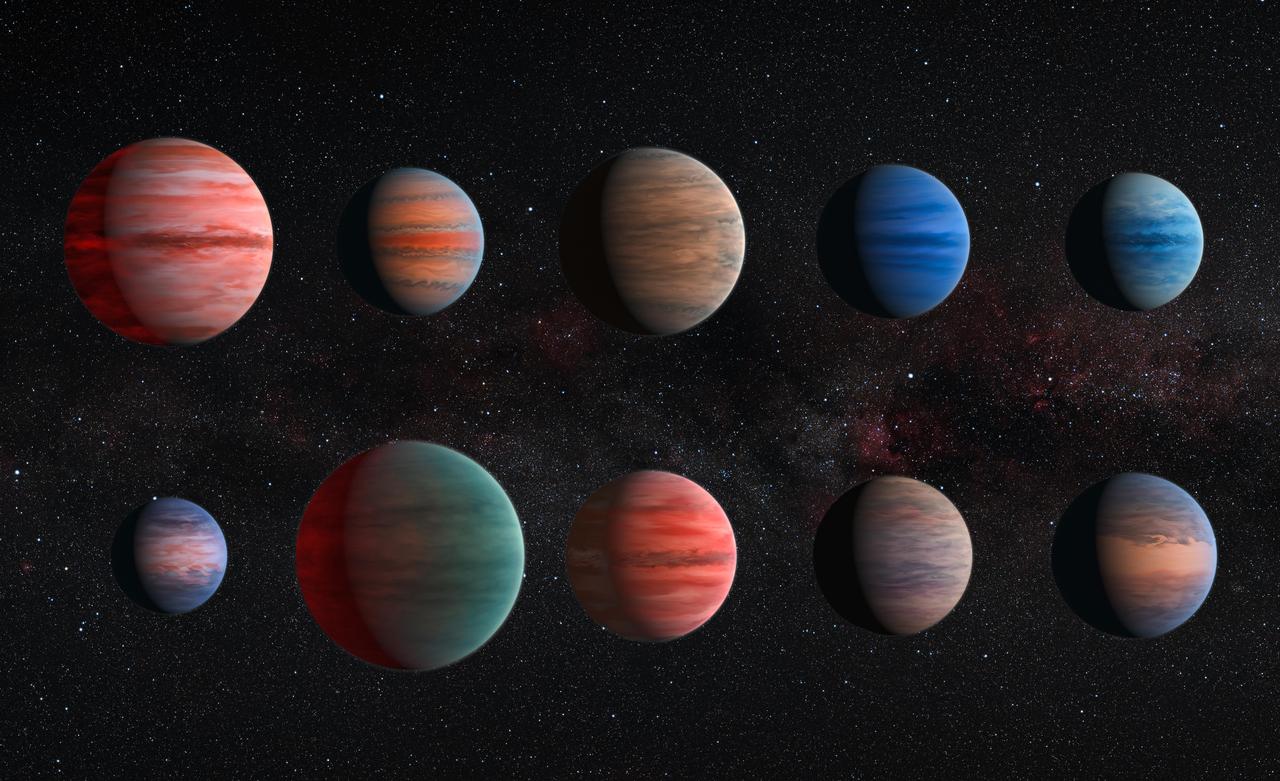
WASP-10
WASP-10 is a star 461 light-years away in the constellation Pegasus. It hosts a transiting planet discovered by the SuperWASP project.
HAT-P-8
HAT-P-8 is a magnitude 10 star located 700 light-years away in Pegasus. It is a F-type star about 28% more massive than the Sun. Two red dwarf companions have been detected around HAT-P-8. The first has a spectral type of M5V and has a mass of . The second is even less massive, at , and its spectral type is M6V.
Gliese 880
star
NGC 7331 Group
galaxy group di the constellation Pegasus
Pi1 Pegasi
star in the constellation Pegasus
70 Pegasi
binary star system in the constellation Pegasus

Solaris
type K main sequence star at a distance of 163 light-years
NGC 7253
galaxy in the constellation Pegasus
HD 219828
star
9 Pegasi
star in the constellation Pegasus
Gliese 829
star system in the constellation Pegasus
35 Pegasi
star in the constellation Pegasus
Psi Pegasi
binary star system in the constellation Pegasus
HD 210702 b
extrasolar planet
Morava
WASP-60, also named Morava, is a F-type main-sequence star about 1,400 light-years away in the constellation Pegasus. The star's age is much younger than the Sun's at 1.7 billion years. WASP-60 is enriched in heavy elements, having 180% of the solar abundance of iron. The star does not have noticeable starspot activity, an unexpected observation for a relatively young star. The age of WASP-60 determined by different methods is highly discrepant though, and it may actually be an old star which experienced an episode of spin-up in the past.
Segue 3
Star cluster
Nu Pegasi
star in the constellation Pegasus
II Pegasi
star
Q4636243
Blazar

55 Pegasi
star in the constellation Pegasus

Sigma Pegasi
star system in the constellation Pegasus
Tangra
WASP-21, also named Tangra, is a G-type star (spectral type G3V) that has reached the end of its main sequence lifetime. It lies approximately 834 light-years away, in the constellation of Pegasus. The star is relatively metal-poor, having 40% of heavy elements compared to the Sun. Kinematically, WASP-21 belongs to the thick disk of the Milky Way. It has an exoplanet named WASP-21b.
72 Pegasi
star system in the constellation Pegasus
Chi Pegasi
variable star in the constellation Pegasus
Phi Pegasi
variable star in the constellation Pegasus
MT Pegasi
star in the constellation Pegasus
EE Pegasi
star in the constellation Pegasus
32 Pegasi
binary star system in the constellation Pegasus
IM Pegasi
star
56 Pegasi
star system in the constellation Pegasus
Anadolu
WASP-52, also named Anadolu, is a K-type main-sequence star about 570 light-years away in the constellation Pegasus. It is older than the Sun at billion years, but it has a similar fraction of heavy elements.
The star has prominent starspot activity, with 3% to 14% of the stellar surface covered by areas 575 K cooler than the rest of the photosphere.
78 Pegasi
binary star system in the constellation Pegasus
2 Pegasi
star in the constellation Pegasus
Rho Pegasi
star in the constellation Pegasus
Q2743690
supernova
Huchra's lens
quasar