Category
page 1Pennsylvanian taxonomic orders

Solifugae
Solifugae is an order of arachnids known variously as solifuges, sun spiders, camel spiders, and wind scorpions. The order includes more than 1,000 described species in about 147 genera. Despite their common names, they differ from both order Araneae (spiders) and order Scorpiones (scorpions). Most species of solifuges live in dry climates and feed opportunistically on ground-dwelling arthropods and other small animals. The largest species grow to a length of , including legs. A number of urban legends exaggerate the size and speed of solifuges, and their potential danger to humans, which is n
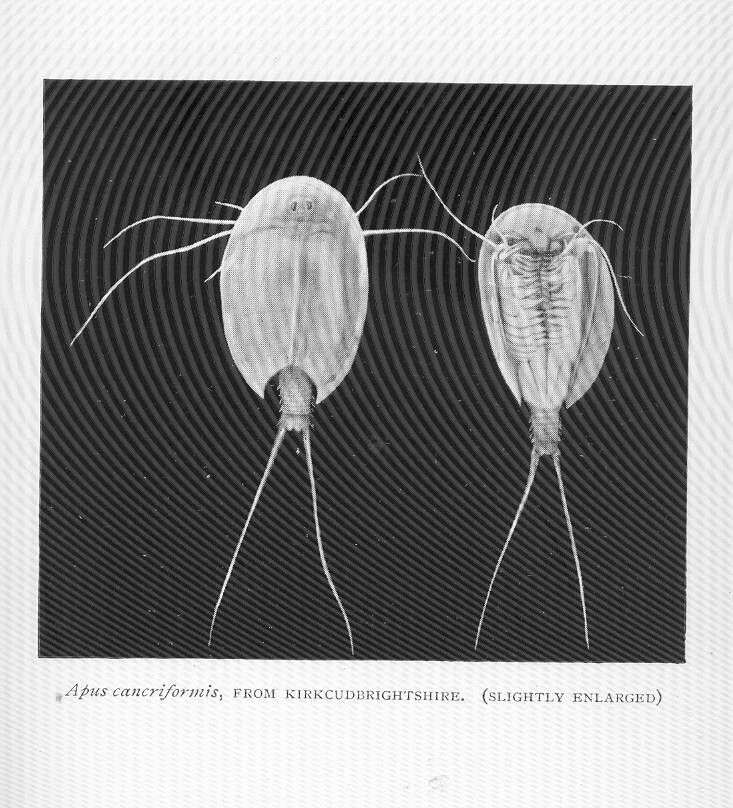
Notostraca
The order Notostraca, containing the single family Triopsidae, is a group of crustaceans known as tadpole shrimp or shield shrimp. The two genera, Triops and Lepidurus, are considered living fossils, with similar forms having existed since the end of the Devonian, around 360 million years ago. They have a broad, flat carapace, which conceals the head and bears a single pair of compound eyes. The abdomen is long, appears to be segmented and bears numerous pairs of flattened legs. The telson is flanked by a pair of long, thin caudal rami. Phenotypic plasticity within taxa makes species-level ide

Eugeneodontiformes
right|thumb|Helicoprion bessonovi, teeth at the front of the lower jaw (reversed for more natural position)
225px|thumb|Restoration of Romerodus ([[Caseodontidae)]]

Hybodontiformes
Hybodontiformes, commonly called hybodonts, are an extinct group of shark-like cartilaginous fish (chondrichthyans) which existed from the late Devonian to the Late Cretaceous. Hybodonts share a close common ancestry with modern sharks and rays (Neoselachii) as part of the clade Euselachii. They are distinguished from other chondrichthyans by their distinctive fin spines and cephalic spines present on the heads of males. An ecologically diverse group, they were abundant in marine and freshwater environments during the late Paleozoic and early Mesozoic, but were rare in open marine environments

Petalodontiformes
200px|thumb|left|Teeth of Petalodus|Petalodus ohioensis
Petalodontiformes ("thin-plate teeth") is an extinct order of marine cartilaginous fish related to modern day chimaera found in what is now the United States of America and Europe.

Xenacanthiformes
Xenacanthiformes (or Xenacanthida) is an order or superorder of extinct shark-like chondrichthyans (cartilaginous fish) known from the Carboniferous to the Late Triassic. They were native to freshwater, marginal marine, and shallow marine habitats. Some xenacanths may have grown to lengths of . Most xenacanths died out at the end of the Permian in the End-Permian Mass Extinction, with only a few forms surviving into the Triassic.