Category
page 1People from Roman Syria

Lucian of Samosata
Lucian of Samosata (Λουκιανὸς ὁ Σαμοσατεύς, 125 – after 180) was a Hellenized Syrian satirist, rhetorician and pamphleteer who is best known for his characteristic tongue-in-cheek style, with which he frequently ridiculed philosophers and priests, speculative beliefs about the nature of the universe, religious practices, and superstitions. Although his native language was probably Syriac, all of his extant works are written entirely in ancient Greek (mostly in the Attic Greek dialect popular during the Second Sophistic period).

Caracalla
Marcus Aurelius Antoninus (born Lucius Septimius Bassianus, 4 April 188 – 8 April 217), better known by his nickname Caracalla (; ), was Roman emperor from 198 to 217 AD, first serving as nominal co-emperor under his father and then ruling alone after 211 AD. He was a member of the Severan dynasty, the elder son of Emperor Septimius Severus and Empress Julia Domna. Severus proclaimed Caracalla co-ruler in 198, doing the same with his other son Geta in 209. The two brothers briefly shared power after their father's death in 211, but Caracalla soon had Geta murdered by the Praetorian Guard
.png)
Elagabalus
Marcus Aurelius Antoninus (born Sextus Varius Avitus Bassianus, 204 – 13 March 222), better known by his posthumous nicknames Elagabalus ( ) and Heliogabalus ( ), was Roman emperor from 218 to 222, while he was still a teenager. His short reign was notorious for religious controversy and alleged sexual debauchery. A close relative to the Severan dynasty, he came from a prominent Syrian Arab family in Emesa (Homs), Syria, where he served as the head priest of the sun god Elagabal from a young age. After the death of his cousin, the emperor Caracalla, Elagabalus was raised to the Principate at 1

Severus Alexander
Roman Emperor (208-235)

Eusebius of Caesarea
Eusebius of Caesarea (30 May AD 339), also known as Eusebius Pamphilius, was a historian of Christianity, exegete, and Christian polemicist from the Roman province of Syria Palaestina. In about AD 314 he became the bishop of Caesarea Maritima.

Ammianus Marcellinus
4th-century Roman historian and soldier

Ignatius of Antioch
late 1st/early 2nd century Christian author and Patriarch of Antioch
Publilius Syrus
1st century BC Syrian-born Latin writer
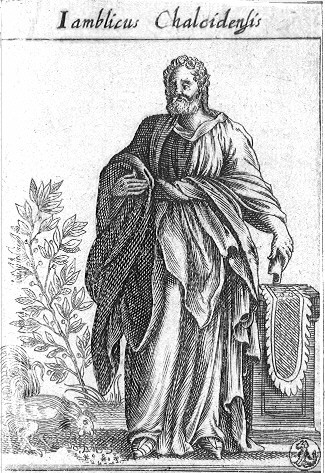
Iamblichus
Iamblichus ( ; ; ; ) was a Syrian Arab Neoplatonist philosopher who determined a direction later taken by Neoplatonism. Iamblichus was also the biographer of the Greek mystic, philosopher, and mathematician Pythagoras. In addition to his philosophical contributions, his is important for the study of the sophists because it preserved about ten pages of an otherwise unknown sophist known as the Anonymus Iamblichi.

Cassiodorus
Magnus Aurelius Cassiodorus Senator (c. 485 – c. 585), commonly known as Cassiodorus (), was a Roman statesman, scholar, and writer who served in the administration of Theodoric the Great, king of the Ostrogoths. Senator was part of his surname, not his rank. In his later years, he devoted himself to Christian learning and founded the Vivarium monastery, where he worked extensively during the final decades of his life.

Julia Domna
ancient Roman empress

Philip II Philoromaeus
last Seleucid ruler
Severus of Antioch
Patriarch of Antioch
Eutropia
Eutropia (Greek: Εύτροπία; died after 325) was a Roman empress of Syrian origin, the wife of Emperor Maximian.
Marinus of Tyre
Greek cartographer and mathematician (c.70–130)

Gaius Julius Priscus
brother of Roman emperor Philip the Arab

Eunus
Eunus (died 132 BC) was a Roman slave from Apamea in Syria who became the leader and king of the slave uprising during the First Servile War (135 BC–132 BC) in the Roman province of Sicily. According to the historian Florus, his name is remembered due to the severe defeats he inflicted on the Romans.
Sohaemus of Armenia
Roman client king of Armenia (died 180)
Sextus Varius Marcellus
Syrian-born Roman nobleman and politician (c. 165 – c. 215)
Paulinus of Antioch
Patriarch of Antioch
Archigenes
Archigenes (), an ancient Greco-Syrian physician, who lived in the 1st and 2nd centuries AD.
Julius Bassianus
Syrian high priest of Elagabalus (died 217)
Gessius Marcianus
2nd/3rd century Syrian-born Roman nobleman
Saturninus
Syrian gnostic around 125 Ad
Flamma
Flamma (lit. The Flame) was a Syrian gladiator under the Roman Empire during the reign of Hadrian. He was one of the most famous and successful of his time.
Eugenius
early 3rd-century Roman tribunus and usurper from Antioch

Paul the Black
Syriac Orthodox Patriarch of Antioch
Sampsiceramus II
king-priest of Emesa, vassal of the Roman Empire
Sergius of Tella
Patriarch of Antioch

Gaius Julius Alexion
1st century Roman Client Priest King of Emesa
Beryllus of Bostra
3rd century bishop of Bostra, Nabatea
Thomas of Harqel
Syrian Christian orthodox bishop, miaphysite, translator of the New Testament into Syriac
Julian of Antioch
Patriarch of Antioch (471–476) and Chalcedonian

Sampsiceramus I
priest King of Emesa
John of the Sedre
Patriarch of Antioch