Category
page 1Peramelemorphs

Peramelemorphia
The order Peramelemorphia includes the bandicoots and bilbies. All members of the order are endemic to Australia-New Guinea and most have the characteristic bandicoot shape: a plump, arch-backed body with a long, delicately tapering snout, very large upright ears, relatively long, thin legs, and a thin tail. Their size varies from about 140 grams up to 4 kilograms, but most species are about one kilogram.

greater bilby
species of mammal

Peramelidae
The marsupial family Peramelidae contains the extant bandicoots. They are found throughout Australia and New Guinea, with at least some species living in every available habitat, from rainforest to desert. Four fossil peramelids are described. One known extinct species of bandicoot, the pig-footed bandicoot, was so different from the other species, it was recently moved into its own family.
Bilby-5.jpg)
Macrotis
Macrotis is a genus of desert-dwelling marsupial omnivores known as bilbies or rabbit-bandicoots; they are members of the order Peramelemorphia.
lesser bilby
species of extinct mammal
Chaeropus ecaudatus
species of mammal

eastern barred bandicoot
species of mammal

Northern brown bandicoot
species of mammal

long-nosed bandicoot
species of mammal

Golden bandicoot
species of mammal endemic to Australia

Western barred bandicoot
species of mammal
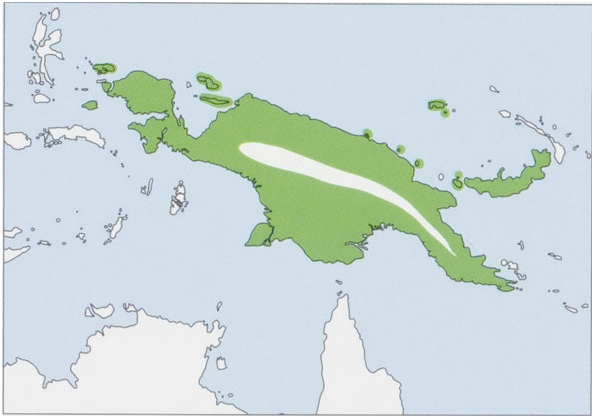
Echymipera kalubu
species of mammal

Southern brown bandicoot
species of mammal

Seram bandicoot
species of mammal
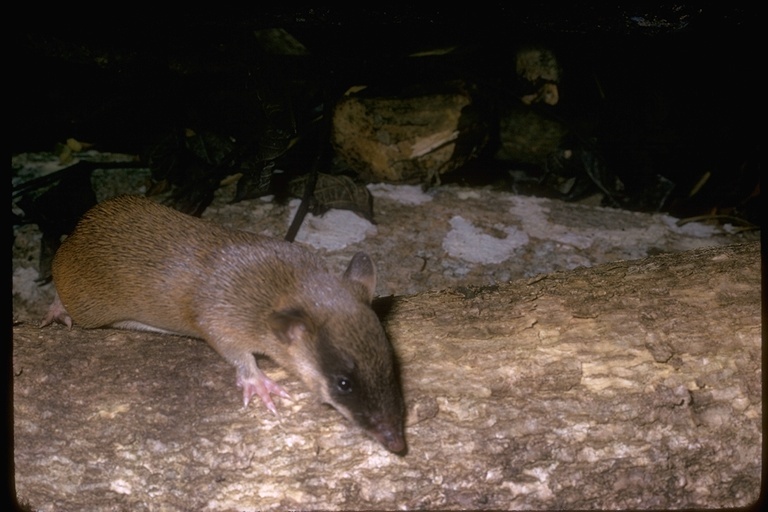
Echymipera
genus of mammals

New Guinean long-nosed bandicoot
genus of mammals
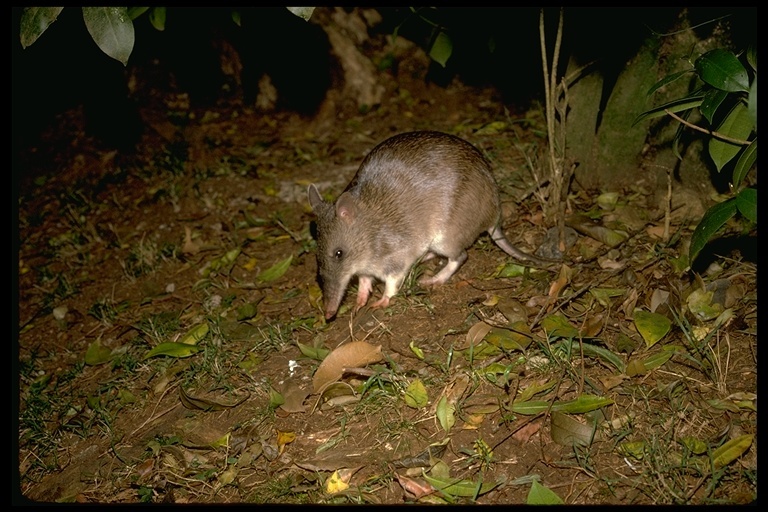
Perameles
Perameles is a genus of marsupials of the order Peramelemorphia. They are referred to as long-nosed bandicoots or barred bandicoots.
desert bandicoot
species of extinct mammal

Echymipera rufescens
species of mammal

Echymipera clara
species of mammal

Papuan bandicoot
species of mammal

Raffray's bandicoot
species of mammal

Striped bandicoot
species of mammal

Mouse bandicoot
species of mammal

short-nosed bandicoot
genus of mammals

New Guinean mouse bandicoot
genus of mammals

Giant bandicoot
species of mammal

Echymipera davidi
species of mammal
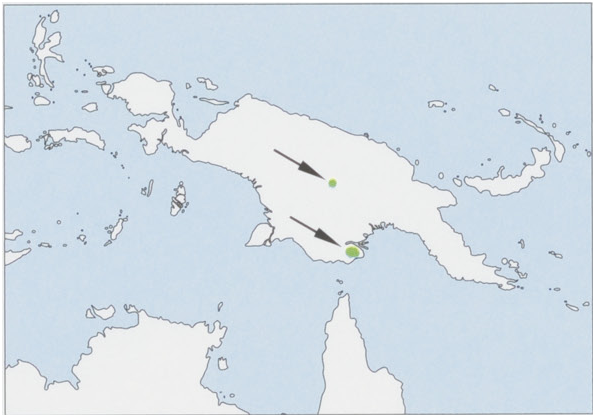
Echymipera echinista
species of mammal

Arfak pygmy bandicoot
species of mammal

bandicoot
Bandicoots are a group of more than 20 species of small to medium-sized, terrestrial, largely nocturnal omnivorous marsupials in the order Peramelemorphia. They are endemic to the Australia–New Guinea region, including the Bismarck Archipelago to the east and Seram and Halmahera to the west.

Chaeropus
Chaeropus, known as the pig-footed bandicoots, is a genus of small marsupials that became extinct during the 20th century. They were the only members of the family Chaeropodidae in order Peramelemorphia (bandicoots and bilbies), with unusually thin legs, yet were able to move rapidly. Two recognised species inhabited dense vegetation on the arid and semiarid plains of Australia. The genus' distribution range was later reduced to an inland desert region, where it was last recorded in the 1950s; it is now presumed extinct.
Yarala
Yarala is a genus of fossil mammals that resemble contemporary bandicoots. The superfamily Yaraloidea and family Yaralidae were created following the discovery of the type species Yarala burchfieldi in 1995, on the basis that it lacks synapomorphies that unite all other peramelemorphian taxa.
Crash bandicoot
fossil species of marsupial
Easter Bilby
Australian holiday character
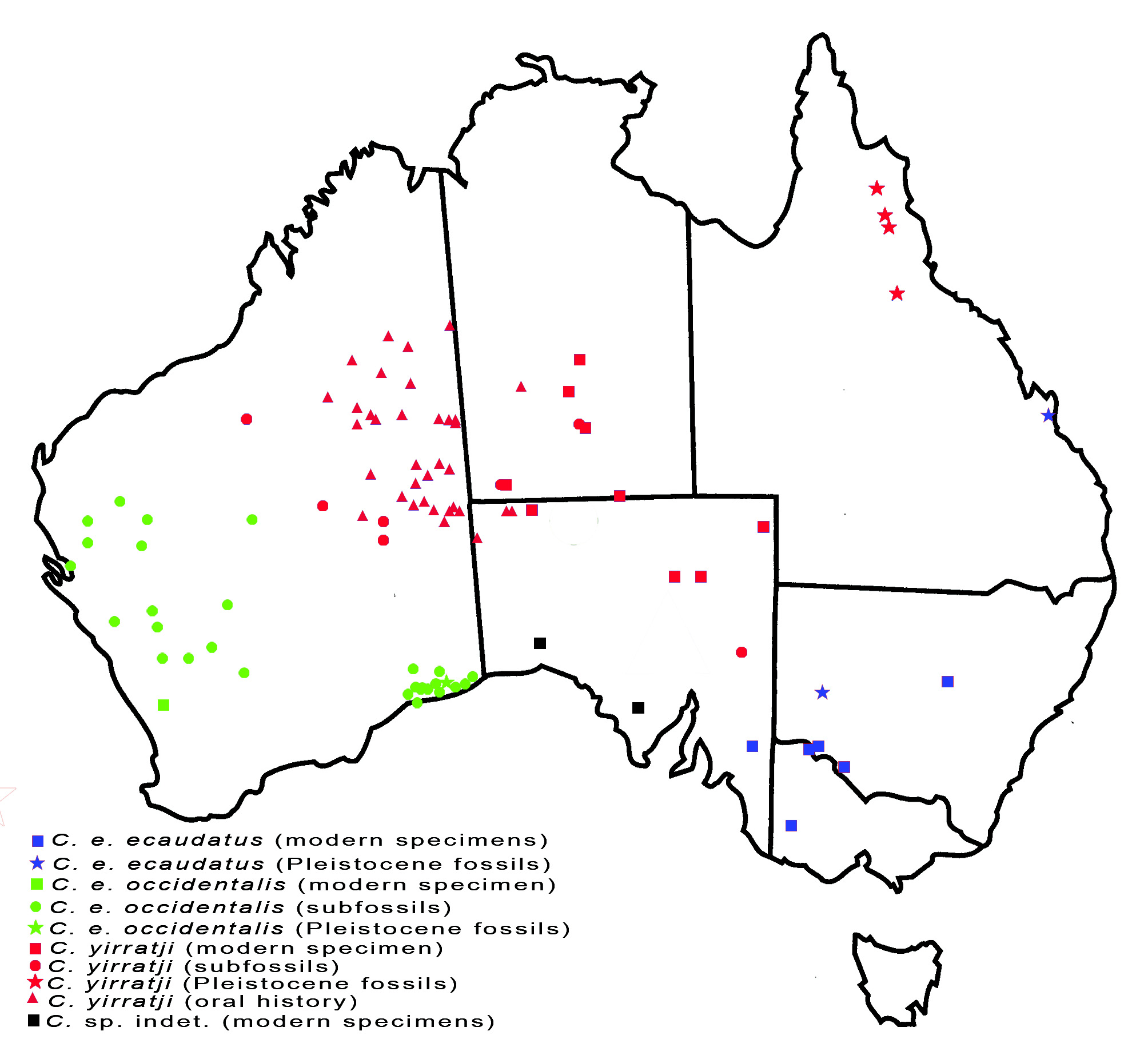
Chaeropus yirratji
species of mammal
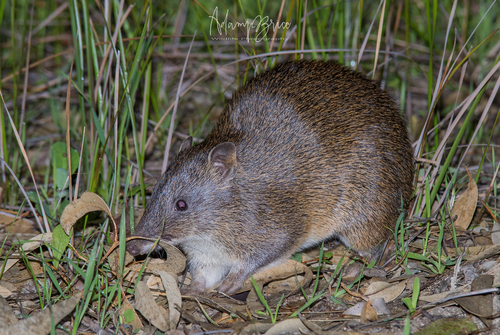
Isoodon fusciventer
The quenda (Isoodon fusciventer), also known as the southwestern brown bandicoot or western brown bandicoot, is a small marsupial species endemic to Southwest Australia.
Eastern striped bandicoot
species of mammal
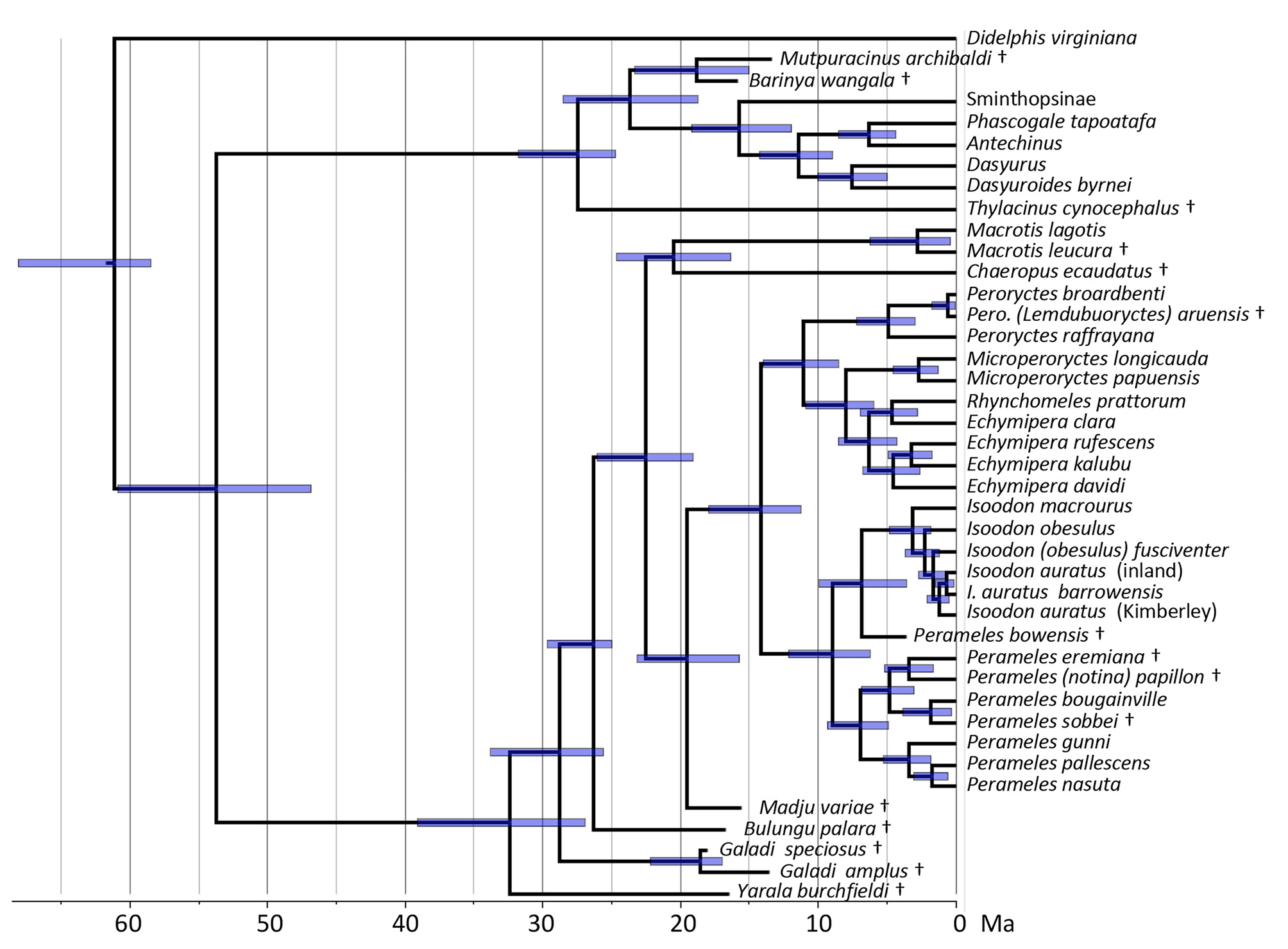
Perameles papillon
species of mammal
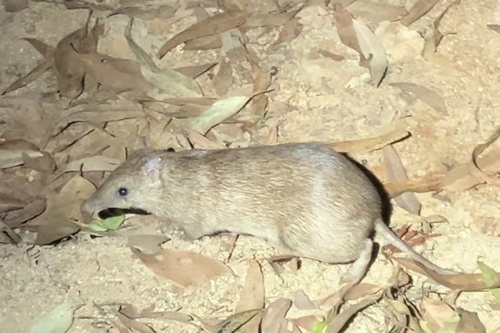
Isoodon peninsulae
species of mammal
Galadi
Galadi is an extinct genus of predatory bandicoot from Oligo-Miocene deposits of Riversleigh, northwestern Queensland, Australia. It was first named by K.J. Travouillon, Y. Gurovich, R.M.D. Beck and J. Muirhead in 2010 and the type species is Galadi speciosus; additional three species, G. adversus, G. amplus and G. grandis, were described in 2013. The genus is represented by three well-preserved skulls and several isolated maxillae and dentaries. Its body mass would have been close to two pounds, making it relatively large for its family. The combination of body size, robustness
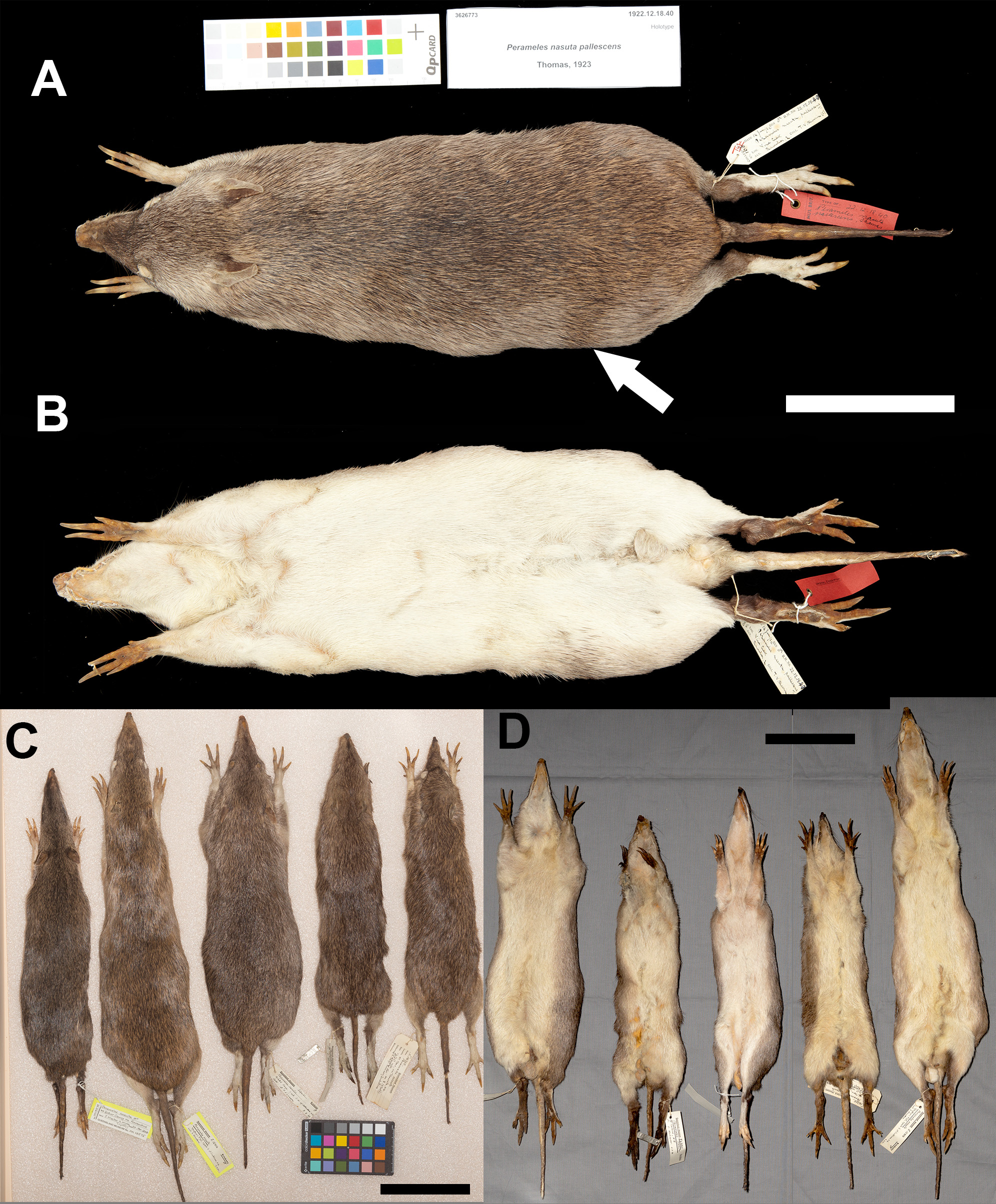
Perameles pallescens
mammal species in the genus Perameles
Perameles bowensis
species of mammal (fossil)