Category
page 1Percolozoa
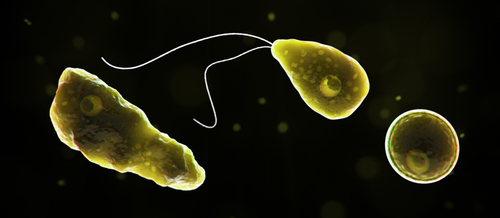
Naegleria fowleri
species of free-living excavate form of protist
primary amebic meningoencephalitis
extremely rare type of amoebiasis that infects the brain

Acrasidae
thumb|right|Acrasis rosea amoebae and spores under microscope
Naegleria
Naegleria is a genus consisting of 47 described species of protozoa often found in warm aquatic environments as well as soil habitats worldwide. It has three life cycle forms: the amoeboid stage, the cyst stage, and the flagellated stage, and has been routinely studied for its ease in change from amoeboid to flagellated stages. This genera became famous when Naegleria fowleri, the causative agent of the usually fatal human and animal disease primary amoebic meningoencephalitis (PAM), was discovered in 1965. Most species in the genus, however, are incapable of causing disease.

Heterolobosea
Heterolobosea or Percolozoa, commonly known as amoebomastigotes, is a phylum of protists including many amoeboflagellates. Naegleria fowleri, the causative agent of the often fatal disease amoebic meningitis, is the only member of this phylum infectious to humans. Typically, their life cycle alternates between flagellate and amoeboid stages.
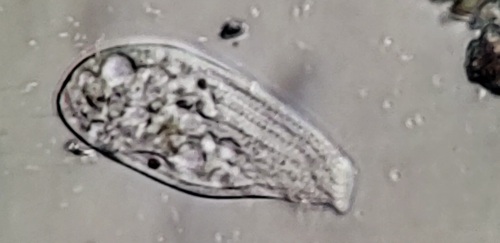
Stephanopogon
Stephanopogon is a genus of flagellated marine protist that superficially resembles a ciliate.
Tetramitia
Tetramitia is one of the two major subphyla within the protist phylum Heterolobosea (the other is Pharyngomonada).
Naegleria gruberi
species of Heterolobosea
Vahlkampfiidae
Vahlkampfiidae is a family of Heterolobosea.
Schizopyrenida
Schizopyrenida is an order of Heterolobosea.
Percolomonas
Percolomonas is a genus of free-living flagellate Heteroloboseans, forming a clade with Stephanopogon.
Vahlkampfia
Vahlkampfia is a genus of amoeboids in Heterolobosea.
Lyromonas
Lyromonas is a genus of Excavata unicellular organism.
Percolatea
Percolatea are a class of excavates in the phylum Percolozoa.