Category
page 1Periodontal disorders

gingivitis
Gingivitis, also known as ulitis, is a non-destructive disease that causes inflammation of the gums. The most common form of gingivitis, and the most common form of periodontal disease, is in response to bacterial biofilms (also called plaque) that are attached to tooth surfaces, termed plaque-induced gingivitis. Most forms of gingivitis are plaque-induced.

periodontitis
gum disease
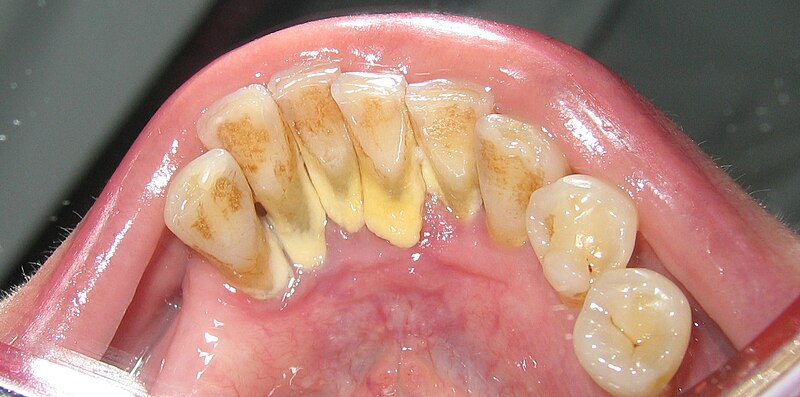
calculus
form of hardened dental plaque

pericoronitis
Pericoronitis is inflammation of the soft tissues surrounding the crown of a partially erupted tooth, including the gingiva (gums) and the dental follicle. The soft tissue covering a partially erupted tooth is known as an operculum, an area which can be difficult to access with normal oral hygiene methods. The hyponym operculitis technically refers to inflammation of the operculum alone.
periapical periodontitis
Human disease
gingival recession
human disease
epulis
Epulis (; plural epulides) is any tumor-like enlargement (i.e. lump) situated on the gingival or alveolar mucosa. The word literally means "(growth) on the gingiva", and describes only the location of the mass and has no further implications on the nature of the lesion. There are three types: fibromatous, ossifying and acanthomatous. The related term parulis (commonly called a gumboil) refers to a mass of inflamed granulation tissue at the opening of a draining sinus on the alveolus over (or near to) the root of an infected tooth. Another closely related term is gingival enlargement, which ten
gingival overgrowth
Human disease
peri-implantitis
thumb|A radiograph two years after implant placement, then seven years later in a heavy smoker, demonstrating progression of bone loss due to peri-implantitis
herpetic gingivostomatitis
Human disease
gingival fibromatosis
rare condition of gingival overgrowth
Q17132235
Hypercementosis is an idiopathic, non-neoplastic condition characterized by the excessive buildup of normal cementum (calcified tissue) on the roots of one or more teeth. A thicker layer of cementum can give the tooth an enlarged appearance, mainly occurring at the apex or apices of the tooth. The cellular cementum functions at the bottom half of the tooth roots which contain cementocytes that anchor the tooth into the jaw socket, protect the tooth's pulp, and repair external root resorption.
chronic periodontitis
chronic inflammatory process that affects the tissues that surround and support the teeth
Treponema denticola
species of bacterium
gingival and periodontal pocket
abnormal depth of the gingival sulcus near the point at which the gingival tissue contacts the tooth
Furcation defect
medical condition in dentistry
periodontal abscess
medical condition