Category
page 1Peripheral nervous system

nerve
A nerve is an enclosed, cable-like bundle of nerve fibers (called axons). Nerves have historically been considered the basic units of the peripheral nervous system. A nerve provides a common pathway for the electrochemical nerve impulses called action potentials that are transmitted along each of the axons to peripheral organs or, in the case of sensory nerves, from the periphery back to the central nervous system. Each axon is an extension of an individual neuron, along with other supportive cells such as some Schwann cells that coat the axons in myelin.

peripheral nervous system
part of the nervous system
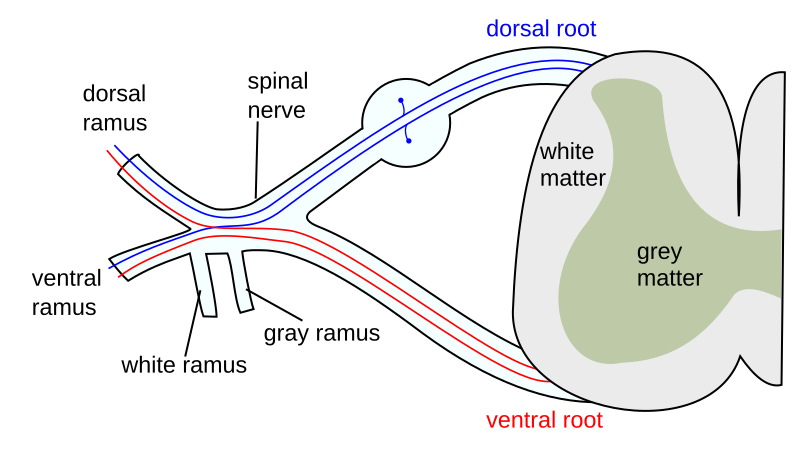
spinal nerve
nerve that carries signals between the spinal chord and the body
somatic nervous system
part of the peripheral nervous system
spinal ganglia
cluster of neurons in a dorsal root of a spinal nerve
efferent nerve fiber
axonal projections that exit a particular region
nerve plexus
cluster of nerves in a similar location
posterior root of spinal nerve
one of two "roots" which emerge from the spinal cord
Template:Somatosensory system
Wikimedia template
anterior root of spinal nerve
efferent motor root of a spinal nerve
General visceral afferent fibers
part of the visceral nervous system
list of human nerves
Wikimedia list article
General somatic efferent fibers
nerve fiber